
Why Backup Time Matters to Frozen-Food Retailers
When the power goes out, time matters. Commercial ice cream display freezers contain products that start softening above -12°C, and once the texture deteriorates, refreezing seldom restores the original quality. By knowing how long the backup will run, operators can act promptly, limit spoilage, and safeguard the brand’s reputation.
Observations from gelato shops, convenience stores, and supermarkets suggest that the outage itself is less often responsible for most losses than the delayed response afterward. If operators know how long the cabinet can hold its temperature, a potential disaster may remain manageable.
Typical Backup Hold Times by Freezer Type
Freezers vary in how long they stay cold once the compressor stops. Insulation in the cabinet, the door design, the amount of product inside, and the surrounding temperature all affect that time. The table gives average performance ranges observed in commercial environments at 25°C ambient.
| Freezer Type | Door Configuration | Average Safe Hold Time | Notes |
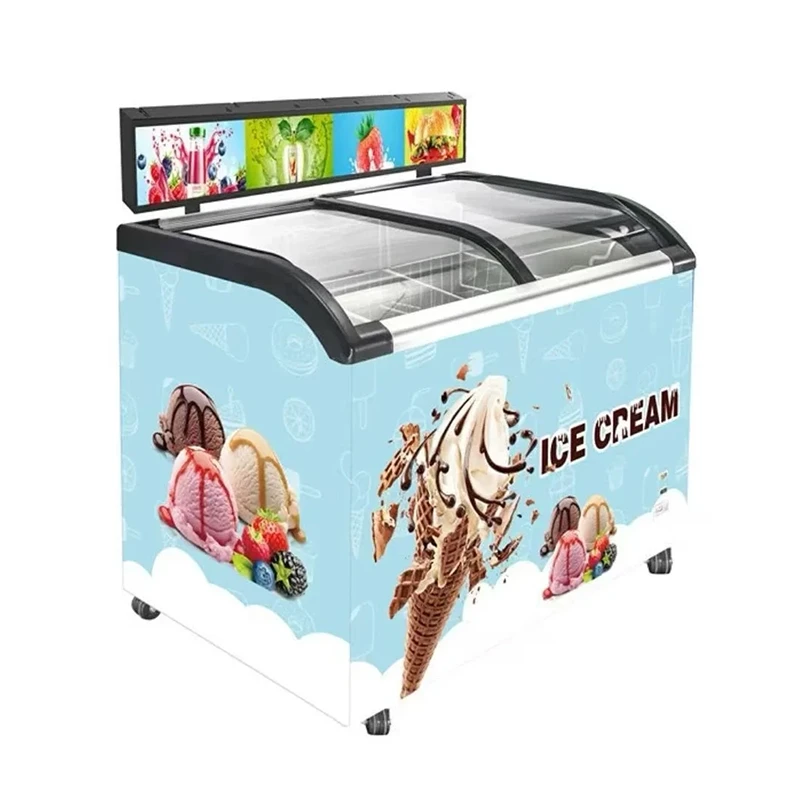
| Ice Cream Freezers (chest style) | Sliding glass lid | 8–14 hours | Cold air sinks and stays trapped |
| Commercial Upright Freezer | Solid door | 6–10 hours | Better than glass door models |
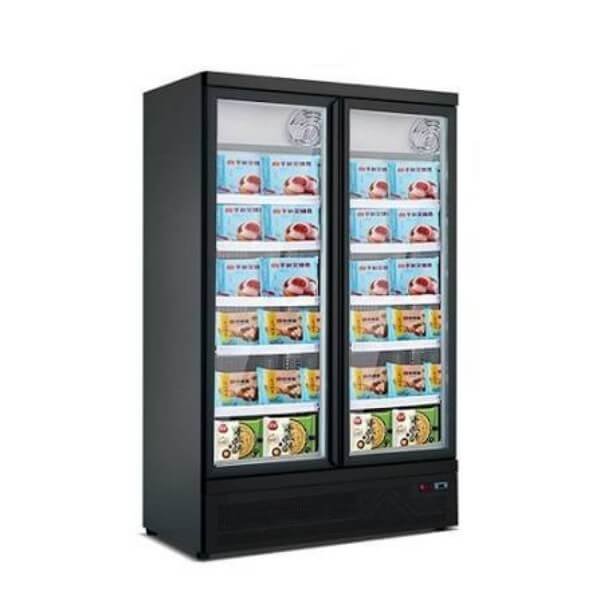
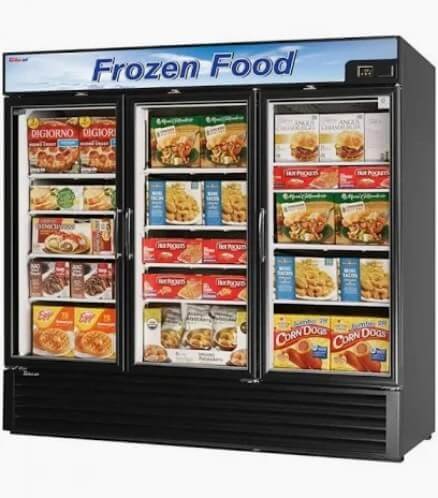
| Display Freezer (glass door) | Hinged glass | 3–6 hours | Radiant heat gain shortens hold time |
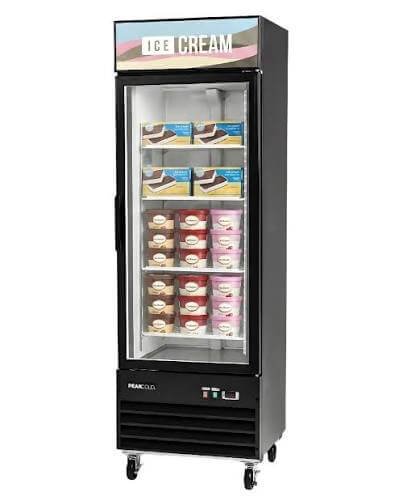
| Commercial ice cream display freezer (curved glass) | Top-loading curved glass | 5–8 hours | Depends on lid seal quality |
Full cabinets hold their temperature more consistently than half-empty ones because the frozen product itself acts as thermal mass. Experienced operators therefore keep display units well stocked, especially during high-risk weather seasons.
Factors That Extend or Shorten Backup Time
Insulation Thickness and Quality
Heat transfer is directly affected by both polyurethane foam density and wall thickness. In premium cabinets, the walls are commonly 60–75 mm thick; budget models may have walls of just 40 mm. Operators should ask suppliers for the K-value instead of relying on vague marketing claims.
Door Discipline
- Keep the lids closed for the entire outage
- Post a clear sign reminding staff not to open the freezer
- If the outage continues beyond two hours, cover glass doors with insulated blankets
Product Load and Placement
A commercial ice cream display freezer stays cold much longer when it is 70–90% full than when it is mostly empty. Place older stock on top to support rotation, and keep the lower shelves tightly packed to preserve a reserve of cold.
Ambient Conditions
Store temperature is easy to overlook. In a 20°C conditioned space, backup time at 30°C can be nearly half that of a freezer. Cabinets should stay out of direct sunlight and away from kitchen equipment. Keeping them there consistently pays off.
Preparing Before the Power Goes Out
Preparation can make the difference between operators losing thousands and losing nothing. Before outage season begins, put these measures in place.
- Install a digital temperature logger capable of sending SMS alerts.
- Keep a backup generator with enough capacity to power at least the display units.
- Pre-freeze gel packs for placement inside cabinets during extended outages.
- Record product batch codes each day for insurance claims.
- Train staff to follow a written outage response protocol.
Backup generators remain the most dependable safeguard. A modest 5 kW inverter generator can keep two or three units operating during a blackout that lasts several hours, provided fuel is stored safely nearby.
Response Steps During an Outage
The first thirty minutes often shape the outcome. Managers should follow a clear sequence rather than improvise under pressure.
- Contact the utility provider to confirm the outage scope
- Record cabinet temperatures immediately for documentation
- Keep all doors and lids closed
- Use the generator only after confirming that ventilation is safe
- If the hold time expires, transfer premium products to backup Ice Cream Freezers
Some operators set up mutual aid with a nearby business that has generator power. This preparation signals operational maturity, which regulators and insurers increasingly reward.
When to Discard vs. Refreeze
Food safety authorities generally recommend not selling ice cream that has reached -6°C or warmer, even if it has been refrozen. Texture can deteriorate, but the greater concern is the rapid increase in microbial risk. Using a reliable Display Freezer thermometer provides an objective basis for the decision rather than relying on touch.
Batch documentation and photographs can provide solid support for insurance claims. Retailers that skip this step often recover only a fraction of what they lost.
Choosing Equipment Built for Resilience
Selecting the right cabinet at the start is the least costly form of insurance. A well-engineered Commercial Upright Freezer, with thick insulation, quality door gaskets, and a low-wattage compressor, will perform better than cheaper alternatives during every outage over its service life.
Ask the manufacturer to provide documented results from pull-down and hold-time tests. Reputable suppliers should share this information willingly, and that level of openness can indicate confidence in the product.
FAQ
How long can a commercial ice cream display freezer maintain its temperature without power?
With the door kept shut, most units remain at a safe temperature for 4–8 hours. How long that lasts depends on the insulation, the amount of product inside, and the store’s ambient conditions.
Is a generator worth the investment for a small ice cream shop?
Yes. A single power outage can destroy inventory valued at ten times the price of a generator, making one of the quickest-payback investments in frozen retail.
Should refrozen ice cream be sold after a power outage?
No. Once ice cream rises above -6°C, its texture may suffer, and its safety can decline. Reputable operators throw out affected batches and record the losses for insurance recovery.