

Why Energy Efficiency Matters for Beverage Cooling
Utility bills can steadily eat into the profit margins of restaurants, convenience stores, and hospitality venues. In food service operations, refrigeration by itself often uses 40-60% of total electricity. That makes a commercial beverage refrigerator more than a question of capacity or appearance; it has a direct effect on operating costs over time.
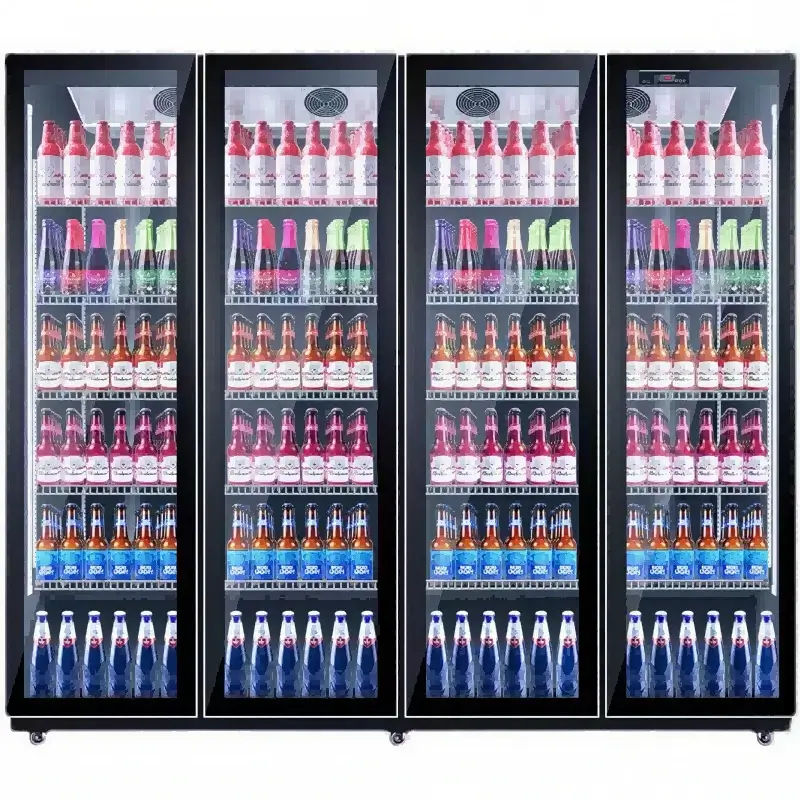
Operators who replace older units with ENERGY STAR-certified models typically report annual savings of $150-$400 per unit. Across an entire chain, that difference quickly becomes hard to overlook.
Key Factors in Energy Consumption
Beverage Refrigerators can vary significantly in efficiency, even when their specifications appear similar. Several factors account for the difference, starting with:
1. Compressor Technology
Variable-speed, or inverter, compressors match their cooling output to demand rather than switching on and off as forcefully as traditional single-speed units. They may cut energy use by 20-40% and operate more quietly, which matters in customer-facing environments.
2. Door Design and Insulation
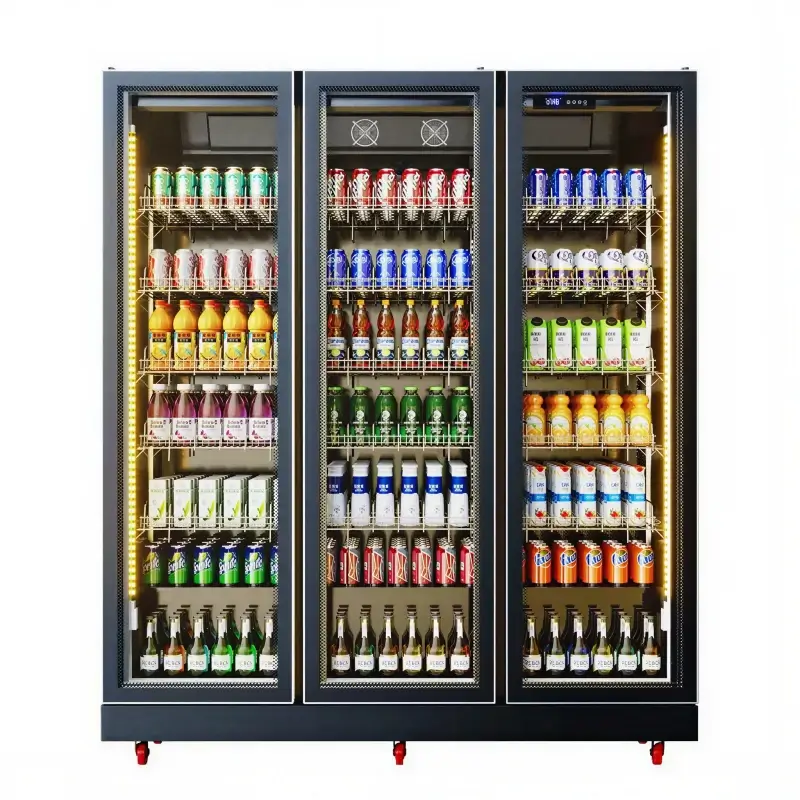
Glass doors present merchandise attractively, but they allow more cold air to escape than solid doors. Modern Commercial Glass Door Refrigerator models, however, often include triple-pane low-E glass, argon gas fills, and heated frames, which dramatically reduce that efficiency gap. Buyers should still check the U-value of the complete door assembly.
3. LED Lighting
Older fluorescent lighting adds heat inside the cabinet, making the compressors work harder. LED strips use up to 75% less power and generate almost no heat. It is a small change, but the benefits build over time.
4. Refrigerant Type
Natural refrigerants such as R-290 (propane) outperform older HFCs in efficiency and environmental impact. Many jurisdictions now require the switch, which makes future-proofing purchases important.
Comparing Common Beverage Refrigerator Types
The best format depends on available floor space, how visible the products need to be, and the amount of customer traffic. The table below outlines the main trade-offs operators should consider:
| Type | Avg. Annual Energy Use (kWh) | Best For | Visibility |
| Solid-Door Reach-In | 1,200–1,800 | Back-of-house storage | Low |
| Single Glass Door Merchandiser | 1,600–2,400 | Small cafés, delis | High |
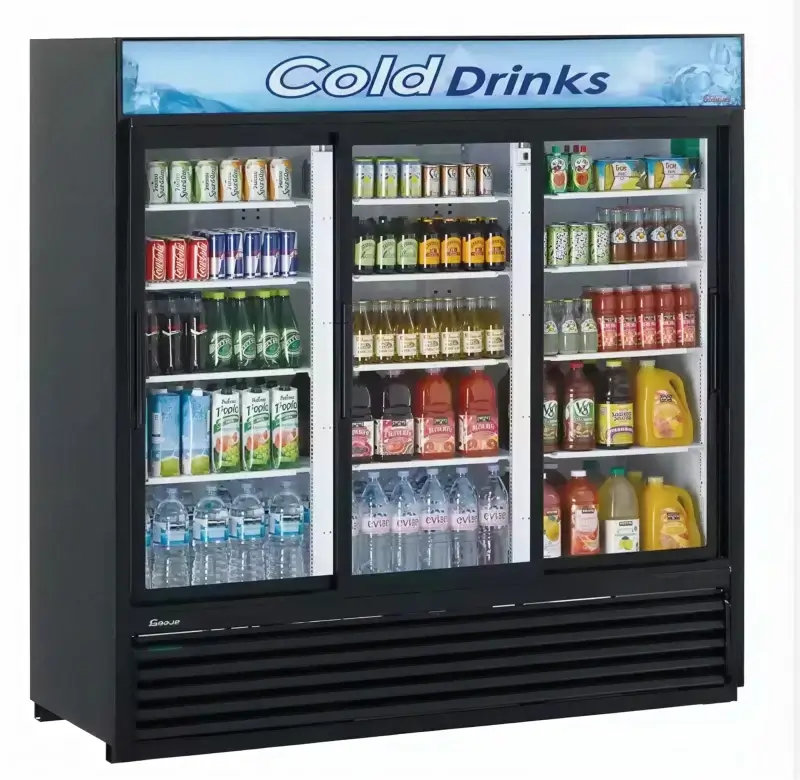
| Double Glass Door Merchandiser | 2,800–4,000 | Convenience stores | High |
| Undercounter Beverage Cooler | 400–700 | Bars, service stations | Medium |
| Open-Front Grab-and-Go | 3,500–5,500 | Quick-service retail | Very High |
Open-front units can increase impulse sales, but they also use the most energy. That revenue-versus-cost trade-off deserves a careful calculation.
Sizing the Unit Correctly
A unit that is too large wastes energy cooling space it does not need, while one that is too small may run constantly and wear out early. A practical way to size it is to:
- Estimate the peak beverage inventory in cubic feet.
- Allow 15-20% of additional capacity for restocking cycles.
- Then match that figure—not a larger one—to the available models.
Most operators, in practice, overbuy by roughly 25%. That quietly raises energy bills throughout the unit’s lifespan.
Placement Tips That Reduce Runtime
Even a highly efficient commercial refrigerator can perform poorly if it is installed in the wrong spot. Thoughtful placement helps protect the compressor and reduce electricity use:
- Leave at least 3 inches of space behind and above the unit so air can circulate.
- Position refrigerators away from ovens, dishwashers, and direct sunlight.
- Clean the condenser coils every 90 days. Dust buildup can increase energy use by 30%.
- Keep thermostats between 36°F and 40°F; lower settings rarely improve product quality.
Calculating True Total Cost of Ownership
Sticker price alone can give buyers the wrong impression. If a cheaper unit costs $300 more each year to operate, its initial price advantage disappears within two years. Smart procurement teams therefore calculate total cost of ownership with this formula:
TCO = Purchase Price + (Annual kWh × Local Rate × Expected Lifespan) + Maintenance
Consider a unit rated at 1,400 kWh/year in a market where electricity costs $0.15/kWh — electricity costs $210 per year to run, that is $2,100 over a decade. Choosing a model that uses 900 kWh instead saves $750 over the same period, which can justify paying more upfront.
Certifications to Put First
Third-party certifications make the evaluation less of a guessing game. When comparing beverage refrigerators, check for these:
| Certification | What It Confirms |
| ENERGY STAR | Confirms that efficiency exceeds federal minimums by 10-45% |
| NSF/ANSI 7 | Indicates compliance with food safety and sanitation requirements |
| DOE compliance | Shows that the unit meets current U.S. Department of Energy standards |
| UL certification | Confirms electrical safety |
A unit with all four certifications usually offers the best balance of performance, safety, and efficiency.
Final Recommendations
Lower energy costs begin with viewing a commercial beverage refrigerator as a long-term investment, not simply a commodity purchase. Look first for an inverter compressor, well-insulated doors, LED lighting, and natural refrigerants. The unit should match actual inventory needs, receive proper maintenance, and be evaluated according to its lifetime energy costs—not just its purchase price. Operators who apply this approach consistently achieve faster payback and healthier margins.
FAQ
Q1: For a mid-sized restaurant, what annual savings can an ENERGY STAR beverage refrigerator provide?
A: Compared with non-certified models, most operators save $200-$500 per unit each year. The exact amount depends on local electricity rates and usage patterns.
Q2: Is the higher energy cost of glass door merchandisers justified for B2B buyers?
A: Yes, if product visibility encourages impulse purchases. In high-traffic retail environments especially, the added sales typically make up for the modest energy premium.
Q3: How often should commercial refrigeration units be serviced to stay efficient?
A: Arrange professional maintenance twice a year, and clean the condenser coils every three months to avoid efficiency losses and help the equipment last longer.