
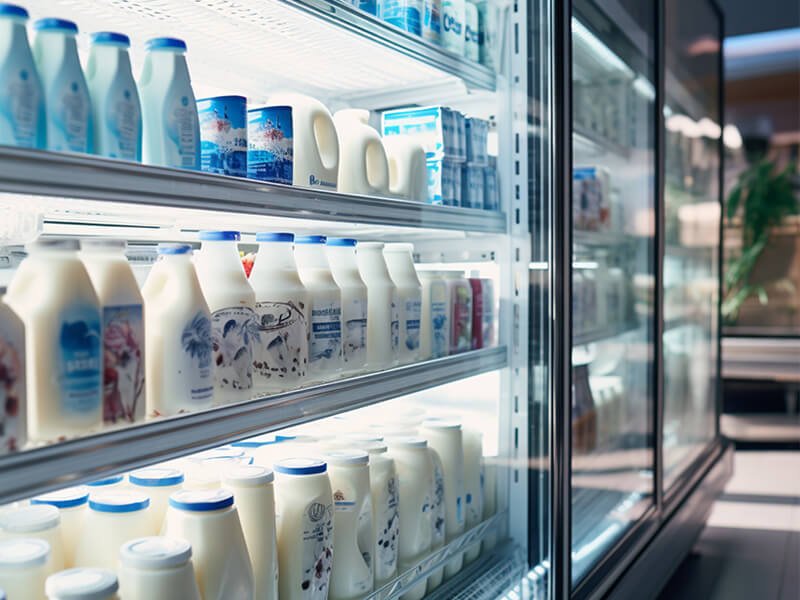
Walk into any restaurant during a dinner rush, and you will hear the compressor of a reach-in cooler cycle above the noise of the line. Open the glass door of a convenience store beverage case, and a blast of cold air confirms the product is at serving temperature. These everyday interactions with commercial refrigeration equipment are so routine that few people stop to ask what is happening inside the cabinet to make cold air appear on demand.
Yet understanding how a commercial refrigerator works is not just an academic exercise. For anyone responsible for purchasing, maintaining, or operating these units, knowing the underlying mechanics leads to better buying decisions, earlier problem detection, and more effective communication with service technicians. A clicking sound that signals a failing start relay, a warm spot on a door gasket that indicates a seal leak, a frosted evaporator coil that points to a defrost system malfunction — each of these observations depends on understanding the system as a whole.
A commercial refrigerator is a refrigeration system purpose-built for continuous, high-volume operation in a business environment. It works by circulating a chemical refrigerant through a closed loop of four main components — the compressor, condenser, expansion valve, and evaporator — in a continuous vapor-compression cycle that absorbs heat from inside the cabinet and rejects it to the surrounding environment. The system uses precisely controlled phase changes of the refrigerant between liquid and gas to move thermal energy against its natural gradient, maintaining internal temperatures between 33°F and 41°F for refrigerators and as low as -20°F for specialized freezers.
The vapor-compression cycle is the same thermodynamic principle used in air conditioning, residential refrigerators, and automotive cooling, but commercial systems scale it up with heavier-duty components, tighter temperature tolerances, and features designed for the punishing duty cycles of a commercial kitchen or retail environment. The following sections unpack each part of this system, outline the types of commercial refrigeration equipment available, and explain what separates commercial-grade units from their residential counterparts.
How Does a Commercial Refrigerator Work?
A commercial refrigerator operates on the vapor-compression refrigeration cycle, a continuous four-stage thermodynamic process in which a refrigerant circulates through the compressor, condenser, expansion device, and evaporator. The refrigerant absorbs heat from inside the cabinet during evaporation and releases it to the outside air during condensation, driven by pressure changes created by the compressor.
The Vapor-Compression Cycle Step by Step
The refrigeration cycle is a closed loop — the refrigerant never leaves the sealed system, and the same charge of refrigerant completes the cycle thousands of times per day. Understanding each stage explains why certain components fail in predictable ways and why maintenance tasks like condenser coil cleaning matter so much.
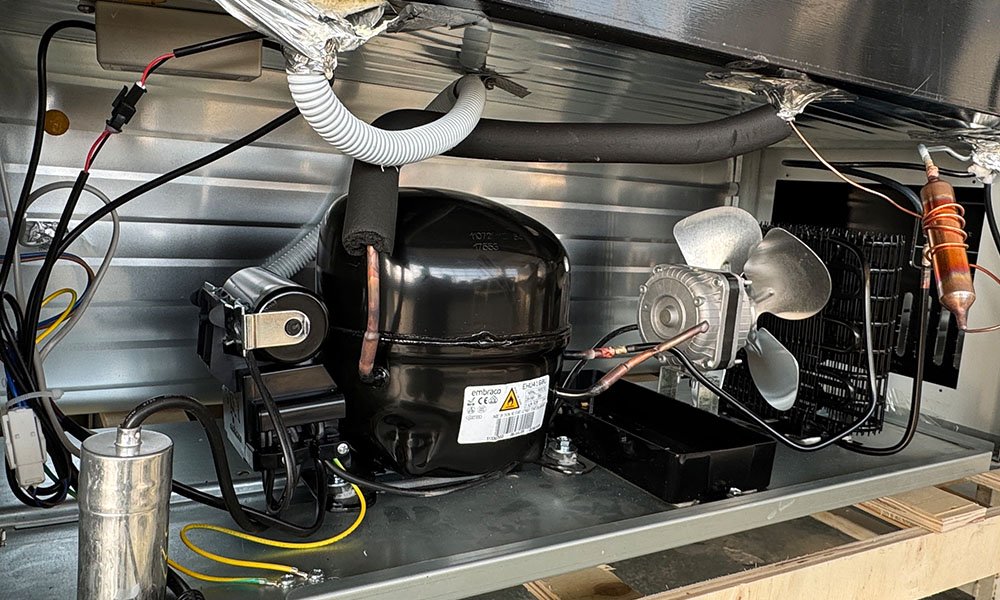
Stage 1: Compression. The cycle begins at the compressor, which is the pump that drives the entire system. Low-pressure, low-temperature refrigerant vapor enters the compressor from the suction line. The compressor reduces its volume dramatically — typically by a ratio of 3:1 to 5:1 in commercial systems — which increases both its pressure and its temperature. The refrigerant leaves the compressor as a high-pressure, high-temperature superheated vapor. This is the most energy-intensive stage of the cycle, and the compressor is typically the most expensive component to replace.
Stage 2: Condensation. The hot, high-pressure vapor flows into the condenser coil, usually located on top of or behind the unit. A fan blows ambient air across the condenser coil, removing heat from the refrigerant. As the refrigerant loses heat, it undergoes a phase change from vapor to liquid. By the time it exits the condenser, the refrigerant is a high-pressure, medium-temperature liquid. This is why keeping condenser coils clean is critical: dust and grease on the coil surface act as insulation, reducing heat transfer, raising system pressure, and forcing the compressor to run hotter and longer.
Stage 3: Expansion. The high-pressure liquid refrigerant passes through the expansion device — typically a thermostatic expansion valve (TXV) or a capillary tube. This component creates a sudden pressure drop by forcing the refrigerant through a narrow orifice. The pressure drop causes a corresponding temperature drop, and the refrigerant exits as a cold, low-pressure mixture of liquid and vapor.
Stage 4: Evaporation. The cold refrigerant mixture enters the evaporator coil inside the cabinet. A fan blows warm cabinet air across the evaporator coil, causing the liquid refrigerant to absorb heat and boil into a vapor. This heat absorption cools the air that circulates through the cabinet. The refrigerant, now a low-pressure vapor, returns to the compressor via the suction line, and the cycle repeats.
Temperature Control and The Defrost Cycle
A thermostat or digital controller monitors the cabinet air temperature and cycles the compressor on and off to maintain the target setpoint. When the cabinet temperature rises above the setpoint — typically because a door was opened — the controller energizes the compressor and evaporator fans. Once the temperature drops back to the setpoint, the system cycles off.
For freezers operating below 32°F, frost inevitably accumulates on the evaporator coil as moisture in the cabinet air freezes on contact. A defrost cycle periodically melts this frost using electric heating elements or a hot-gas bypass from the compressor discharge line. The resulting water drains through a tube to an evaporator pan located near the compressor, where the compressor’s waste heat evaporates it. Adaptive defrost controls in modern units only initiate a defrost cycle when sensors detect actual frost accumulation, reducing energy consumption compared to fixed-timer defrost systems.
Key Components of a Commercial Refrigerator
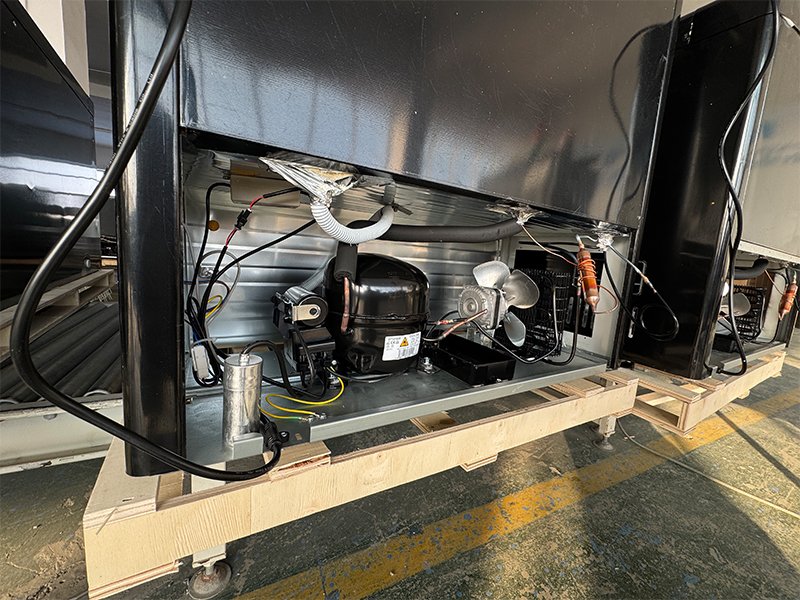
A commercial refrigerator consists of four core refrigeration components — the compressor, condenser, evaporator, and expansion device — plus supporting systems for air circulation, temperature control, defrost management, and structural integrity. Each component plays a specific role in the refrigeration cycle, and a failure in any one part stops the entire system from maintaining temperature.
The Compressor
The compressor is the single most critical and expensive component in the system. It functions as both a pump and a pressure multiplier. By compressing low-pressure vapor into high-pressure vapor, it creates the pressure differential that drives refrigerant flow through the entire circuit.
Commercial systems use three main compressor types:
| Compressor Type | How It Works | Best Suited For |
| Hermetic | Motor and compressor sealed together in a welded steel shell; not field-serviceable | Smaller reach-in units, undercounter cabinets |
| Semi-Hermetic | Bolted housing allows on-site rebuilding and component replacement | Walk-in systems, larger multi-door units |
| Scroll | Two interleaved spiral elements compress refrigerant with fewer moving parts and less vibration | Medium to large commercial applications |
Compressor failures typically result from overheating caused by dirty condenser coils, refrigerant undercharge from slow leaks, or electrical issues such as voltage drops and single-phasing in three-phase units.
The Condenser Coil
The condenser coil is a network of copper or aluminum tubing with aluminum fins that maximize surface area for heat exchange. Located outside the refrigerated compartment, it rejects the heat absorbed from inside the cabinet plus the heat of compression into the surrounding air. A dedicated condenser fan motor pulls or pushes air across the coil to accelerate this process.
Condenser coil cleanliness is the single most impactful maintenance variable for energy efficiency and compressor longevity. A layer of grease and dust as thin as one millimeter can reduce heat transfer efficiency by 30% or more, elevating condensing pressure and temperature and forcing the compressor to work against a higher discharge pressure.
The Evaporator Coil
The evaporator coil performs the reverse function inside the cabinet: it absorbs heat from the stored product and the air that enters when the door opens. As liquid refrigerant evaporates inside the coil at low pressure and low temperature, the coil surface becomes cold, and the evaporator fan circulates cabinet air across it. This is the component that actually creates the cold air inside the unit.
In forced-air systems used by most modern commercial refrigerators, the evaporator fan runs whenever the compressor runs, distributing cold air evenly throughout the cabinet to eliminate temperature stratification between shelves.
The Expansion Device
The expansion device controls refrigerant flow into the evaporator and creates the pressure drop that enables low-temperature evaporation. Most commercial systems use one of two designs:
Thermostatic expansion valve (TXV): Modulates refrigerant flow based on the temperature of the suction line leaving the evaporator, providing precise control under varying load conditions. Preferred in systems where door openings and product loading fluctuate significantly.
Capillary tube: A fixed-length, narrow-diameter tube that provides a constant restriction. Simpler and less expensive than a TXV, but less responsive to changing loads. Common in smaller, self-contained units.
Supporting Systems
Beyond the four core refrigeration components, commercial refrigerators rely on several supporting systems. The temperature controller — either a mechanical thermostat or a digital electronic controller — monitors cabinet conditions and cycles the compressor. Door gaskets made of flexible PVC with magnetic strips create an airtight seal that prevents cold air leakage. Interior lighting, now predominantly LED for energy efficiency and reduced heat output, illuminates stored products. And the cabinet structure itself, with its polyurethane foam insulation injected between an inner liner and outer skin, provides the thermal barrier that makes the refrigeration cycle efficient enough to be practical.
Types of Commercial Refrigerators
Commercial refrigerators come in several form factors, each designed for a specific combination of storage capacity, access frequency, and product visibility. The most common types include reach-in cabinets, undercounter units, glass door refrigerators, beverage refrigerators, and merchandiser refrigerators for customer-facing retail applications.
Reach-In Refrigerators
Reach-in units are the vertical, full-height cabinets found in nearly every commercial kitchen. Available in one-, two-, and three-section configurations, they provide organized shelf storage at standing height. Solid-door models prioritize insulation and energy efficiency for back-of-house use, while glass-door versions offer at-a-glance inventory visibility.
Commercial Glass Door Refrigerators
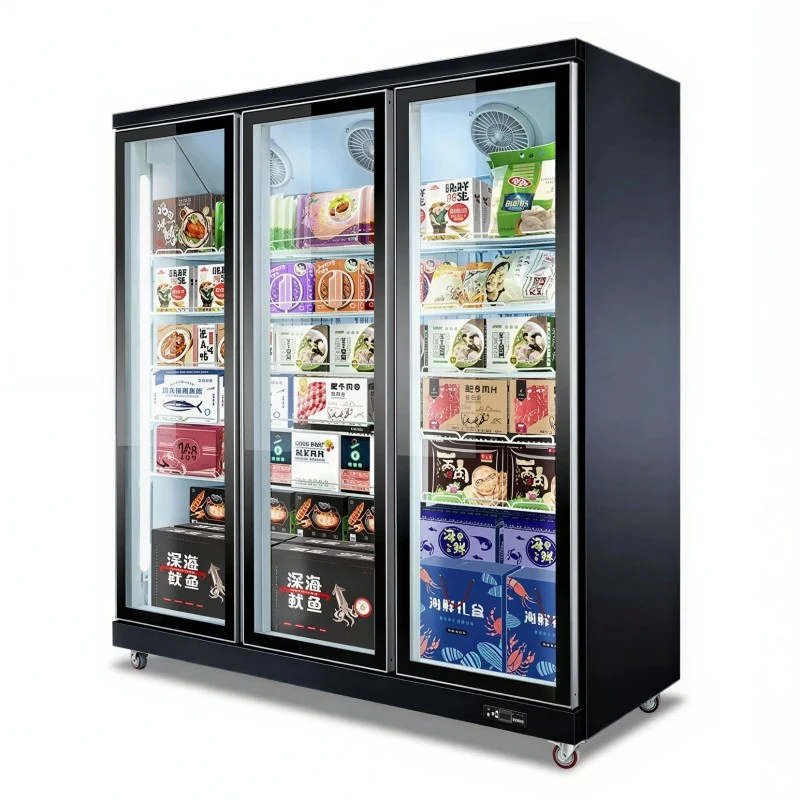
Commercial glass door refrigerators serve a dual purpose: they keep products at a safe temperature while making them visible without opening the door. This visibility reduces the duration and frequency of door openings, which in turn reduces energy consumption. Glass door units are standard in convenience stores, grocery aisles, and cafeteria serving lines where customers select their own products.
The glass used in these doors is not ordinary window glass. It is typically double-pane or triple-pane low-emissivity glass with an insulating gas fill between panes and an electrically heated outer surface to prevent condensation and fogging in humid environments. The frames incorporate magnetic gaskets identical to those on solid-door units, and built-in door locks are common for after-hours security.
Commercial Beverage Refrigerators
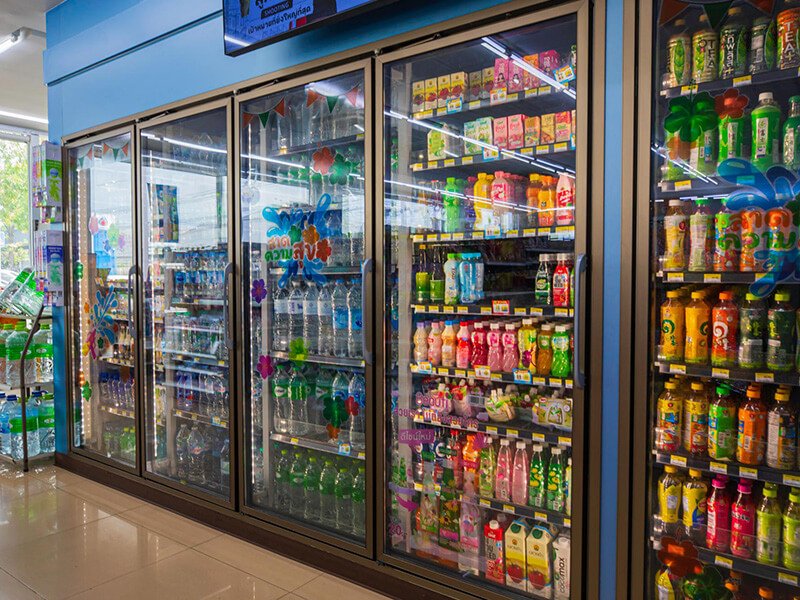
Commercial beverage refrigerators are specifically designed to chill bottled and canned beverages to serving temperature — typically 34°F to 40°F — while maximizing product capacity and presentation. They differ from general-purpose reach-in refrigerators in several ways: shelving is configured for standard bottle and can sizes rather than food pans, interior lighting is optimized to illuminate product labels, and glass doors are standard to encourage impulse purchases.
Key features to evaluate in a beverage refrigerator include:
Shelf depth and spacing designed for common package formats (12 oz cans, 20 oz bottles, wine bottles)
Forced-air cooling that ensures consistent temperature from top to bottom shelf
High-density foam insulation to reduce energy consumption during frequent door openings
Locking doors for inventory control in self-service environments
Adjustable leveling legs for installation on uneven retail floors
Merchandiser Refrigerators
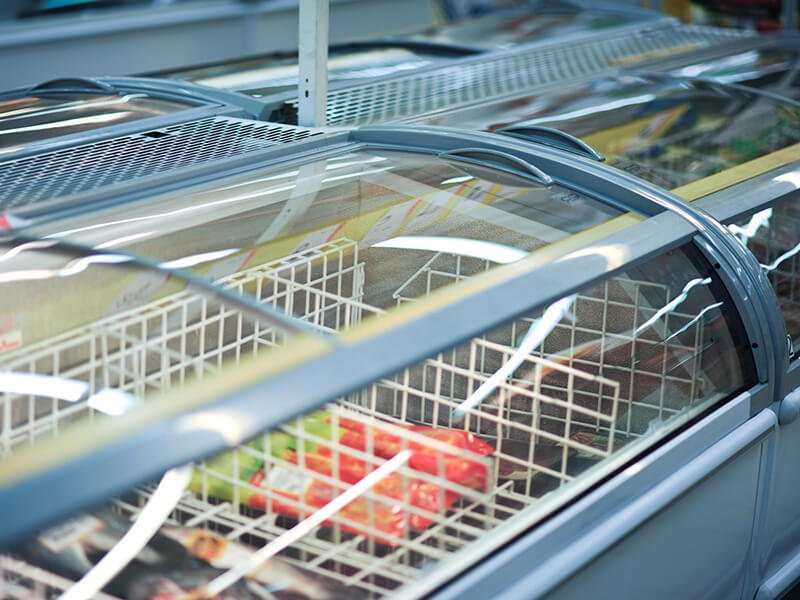
Merchandiser refrigerators take the glass-door concept a step further, prioritizing product presentation as highly as temperature performance. Unlike a standard reach-in where products are stored in kitchen pans, merchandisers feature bright LED interior illumination, organized shelf layouts that present products at consumer-friendly viewing angles, and branding panels or signage areas. Open-air merchandisers dispense with doors entirely, using a curtain of cold air across the front opening to maintain product temperature while maximizing impulse access.
These units are most commonly found in grocery stores, convenience stores, and food-service grab-and-go stations. The design trade-off is that merchandisers sacrifice some thermal efficiency for product accessibility, making high-efficiency compressors and adaptive defrost controls particularly important for managing energy costs.
Undercounter and Other Configurations
Space-constrained kitchens benefit from units that fit beneath standard 34-inch countertops. Worktop models add a stainless-steel prep surface above the cabinet, merging cold storage and work space into a single footprint. Other specialized configurations include roll-in and roll-through units for bakeries and commissaries, pass-through cabinets that open from both sides for cook lines between kitchen and service areas, and dual-temperature units that combine refrigerator and commercial freezer sections in one cabinet.
Commercial vs. Residential Refrigerators: Key Differences
Commercial refrigerators differ from residential models in compressor duty rating, construction materials, temperature recovery speed, serviceability, and regulatory compliance requirements. A residential refrigerator placed in a commercial kitchen will fail prematurely and may not maintain food-safe temperatures under real-world usage conditions.
Engineering for Continuous Duty
A residential refrigerator compressor is designed for intermittent operation with ample rest time between cycles. A commercial unit’s compressor is rated for continuous duty — it can run for hours at a stretch during peak periods without overheating. The difference in internal component quality, winding insulation, and oil circulation design between these two duty ratings accounts for much of the cost difference between residential and commercial equipment.
Temperature Recovery and Food Safety
The FDA Food Code requires that refrigerated food be maintained at 41°F or below. When a kitchen staff member opens a reach-in door, warm ambient air rushes in. A commercial refrigerator recovers to safe temperature in minutes; a residential unit may take significantly longer, during which time food temperatures can drift above the safety threshold.
This recovery speed is a function of compressor capacity, evaporator coil surface area, and airflow design — all areas where commercial equipment is purpose-built and residential equipment is cost-optimized for a less demanding use case.
Construction and Component Differences
| Feature | Residential Refrigerator | Commercial Refrigerator |
| Compressor Duty | Intermittent, lower horsepower | Continuous-rated, higher horsepower |
| Interior Material | Plastic liner, prone to cracking | Stainless steel or aluminum, chemical-resistant |
| Door Hinges | Light-duty, may sag over time | Heavy-duty, often with lifetime warranty |
| Temperature Control | Basic thermostat, ±3-5°F accuracy | Digital controller, ±1°F accuracy typical |
| Gasket Design | Single magnetic strip, glued in place | Multi-magnet, replaceable dart-style channel |
| Ventilation Clearance | 1-2 inches | 3-6 inches required for proper airflow |
| Certification | Household appliance standards | NSF/ANSI standards for food equipment |
Common Applications and Use Cases
Commercial refrigerators are deployed across a wide range of industries, with the most intensive use occurring in restaurants and food service, grocery and convenience retail, healthcare and laboratory environments, and hospitality venues. Each application imposes different demands on the equipment in terms of temperature precision, door-opening frequency, and ambient operating conditions.
Restaurants and Food Service
In restaurant kitchens, reach-in refrigerators and undercounter units form the backbone of the cold storage system. Their placement directly on cook lines and prep stations minimizes the steps staff must take to retrieve ingredients during service. The typical hot-line setup includes at least two reach-in units — one for proteins and one for produce and prepared items — organized so that cooks can access what they need without crossing the kitchen during peak hours.
Grocery Stores and Convenience Retail
Retail environments demand a different category of equipment. Glass-door merchandiser refrigerators and multi-deck open cases dominate the sales floor, displaying dairy products, beverages, deli items, and prepared grab-and-go foods. These units are designed with consumer browsing behavior in mind: bright lighting, readable product labels at eye level, and door handles that operate smoothly with one hand.
Healthcare and Laboratories
Hospitals, pharmacies, and research laboratories use commercial refrigerators for vaccine storage, medication preservation, and sample retention. These applications require tighter temperature tolerances than food service — typically ±1°F — and often demand redundant cooling systems, uninterrupted power supplies, and continuous temperature data logging for regulatory compliance. The CDC’s vaccine storage guidelines specify purpose-built medical-grade or pharmacy-grade refrigerators rather than standard commercial food-service units for vaccine preservation.
Hospitality and Events
Hotels, banquet facilities, and catering operations rely on commercial refrigeration for both back-of-house food preparation and front-of-house beverage and dessert service. Bar coolers, wine refrigerators, and mobile catering cabinets are specialized subcategories within this segment, each with temperature and humidity requirements tailored to specific products.
Understanding Your Refrigeration Needs
A commercial refrigerator is not a commodity item that can be selected by price alone. The vapor-compression cycle that makes cold air possible is the same across all units, but the quality of the compressor, the surface area of the condenser and evaporator coils, the precision of the temperature controller, and the durability of the cabinet construction determine whether the unit will perform reliably for a decade or fail within a few years.
Understanding how the system works — the roles of the compressor, condenser, expansion device, and evaporator — gives you the vocabulary to evaluate equipment specifications meaningfully. Knowing the types available, from solid-door reach-in cabinets for back-of-house storage to glass-door merchandiser refrigerators and beverage refrigerators for customer-facing retail, lets you match the right form factor to each use case. And recognizing the differences between commercial and residential equipment prevents the costly mistake of putting a household appliance into a commercial environment where it cannot keep up.
Frequently Asked Questions
How long does a commercial refrigerator typically last?
A well-maintained commercial refrigerator can last 10 to 15 years, with the compressor being the component most likely to require replacement between years 8 and 12. The actual lifespan depends heavily on maintenance practices — units with regularly cleaned condenser coils and promptly replaced door gaskets consistently outlast neglected equipment. The operating environment also matters: a unit installed in a hot kitchen with poor ventilation will have a shorter service life than one in a climate-controlled space with adequate airflow around the condensing unit.
What refrigerant is used in modern commercial refrigerators?
The commercial refrigeration industry is transitioning away from high-GWP (global warming potential) refrigerants like R-404A toward lower-GWP alternatives. Many new self-contained commercial refrigerators now use R-290 (propane), which has excellent thermodynamic properties and a GWP of only 3, or R-600a (isobutane) with a GWP of 3. Larger remote systems increasingly use R-448A or R-449A as replacements for legacy refrigerants. The EPA’s Technology Transitions program under the AIM Act is phasing down HFC production, making refrigerant type an important consideration for long-term equipment planning.
Can I convert a residential refrigerator for commercial use?
No. Residential refrigerators lack NSF certification required by most health departments for commercial food service, cannot maintain safe temperatures under the frequent door openings typical in a commercial environment, and will almost certainly void their warranty if used commercially. The cost savings disappear quickly when the unit fails prematurely, potentially taking hundreds of dollars of food inventory with it and resulting in a health code violation during an inspection.