
The Short Answer: Display Temperature
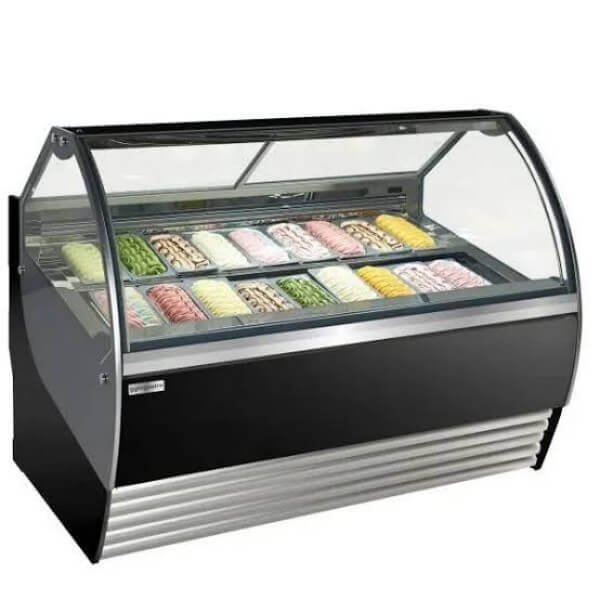
Texture can determine whether an ice cream shop succeeds or struggles. If the ice cream is too cold, customers may have difficulty scooping it. If it is too warm, it can slump in the pan within minutes. Scooping cabinets in display freezers are usually kept between -14°C and -12°C, while pre-packaged ice cream is stored at -22°C to -18°C.
Operators who remain in this narrow range consistently report quicker service, reduced product waste, and greater customer satisfaction. The rest of the article examines the significance of these figures and explains how to achieve them consistently.
Why Temperature Controls Texture
Ice cream consists of ice crystals, fat globules, air, and sugar syrup held in a frozen mixture. Its temperature controls the amount of water that remains frozen. At -18°C, roughly 90% of the water turns to ice, leaving the dessert as a hard block. Warm it to -13°C, though, and only about 72% remains frozen. That is what gives ice cream the soft, creamy texture that makes scooping easy.
Working in gelato bars and scoop shops makes one point hard to miss: changing the temperature by two degrees can affect the customer’s experience. For professional operators, the display cabinet is a precision instrument, not simply a cold storage space.
Recommended Ranges by Product Type
Different frozen desserts are served best at different temperatures. The table below shows industry-tested ranges used in successful retail operations.
| Product Type | Ideal Display Temperature | Best Cabinet Style |
| Hard-pack ice cream | -14°C to -12°C | Scooping ice cream freezer display |
| Italian gelato | -14°C to -11°C | Ventilated pozzetti or pan display |
| Sorbet | -15°C to -13°C | Standard scooping cabinet |
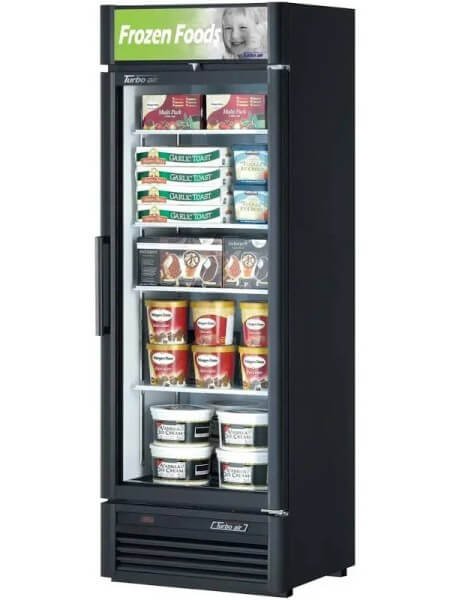
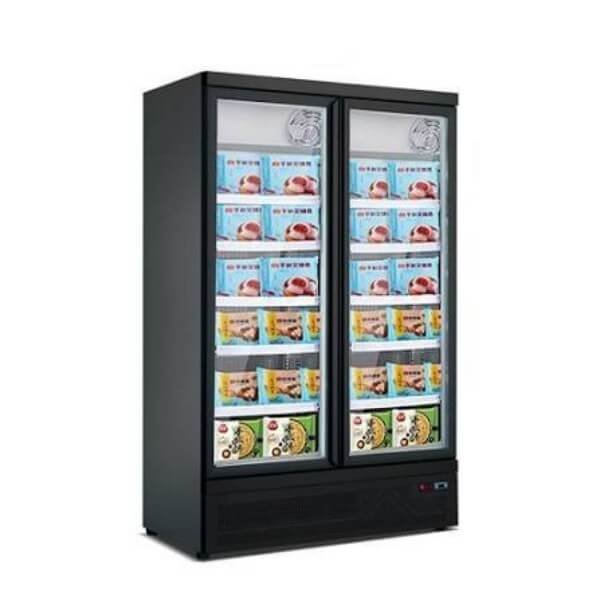
| Pre-packaged pints | -22°C to -18°C | Commercial Upright Freezer |
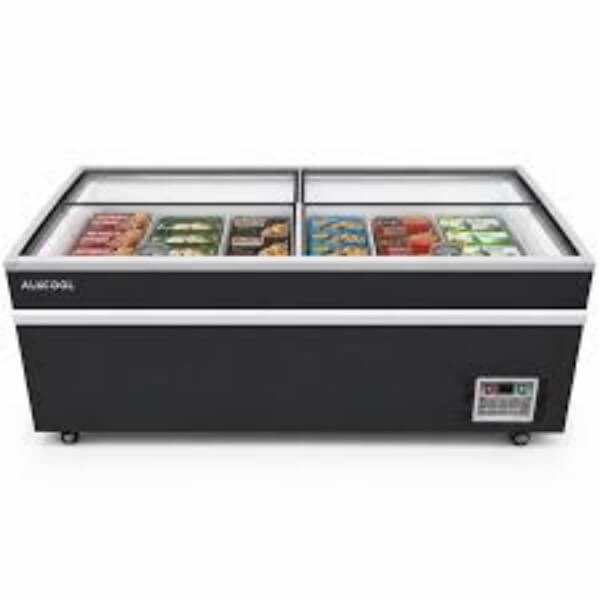
| Novelty bars and cones | -20°C to -18°C | Chest Ice Cream Freezers |
| Soft-serve mix (frozen backup) | -18°C | Reach-in freezer |
Serving temperature is not the same as storage temperature. When retailers treat the two as interchangeable, they risk compromising texture or safety. On the sales floor, a dedicated Display Freezer should be paired with a separate holding unit in the back so each function remains distinct.
Factors That Push Temperature Out of Range
Even a properly specified cabinet can drift during normal operation. In day-to-day use, several causes appear repeatedly.
Ambient Store Conditions
High summer humidity forces the compressor to work harder. In a store maintained at 26°C with little airflow, a display cabinet may operate two to three degrees above its setpoint.
Product Overloading
Stacking pans above the load line restricts cold-air circulation. The top layer softens while the bottom stays rock hard, which affects service speed and product uniformity.
Frequent Lid Openings
Opening the lid lets cold air out. During busy weekends, the internal temperature may rise by 4°C or more if staff leave the sliding covers open between scoops.
Defrost Cycles
During automatic defrost, the evaporator temperature rises temporarily. Scheduling the cycle for closed hours helps avoid noticeable product softening during peak trading.
Practical Ways to Maintain the Right Temperature
Retailers that reliably achieve the intended texture usually stick to a routine. The same measures apply in scoop shops, cafés, and supermarket concessions.
- Check the thermometer against an independent probe once a month
- Record cabinet temperatures three times each day
- Move pans from back to front to help them freeze evenly
- Fully close the sliding lids after every scoop
- Schedule defrost cycles only during off-hours
- Keep pans at least 80% full to maintain a stable cold mass
Digital data loggers paired with cloud alerts have become standard for serious operators. They catch overnight drift before the morning service begins and keep records that may support both HACCP compliance and warranty claims.
Matching Equipment to Product Strategy
The cabinet you select sets the limits of its temperature control. Even careful staff routines can be undermined by an undersized compressor, thin insulation, or single-pane glass.
Scoop shops offering premium hard-pack ice cream may benefit from ventilated display cabinets rated to -14°C in a 30°C ambient environment. For supermarkets stocking packaged pints, a Commercial Upright Freezer that can maintain a stable -20°C is the better choice.
Kiosks and other high-impulse locations are often better suited to chest-style Ice Cream Freezers because they retain cold air despite frequent opening.
Selecting the right format when purchasing is much less expensive than dealing with texture complaints for years afterward. Reputable suppliers publish pull-down curves and hold-time data, and buyers should insist on reviewing both.
Reading the Product, Not Just the Thermometer
Experienced operators trust the scoop, not just the digital readout. As it moves through the ice cream, a little resistance followed by a clean curl signals the right temperature. If the scoop drags, or the ice cream slides off in a smooth crescent that will not keep its shape, an adjustment is needed.
This hands-on understanding separates good ice cream retailers from exceptional ones. Instruments provide measurements; experience tells you what they mean.
FAQ
What temperature should a scooping cabinet run at during business hours?
Most hard-pack ice cream is easiest to scoop between -14°C and -12°C. Gelato should be held slightly warmer, closer to -12°C, for its characteristic soft texture.
Can one cabinet handle both storage and display effectively?
Rarely. The product needs to stay at -20°C for its full shelf life, while scooping requires -13°C. Using a single temperature for both purposes can affect the texture or stability of the product.
How often should temperature calibration happen in a busy shop?
Compare it with an independent thermometer once a month, and record its readings daily. After servicing or moving the thermometer, recalibrate it immediately. Do the same if unexplained texture complaints arise.