
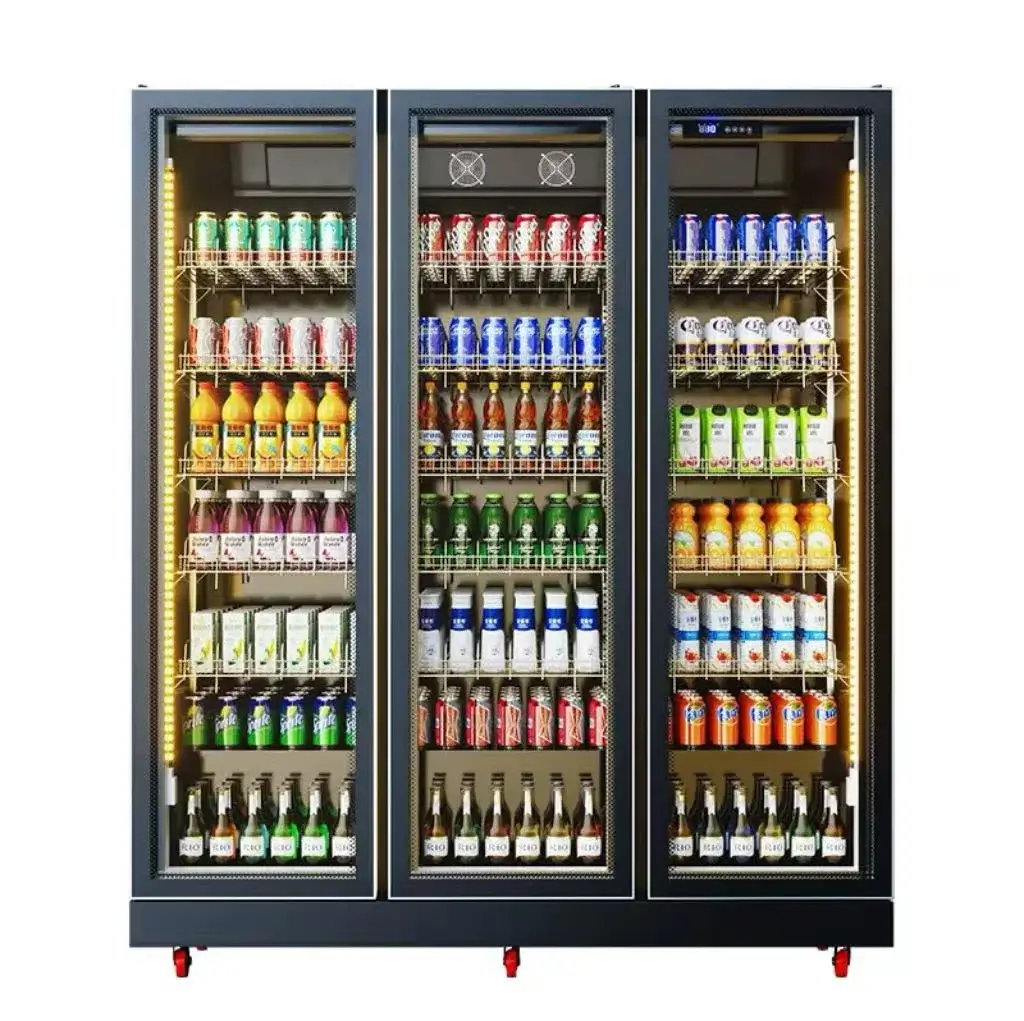
Why the Compressor Decision Matters More Than Most Buyers Realize
At the heart of any commercial drink refrigerator sits the compressor. Overlooking its condition or suitability may lead to higher electricity bills and repair costs later on. Field observations over several years indicate that roughly 70% of premature cooling failures stem from compressor mismatches, not user error. A café with 300 bottle openings each day places very different demands on its refrigerator than a boutique wine shop with steady, quiet turnover.
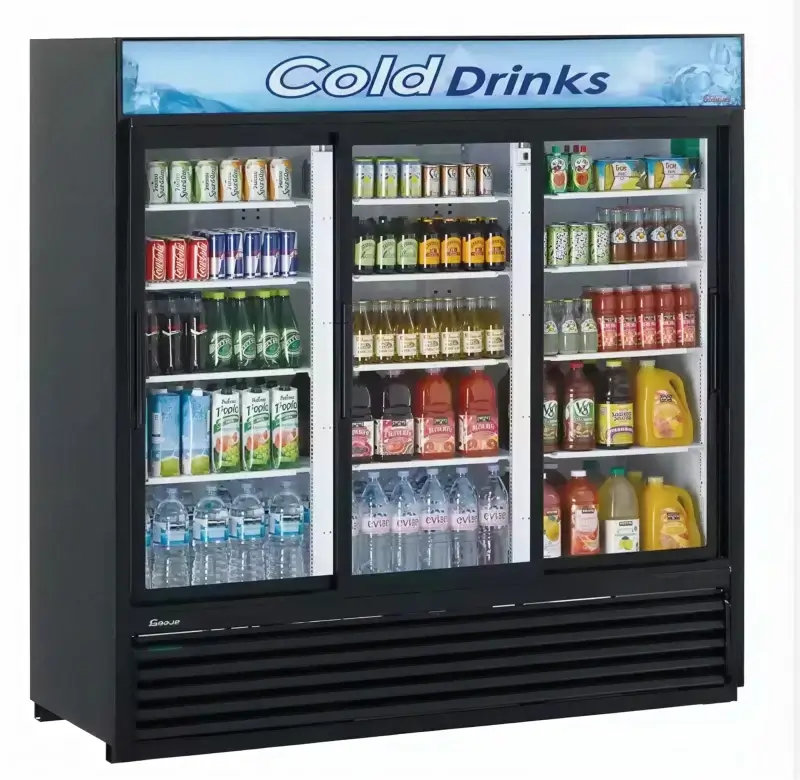
Choosing correctly starts with three questions: How demanding is the workload? What are the surrounding conditions? And how much noise can the space tolerate? Once those are clear, the most suitable compressor type is often easy to identify.
The Four Compressor Types Worth Considering
A compressor that works for one application may be a poor choice for another. In commercial drink refrigerators, operators usually encounter four main types, each offering different advantages.
Reciprocating Compressors
These remain the industry’s workhorses. They handle frequent door openings well and can cope with warm kitchen conditions. Noise is the main drawback, so they are less suitable for dining rooms occupied by customers.
Rotary Compressors
At partial loads, rotary units run more quietly and consume less energy. That balance of performance and cost is why many mid-range beverage refrigerators use them. Above 38°C ambient, though, their limitations become apparent.
Inverter Compressors
Inverter technology adjusts its speed to match cooling demand, rather than cycling on and off over and over. For restaurants that serve craft sodas or kombucha, this helps maintain steadier temperatures with fewer fluctuations. Energy savings often reach 30-40% compared with fixed-speed alternatives.
Thermoelectric Systems
These systems are not compressors in the technical sense, but they are still worth mentioning. Thermoelectric cooling is well suited to small wine coolers, where keeping vibration low helps prevent sediment in aged bottles from being disturbed. Once the unit holds more than roughly 50 bottles, however, its performance becomes an issue.
Compressor Comparison at a Glance
The table below summarizes performance patterns observed in mainstream commercial installations:
| Compressor Type | Best Use Case | Noise Level | Energy Efficiency | Typical Lifespan |
| Reciprocating | High-traffic bars, kitchens | 55-65 dB | Moderate | 8-10 years |
| Rotary | Convenience stores, cafés | 45-55 dB | Good | 7-9 years |
| Inverter | Premium retail, restaurants | 40-50 dB | Excellent | 10-12 years |
| Thermoelectric | Small wine displays | 30-40 dB | Fair (small units only) | 5-7 years |
Matching Compressor Type to a Business Scenario
The comparison indicates which compressor suits each type of operating environment.
High-Volume Beverage Service
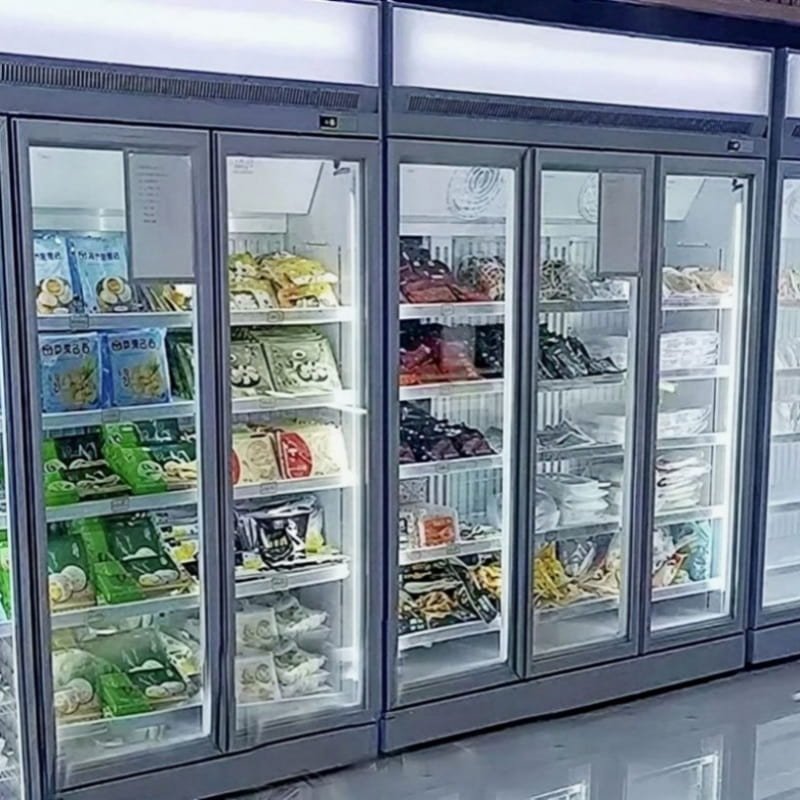
For bars, quick-service restaurants, and stadium concession stands, durability comes first. A commercial glass-door refrigerator operating from opening through closing generally requires a reciprocating compressor or a heavy-duty inverter model. Since the doors may open repeatedly throughout the day, sharp increases in heat load are unavoidable; lighter compressors can struggle under those conditions.
Retail Display Environments
Convenience stores and supermarkets need good visibility and consistent lighting, but reliable cooling matters just as much. Inverter compressors fit these environments well because they maintain stable temperatures, even when customers leave a door open while choosing what to purchase. Once stores replace fixed-speed units with inverter models, claims for spoiled products decline noticeably.
Wine and Specialty Beverage Storage
Wine requires a stable temperature, kept within ±1°C, along with minimal vibration. Above 40 bottles, compressor units with rubber-mounted assemblies, or dedicated dual-zone inverter systems, generally outperform thermoelectric models. For that reason, serious collectors and restaurants carrying extensive wine lists usually opt for compressors.
Factors Buyers Often Overlook
The compressor category matters, but it is only one part of what determines long-term satisfaction:
- Refrigerant type: R290 and R600a hydrocarbons are more efficient and have less environmental impact than older R404A systems.
- Ambient climate class: Units rated for climate class 4 or 5 can handle warmer back-of-house conditions without cycling too frequently.
- Serviceability: Front-breathing designs can be placed closer to the wall, while also making coil cleaning easier.
- Warranty coverage: A compressor warranty of five years or longer can indicate that the manufacturer has confidence in the unit.
Ignoring these details often leads to buyer’s remorse within the first two years of ownership.
A Practical Selection Framework
When evaluating a commercial drink refrigerator, operators can follow this simplified decision path:
- Begin by tracking how frequently the door is opened each day and noting the highest ambient temperature.
- Then assess how sensitive the installation area is to noise.
- Set a realistic five-year budget for energy consumption instead of looking only at the upfront cost.
- Before signing, verify the refrigerant type and warranty terms. Confirm as well that replacement parts are available and that local service is covered.
Sticking with these steps consistently yields better results than making choices based solely on price.
Final Perspective
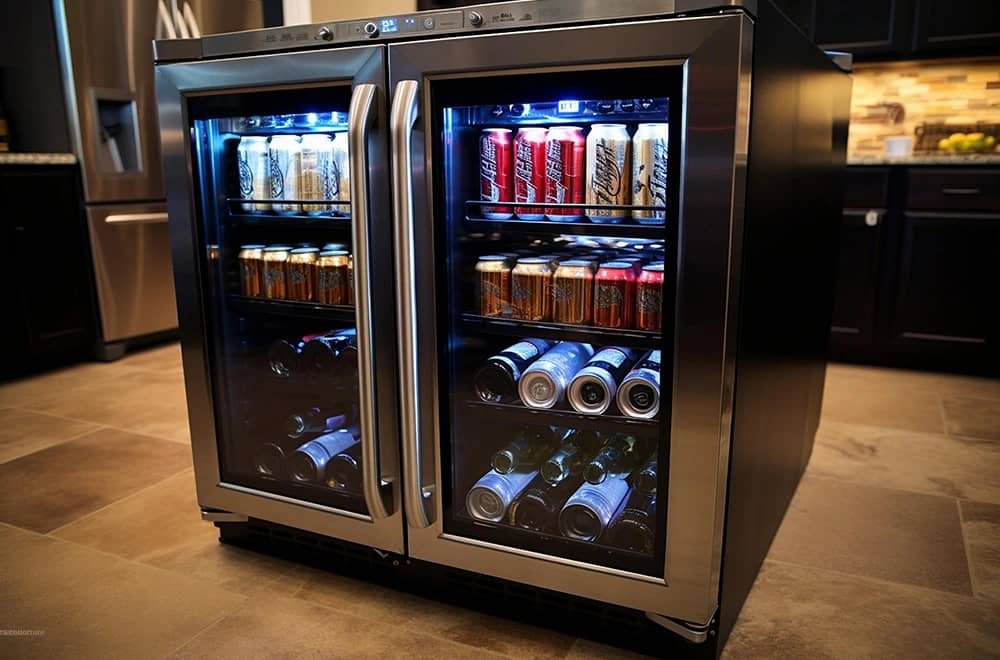
Compressor selection depends on how a business plans to use its cooling equipment. The right technology for those daily demands can reduce energy costs, keep dining areas quieter, and limit emergency repair calls. A craft-beverage cooler, premium wine display, and busy grab-and-go counter each place different demands on the system. That makes the compressor worth more careful consideration than it usually receives.
FAQ
How often should a commercial compressor be serviced?
A professional inspection twice yearly helps compressors run efficiently. In busy settings, quarterly coil cleaning prevents overheating and can considerably extend a compressor’s lifespan.
Can an inverter compressor replace a failed fixed-speed unit?
Usually, not as a direct substitute—the control boards are different. Over time, replacing the entire cooling assembly or upgrading the cabinet is generally more cost-effective.
Which compressor works well for an outdoor beverage station?
A reciprocating model with a climate class 5 rating is designed to cope with high heat and humidity. The unit should also have suitable IP protection to keep out dust and moisture.