
The Commercial Upright Freezer can shape a kitchen or retail operation’s daily rhythm. When the fit is wrong, staff end up working around it: forcing products into cramped stacks, reopening the door, or discarding stock when the temperature wanders. A suitable unit stays out of the way, protecting thousands of dollars in inventory at safe temperatures while work carries on. The specifications may look similar on paper, but the difference shows up every shift.
Most buyers start by comparing freezer capacity and price. Experienced operators ask different questions first: What will they sell, how many customers will pass through, and how much room do they have? Those answers point to the right equipment. This article examines that approach, covers the main freezer formats, and looks at the ownership details that become clear after the first year.


Why Upright Freezers Earn Their Place in Commercial Kitchens
Uprights cost more but save time with visible, grab-ready products
Chest freezers cost less per unit of storage and use less energy for each cubic foot. On paper, they look like the clear winner. Commercial operators usually choose uprights anyway: staff can spot and grab products without digging through layers of stacked bags. When that happens hundreds of times a day, the time savings become significant. Kitchens, stores, and foodservice businesses therefore keep choosing upright freezers.
The Core Advantages Upright Models Offer
A well-chosen Commercial Upright Freezer cuts down on staff time and helps keep food at the proper quality. Its shelves separate product categories, making stock counts faster and reducing the chance of cross-contamination during handling.
Items are quicker to locate, so the door does not stay open as long. That helps preserve the internal temperature and keeps energy use down.
With a standardized footprint, the unit fits common commercial kitchen layouts without creating awkward clearance issues.
Compared with chest freezers, upright models put less strain on staff because workers do not have to bend and reach as often. Cleaning is easier, too; the interior stays visible and accessible without forcing anyone to remove everything.
That mix helps explain why upright freezers remain dominant in back-of-house operations, even though chest freezers usually cost less upfront. Once staff time and spoiled or lost product enter the calculation, the savings can shrink fast.
Understanding the Main Configurations
Choosing an upright freezer is not always straightforward. Start with three practical questions: How much room is available? How much food needs to be stored? And how quickly do staff need to reach it?
| Configuration | Best Use Case | Typical Capacity | Access Style |
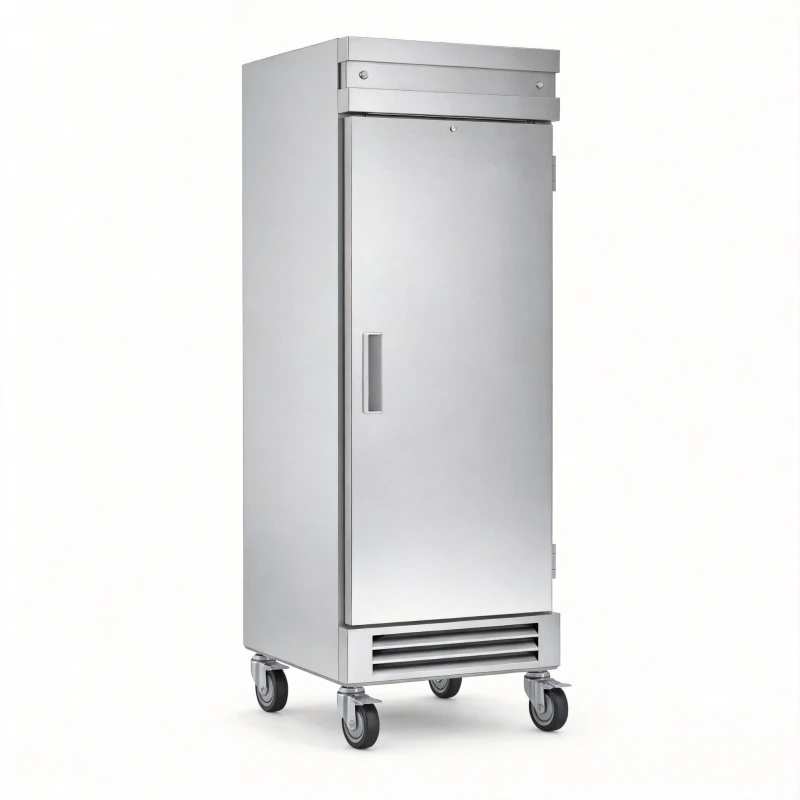
| Single Door Upright | Works well in small kitchens, cafés, or as backup storage | 20 to 30 cubic feet | Available with a solid or glass door |
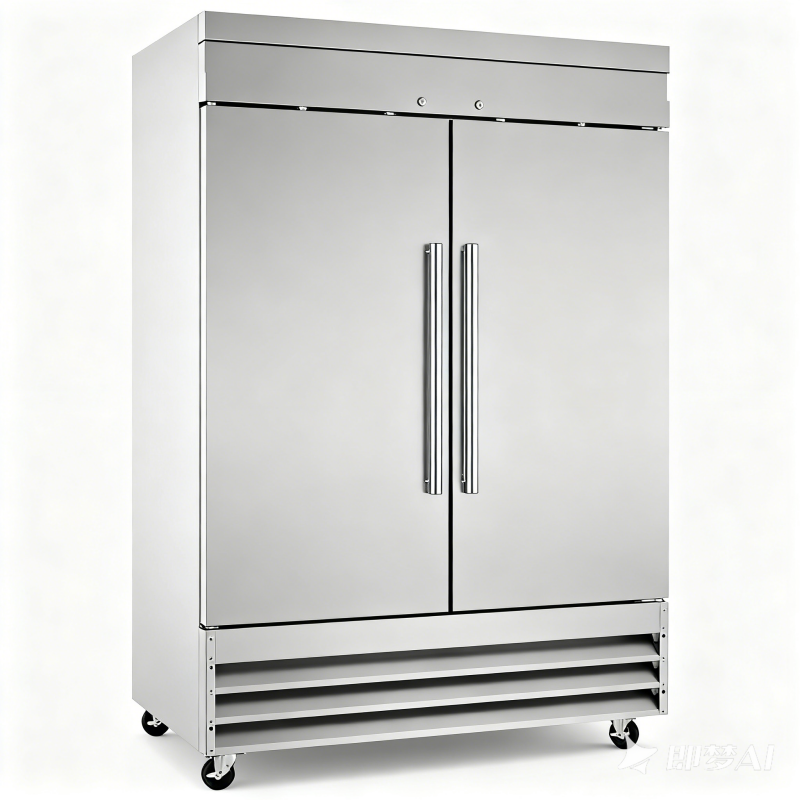
| Double Door Upright | Suited to kitchens handling moderate to high volumes | 40 to 55 cubic feet | Two full-height doors |
| Triple Door Upright | Built for high-volume production kitchens | 60 to 80 cubic feet | Three full-height doors |
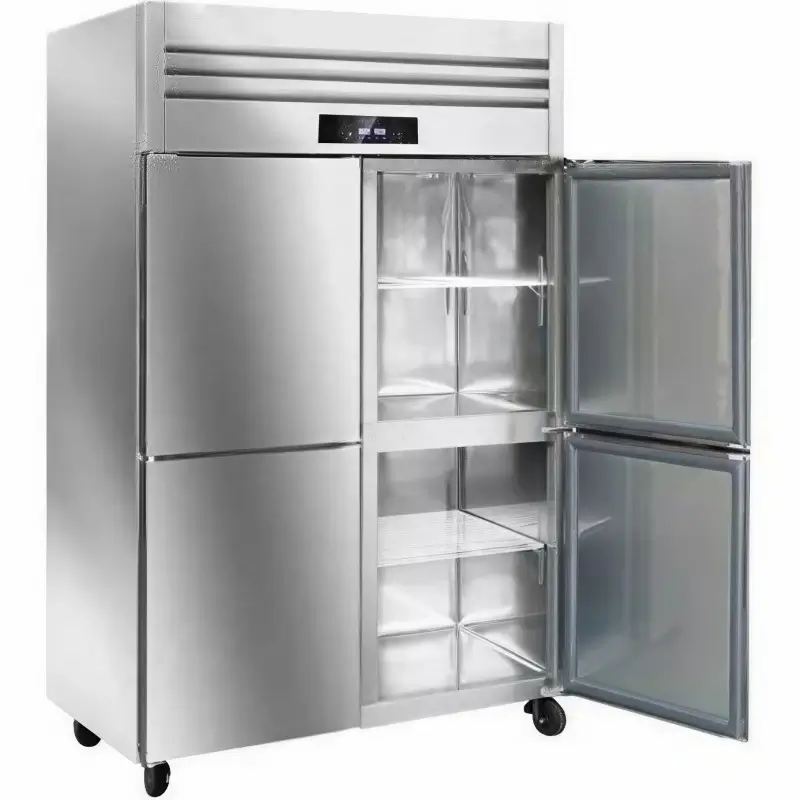
| Half-Door Upright | A practical choice for stations that need frequent access | Varies | Several smaller doors |
| Roll-In Upright | Common in bakeries and catering operations | Varies | Full-height opening for rolling racks |
Short on space? A Single Door Upright Freezer fits neatly into a café, small restaurant, convenience store, or back-of-house area as extra storage, with frozen goods always close at hand.
Once frozen stock no longer fits in one freezer, a Double Door Upright Freezer is often the practical choice. It gives restaurants, hotel kitchens, and mid-sized retailers more room without taking up twice the floor space. Separate compartments make storage easier, too: staff can open one door while the other remains shut, limiting temperature loss.
At frequently used stations, a split door lets staff open only the top or bottom section. Less cold air escapes during a busy shift, though the design takes away some interior space. In high-traffic operations, the energy savings can justify that compromise.
Solid Doors vs Glass Doors
Door material affects both energy consumption and visibility. Solid doors generally insulate better and cost less, making them a practical choice for back-of-house storage. Glass uses more energy, but seeing the contents can justify it in retail settings or when staff need to check inside without opening the unit.
Where the unit sits makes the difference. Glass doors rarely help in a kitchen prep area, where staff already know the contents and open the refrigerator for a particular item. On a retail floor or self-service station, though, customers can scan their choices at once. That can speed up decisions and encourage impulse purchases enough to justify the added cost.
Capacity Planning Grounded in Real Operations
Real turnover +20–25%, 70–85% full
Capacity mistakes cost money from both directions. Go too small, and staff must restock mid-shift or squeeze extra product into storage that was never meant for it. Go too large, and the unit takes up floor space, uses more energy, and ties up funds that could be earning a better return elsewhere.
Start the capacity audit by examining actual product movement, not the manufacturer’s promises. Operators should record the relevant figures before making a purchase. During the busiest service periods, count how often the frozen inventory turns over each day.
Start with twice the volume handled on the busiest day. Add 20–25 percent more for seasonal spikes, delivery delays, and menu changes. Measure the final figure in shelf space, not cubic feet, since irregular packaging can make much of that volume unusable.
Select a unit where working inventory occupies 70 to 85 percent of realistic capacity.
The 70 to 85 percent target is there for a reason. A packed freezer cannot circulate air well, so the compressor works harder, and some areas may become warmer or colder than others. Leaving it mostly empty, and it wastes energy cooling unused space. Staying within that range keeps the unit efficient while leaving enough room for everyday use.
When to Split Capacity Across Multiple Units
A single large freezer may save space, but a breakdown could put the entire frozen inventory at risk. Using two smaller units—such as a Double Door Upright Freezer alongside a Single Door Upright Freezer—provides a practical backup and simplifies stock management. Staff can divide products by type, store expensive items separately, and keep working if one freezer needs servicing.
Pairing Freezers with Refrigeration in the Workflow
When you choose a freezer, you also need to plan for the refrigerator beside it. In a kitchen or shop, both appliances draw from the same available space and electrical supply, so they must work together reliably.
A Commercial Reach In Refrigerator typically sits next to the freezer in a back-of-house kitchen, letting staff shift between chilled and frozen storage as they prepare food. Ordering units from the same brand and in compatible sizes makes daily service easier, keeps the controls familiar, and creates a cleaner-looking setup. When outfitting a complete kitchen, operators usually buy both at once rather than sourcing refrigeration and freezing equipment separately.

Zoning the Kitchen for Efficiency
Where you put the refrigerator or freezer affects both preparation time and energy consumption. Commercial kitchens generally follow a few straightforward placement rules.
Keep freezers clear of ovens, fryers, steam tables, and other equipment that gives off heat.
If you have the room, install the freezer and refrigerator side by side. Servicing becomes easier, and the appliances can share ventilation. Keep the required clearance above and behind both units so air can move freely; check the manufacturer’s specifications for exact measurements.
Place the equipment staff uses most beside the prep stations. Keep reserve and bulk-storage units farther back, out of the main work area. Over thousands of shifts, those small decisions can shorten service time, lower electricity costs, and extend equipment life.
Why Matching Brands and Models Simplifies Operations
Selecting a freezer and refrigerator from the same manufacturer and product line reduces operational friction in multiple ways. Standardized control panels mean staff only need to learn one interface, cutting down on training time and the risk of accidental temperature misadjustments. Matching units also share identical dimensions and ventilation requirements, making it easier to fit them into tight kitchen layouts without custom modifications. From a maintenance standpoint, using a single brand often allows for consolidated service contracts, bulk replacement parts, and faster technician response times, ultimately minimizing costly equipment downtime.
Energy Efficiency and Long-Term Operating Costs
Commercial freezers operate nonstop, which can turn electricity into one of the highest costs people overlook when buying them. Two models with the same price tag may still differ by hundreds of dollars a year in energy bills, and over a decade, that gap can account for a sizable portion of ownership costs.
Design Features That Control Energy Use
Energy efficiency comes from the refrigerator’s overall design, not a single specification. Checking those details before buying can lower electricity costs, since the appliance will not need to run as hard.
Thick insulation keeps the cold air in, so the compressor does not have to run as often. The variable-speed compressor adjusts its output to the refrigerator’s needs rather than repeatedly operating at full power. LED lights add little heat and consume very little electricity.
The freezer defrosts on a set schedule, cutting unnecessary power use without causing big temperature swings.
Its tight door gasket holds the cold air inside.
Front ventilation means it can sit without extra clearance at the back.
Most ENERGY STAR-rated models incorporate these features. The rating points to engineering that can cut monthly utility bills, not just a label added for sales appeal. Although efficient units often cost more upfront, operators who account for total ownership costs typically recover that difference within three to five years—and faster in areas with high electricity rates.
The Hidden Cost of Underbuilt Units
Budget freezers can resemble high-end models in the specifications, yet savings often come from thinner insulation, cheaper compressors, or weaker door gaskets. They may work harder, fail sooner, and consume more electricity each year. Once buyers factor in repairs and operating costs, mid-range or premium brands usually make more sense—the initial discount is often gone within two years.
Durability and What Signals Commercial-Grade Construction
Commercial kitchens put equipment through constant abuse. Freezer doors may swing open hundreds of times each day, temperatures can change quickly, and regular cleaning may expose the unit to harsh chemicals. Commercial-grade equipment is built to take that treatment; household models generally are not, so they often fail sooner when used in a professional kitchen.
Features That Separate Commercial-Grade Units
Construction tells you a lot about whether a freezer can handle daily commercial work or was simply modified for it. A close inspection can prevent the failures buyers encounter most often.
Stainless steel resists corrosion on both the interior and exterior, including after spills and repeated exposure to cleaning chemicals.
Heavy-duty self-closing hinges withstand thousands of openings.
Replaceable magnetic gaskets cost less to service than glued-in versions.
Digital temperature controls alert staff when cooling stops, giving them time to protect the product.
On uneven kitchen floors, casters or leveling legs keep the unit steady.
Accessible refrigeration components let technicians make repairs without dismantling the entire unit.
A well-built Commercial Upright Freezer can run for eight to twelve years in a busy kitchen. Consumer models subjected to that same workload often last only two or three years, while their warranties rarely cover damage after commercial use begins.
Warranty Terms That Signal Quality
Warranty coverage offers a practical hint about the lifespan a manufacturer expects from its equipment. A one-year parts warranty might signal concern about early failures. By contrast, three years of parts coverage paired with five years on the compressor suggests greater confidence in the design. When comparable models are difficult to distinguish, the warranty may settle the choice; longer protection often reveals more about the engineering than the marketing does.
The Bigger Picture on Freezer Selection
A Commercial Upright Freezer should match the business’s available space, daily workload, energy needs, and durability requirements. Small cafés often manage well with a compact single-door model; busier restaurants may need a double-door freezer for more capacity and easier separation of products. Large production kitchens might require several units, with a matching Commercial Reach In Refrigerator nearby to create an organized cold-storage area.
Look first at how much you produce and how the work moves through the operation. The right unit can pay for itself. Buying the cheapest model may backfire; replacing it after only a few years, along with losses from spoiled inventory, can cost far more. Take your time and run the numbers.
A freezer choice shapes the entire kitchen. The right one uses less energy, keeps work running smoothly, and holds up under years of demanding use; the wrong one wastes power and creates small daily problems that add up for the business.
Frequently Asked Questions
How much clearance does a commercial upright freezer need?
Most models need roughly two to three inches of open space along the sides and top for proper airflow. Front-venting units are different: they can sit flush against the wall, saving valuable kitchen space.
Can one upright freezer handle both frozen storage and ice cream display?
Usually not. Storage models prioritize colder temperatures and maximum capacity, while display freezers keep food visible at somewhat higher temperatures. Separate units generally handle these jobs better.
What is the typical lifespan of a commercial upright freezer in a busy restaurant?
A well-built freezer typically lasts eight to twelve years, although constant restaurant use can shorten that span. Regular condenser cleaning and timely replacement of worn door gaskets may help it last closer to twelve years.