
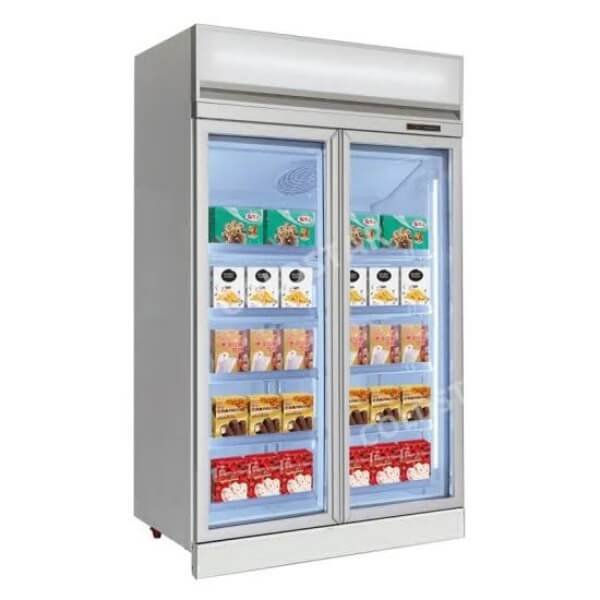
Presentation matters in frozen-food sales. Products placed in clear view are more likely to catch a shopper’s attention and prompt an impulse purchase. A Display Freezer must keep food at the right temperature, but it also needs to present that stock effectively. This applies to retail stores, convenience chains, ice cream parlors, and butcher shops alike, where the freezer’s design can affect how much revenue each square foot generates.
Most buyers look at price or energy ratings first. That can be misleading. The better starting point is the product mix: which format fits it, how much capacity the site needs, and how much stock customers should be able to see. Once those decisions are made, the equipment shortlist narrows quickly. This article shows how experienced operators make the choice, compares the main formats, and examines the problems that often appear after the first year.
Why Display Freezers Deserve Strategic Attention
Frozen goods hidden in a back-room chest freezer rarely prompt an unplanned purchase. The product may stay safe, but shoppers hardly see it. Move those items into a glass-front upright freezer beside the checkout, and customers have a reason to consider buying them. Over thousands of transactions, that change can add up. For retailers, the display freezer earns its place through sales—not storage capacity alone.
The Core Functions a Display Freezer Must Deliver
A commercial display freezer has four basic responsibilities. When one fails, products may suffer, and operating costs can rise.
Temperature stability. Frozen goods should remain at a consistent -10 to 0 degrees Fahrenheit. Repeated temperature swings cause frost to build up and can ruin the product’s texture.
Product visibility. Clear glass, bright interior lighting, and orderly shelves let customers see what is inside without opening the door. That keeps cold air in, protects the set temperature, and speeds up selection.
Energy efficiency. Freezers run continuously and typically use more electricity than refrigerators. An efficient model can cut utility costs considerably over its service life.
Made for constant use. In a busy shop, a door might swing open hundreds of times each day. Weak hinges, tired seals, and undersized compressors won’t last.
Checking the equipment against those four points usually makes the weak link—and the reason for its poor performance—clear. It also gives operators a practical basis for choosing replacement equipment that suits their teams’ daily work.
Understanding the Main Display Freezer Formats
Frozen products need different display setups. Ice cream shops require an open view from above and precise portion control. Butchers are better served by upright cases that feel like standard retail refrigerators, while convenience stores need maximum product capacity in limited space. The best freezer depends on the store.
| Format | Best Use Case | Typical Placement | Visibility Style |
| Commercial Upright Freezer | Displays products vertically on retail floors or near checkout lanes | Retail floors, checkout lanes | Front glass doors |
| Island Freezer | Holds large quantities for bulk displays in center aisles or warehouse clubs | Center aisles, warehouse clubs | Top glass lids |
| Single-door display freezer | Fits compact retail spaces such as cafés, small shops, and kiosks | Cafés, small shops, kiosks | Front glass door |
| Curved-glass display freezer | Presents premium products in ice cream shops or at butcher counters | Ice cream shops, butcher counters | Curved front pane |
| Chest freezer | Bulk backup storage | Back rooms, storage areas | Solid or glass lid on top |
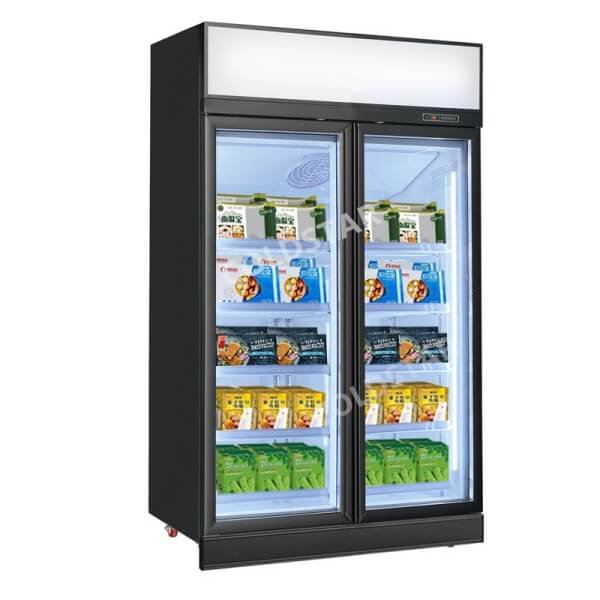
When floor space is limited, building upward can make a Commercial Upright Freezer the practical choice. Its glass doors keep products at eye level, so customers can browse it like an ordinary refrigerator. Adjustable shelves fit packages of different sizes, making this format popular with grocery stores, convenience chains, and foodservice operations that need visible, flexible storage.


In a crowded store, an Island Freezer puts frozen products within easy view and reach. Shoppers lift the sliding glass lids from above, which lets less cold air escape than upright doors do—especially helpful when the freezer is opened again and again. Warehouse clubs, supermarkets, and large convenience stores often use this design for ice cream, frozen vegetables, and bulk protein. For a closer look at its advantages and drawbacks, see the guide to island display freezers.
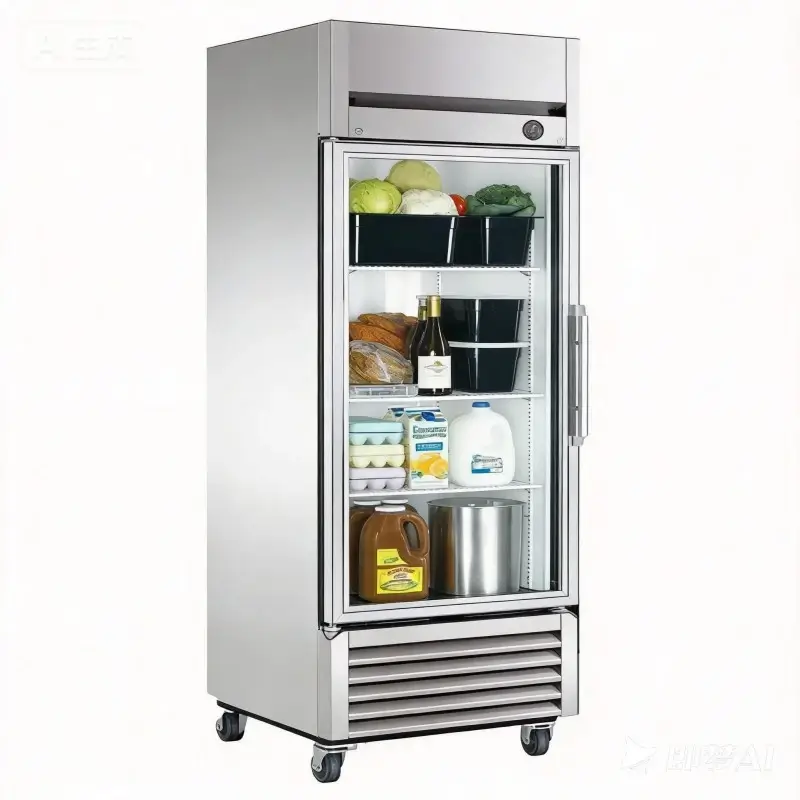
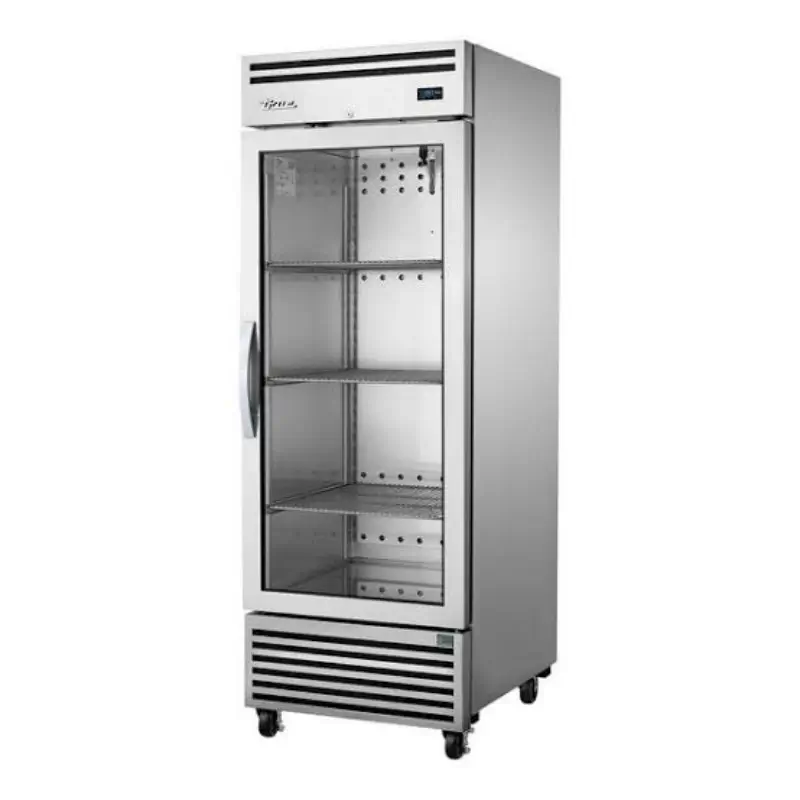
A Single Door Display Freezer helps small retailers show their products clearly without taking up the floor space of a larger upright unit. It suits cafés, boutique markets, ice cream shops, and kiosks where space is limited but merchandise still needs to catch attention. With just one door, it usually costs less to build and operate than a multi-door model, while keeping the contents easy to view.
When Curved Glass Makes the Most Sense
Curved-glass display freezers serve a specific purpose in shops where appearance matters almost as much as cooling performance. Ice cream parlors, gourmet butcher shops, and specialty frozen-dessert stores use them to present products attractively and give customers a reason to look around. The rounded glass draws the eye, and its shape keeps labels easy to read from different angles. For a more detailed discussion of visibility and merchandising, operators can read the article on why curved glass works well for meat displays.
Capacity Planning Without Overbuying or Underbuying
Capacity mistakes tend to take two forms. If a unit is undersized, employees must restock it during service, which disrupts the shift and can expose food to unsafe temperatures. An oversized unit brings its own costs: it occupies valuable floor space, consumes more power, and ties up money that might have earned a better return elsewhere.
Start with real sales, not the freezer’s advertised size. For one or two weeks, record the daily movement of every frozen SKU on both busy and quiet days. Take the highest daily volume, double it for operating room, then add 20 percent for seasonal surges, new products, or late deliveries. Compare that figure with the number of units each freezer can realistically hold.
Select a format where the operating total utilizes 70 to 85 percent of the rated capacity.
Manufacturer capacity figures can be misleading. A freezer labeled for 200 pints of ice cream generally assumes identical containers arranged tightly, with no wasted space. Real retail inventory is less tidy; unusual packaging, novelty items, and promotional displays reduce the room available for saleable stock. Retailers should ask manufacturers to estimate capacity based on the store’s actual product mix rather than relying on the advertised figure alone. Ice cream shops can also use the display freezer sizing guide for retail counters as a planning reference.
How to Account for Real-World Product Mix in Capacity Estimates
Manufacturer capacity ratings often assume ideal conditions, but real-world inventory is rarely so uniform. Unusual packaging shapes, novelty items, and promotional displays all reduce usable space, meaning the actual number of units you can store is often lower than advertised. To avoid overestimating capacity, retailers should provide manufacturers with details about their specific product mix and request a customized capacity estimate. This ensures the selected unit can accommodate the store’s actual inventory without requiring constant restocking or leaving valuable space unused.
Balancing Display Space and Backup Storage
Put fast-selling products in the front display. Store slow movers and surplus stock in a less expensive chest freezer or walk-in unit. Many operators use both—a Display Freezer near the checkout for customers and a chest freezer in the back for storage. This keeps the sales floor neat while limiting costs.
Energy Efficiency and Long-Term Operating Costs
A freezer never gets a day off, so its power consumption can quietly become one of the purchase’s highest ongoing costs. Two models with the same price tag might differ by hundreds of dollars in annual electricity expenses, and over ten years, that gap can account for a significant portion of the total cost.
Design Choices That Shape Energy Use
Energy efficiency comes from the way several parts are designed, not from one specification alone. Buyers who examine these details generally pay less for utilities.
LED lighting uses less electricity than fluorescent tubes and gives off less waste heat. Dense insulation in the walls and doors holds the interior temperature steady, reducing how often the compressor needs to run. Low-E coatings on the glass reduce heat transfer through the transparent panels.
Compressors can adjust their output to match demand rather than run at full power every time. At night, covering open-top island cases reduces heat entering the cases while the store is closed.
Defrosting can be scheduled to reduce energy waste and prevent sudden temperature swings in the product.
ENERGY STAR-rated models usually offer most or all of these features. The rating is based on measurable engineering gains rather than marketing alone, and those gains can lower monthly utility bills. Factoring in the full cost of ownership, operators generally recover the higher purchase price within three to five years—sometimes faster in areas with high electricity rates.
Where Budget Models Actually Cost More
Budget freezers often save money by using thinner insulation, cheaper compressors, or less effective door gaskets. On paper, their specifications can look much like those of premium models, yet they usually run more, break down sooner, and draw more electricity over time. Once lifetime costs are calculated, buyers often favor mid-range or premium brands because extra power and repair bills can wipe out the initial savings within two years.
Merchandising Strategy and Sales Impact
A display freezer is part of the sales floor, not just a place to store products. Put it where shoppers can see and reach it, then keep the contents organized; those choices can encourage additional purchases.
Lighting and Product Presentation
Lighting can shape the way customers move through a store. Bright, even LED light helps them read labels and distinguish colors, encouraging them to linger and sometimes buy something they had not planned on purchasing. Poor or uneven lighting has the reverse effect. When products are difficult to identify, shoppers may associate the lack of visibility with inferior quality, even if the merchandise is premium.
Shelf placement directly affects sales. Keep fast-moving SKUs at eye level, and give new or high-margin products the most visible space at the front. Slower sellers and backup stock belong lower down or toward the back. It’s a basic retail merchandising rule, but many operators overlook it in frozen displays, treating the freezer as storage rather than a sales tool.
Comparing Display Freezers to Chest Freezers for Sales
Chest freezers cost less and hold more, but items disappear beneath the pile. Customers must dig around to find what they want, and many lose interest before buying. Display freezers use more floor space for each product, yet sales are often higher because shoppers can see the selection right away. Retailers weighing the two options can find revenue estimates for typical store settings in “Display Freezers vs Chest Freezers and Which Sells More.”
Durability, Compressors, and the Details That Age Well
Commercial freezers endure constant abuse. Staff open the doors throughout the day, temperatures fluctuate, and regular cleaning wears down exposed surfaces. Units built for commercial work can handle those conditions, while household freezers used in shops often fail much earlier.
What Separates Commercial-Grade Units
The construction usually tells you whether a freezer is ready for daily commercial service. Inspecting those details before purchase can help avoid the breakdowns these machines most commonly suffer.
Choose compressor cooling; thermoelectric units perform poorly in high heat and after frequent door openings.
Front vents allow the units to sit flush with the wall while still releasing heat.
Stainless steel interiors hold up against spills and cleaning chemicals.
Heavy-duty hinges and closers can handle hundreds of daily openings.
Replaceable gaskets maintain a tight seal and cost less to replace than glued-in versions.
Digital temperature controls with alarms that alert staff to cooling failures before product spoils.
A well-built Commercial Upright Freezer or Island Freezer typically lasts eight to twelve years in a busy retail setting. Consumer models used under the same conditions often fail within two or three years, while their warranties rarely cover damage after commercial use begins.
Placement Affects Lifespan More Than Buyers Expect
Poor placement can shorten a freezer’s life. If it stands near an oven, in direct sunlight, or in a stuffy area, the compressor has to run longer to keep things cold. That drives up energy use and accelerates wear, so plan the store layout with care to protect the equipment and control operating costs.
The Bigger Picture on Display Freezer Selection
The right display freezer comes down to the shop’s layout, what it sells, how much product customers need to see, and how heavily the unit will be used. Ice cream stores usually do best with chest-style freezers, since staff can see the contents from above and serve portions easily. Butcher counters often need upright models that show off higher-value cuts. Convenience stores face a different constraint: fitting the most products into a small footprint. A freezer that suits one business may be a bad fit elsewhere.
Businesses that start by examining what they sell and how customers buy can choose equipment that recovers its cost. The cheapest option may seem appealing, but replacing it after only a few years can interrupt sales and add expense. A careful match between the machine and the business often proves worthwhile.
Choosing a Single Door Display Freezer or Island Freezer affects far more than storage. The right unit can help a shop sell more frozen products in the same space, cut wasted energy, and handle years of everyday use.

Frequently Asked Questions
How much floor space should I allocate for a commercial display freezer?
Allow roughly six to eight square feet for a single-door upright freezer, with enough clearance for the door to swing open. Island models need more room—typically about ten to twenty square feet, depending on capacity.
Can one display freezer hold ice cream and frozen meals?
Yes, as long as both products fit the freezer’s temperature range. Most commercial display freezers operate between 0 and -10 degrees Fahrenheit, which keeps ice cream and frozen meals in good condition.
What warranty should a commercial-grade display freezer have?
A sound commercial model usually covers parts and labor for at least two years. Compressor coverage often runs from three to five years; shorter terms can indicate that a consumer freezer has been adapted for commercial use.