
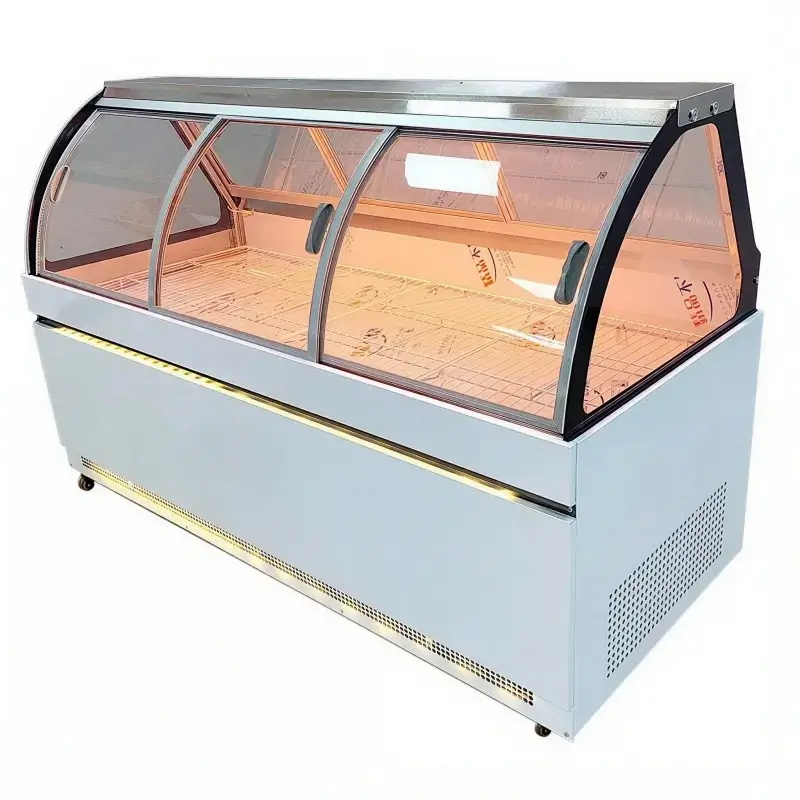
The right meat display refrigerator maintains safe temperatures, reduces moisture loss, presents products clearly, and accommodates the shop’s daily sales volume. When comparing models, butcher shops should consider refrigeration performance before appearance or price.
In practice, a sound purchasing decision considers more than the upfront price. The equipment’s total operating value matters too, including temperature recovery, energy use, cleaning requirements, compressor quality, warranty coverage, and access to replacement parts—all of which can influence profitability over time.

Why Regular Refrigerators Fail in Butcher Shops
A household refrigerator or ordinary storage cabinet may keep food cold, but it generally cannot meet the display, workload, and sanitation needs of a busy meat retailer. Built for commercial use, a Commercial Refrigerator is intended to perform more reliably under demanding business conditions.
Inconsistent Temperatures Risk Fresh Cuts
Every time a door opens, a product is restocked, or the room temperature changes, a cabinet’s performance can be affected. Standard refrigerators may need time to recover, creating warm spots that shorten shelf life and increase food-safety concerns.
Commercial meat cases must maintain temperatures within the limits established by local food regulations. Many fresh-meat applications operate at around 0–4°C, although the right setting depends on the product, packaging, cabinet design, and applicable standards.
Before purchasing, customers should look at temperature-uniformity data rather than trusting the thermostat range alone. Reliable manufacturers can provide technical specifications on temperature recovery and performance under realistic ambient conditions.
No Retail Display for Impulse Buys
Customers often judge freshness by appearance. Even high-quality cuts can seem less appealing if the lighting is poor, sightlines are obstructed, or the glass is fogged.
A dedicated display case makes the presentation stronger, with clear glass, appropriate lighting, and a service area that customers can reach easily. Curved glass lends the counter the familiar look of a traditional butcher shop, while straight glass appears more modern and fits more readily into streamlined store layouts.
Clear visibility can prompt impulse purchases, too. When customers can readily judge the marbling, color, portion size, and arrangement, decisions tend to come faster and with more confidence.
Insufficient Capacity for High Volume
On weekends, during holidays, and across promotional periods, small refrigerators can quickly become overcrowded. Overloading restricts airflow, produces uneven temperatures, and makes stock rotation more difficult.
An oversized cabinet has drawbacks of its own. It consumes valuable floor space, increases energy costs, and may leave the display looking poorly stocked. Buyers should compare usable display capacity with actual sales demand rather than relying only on the unit’s external dimensions.
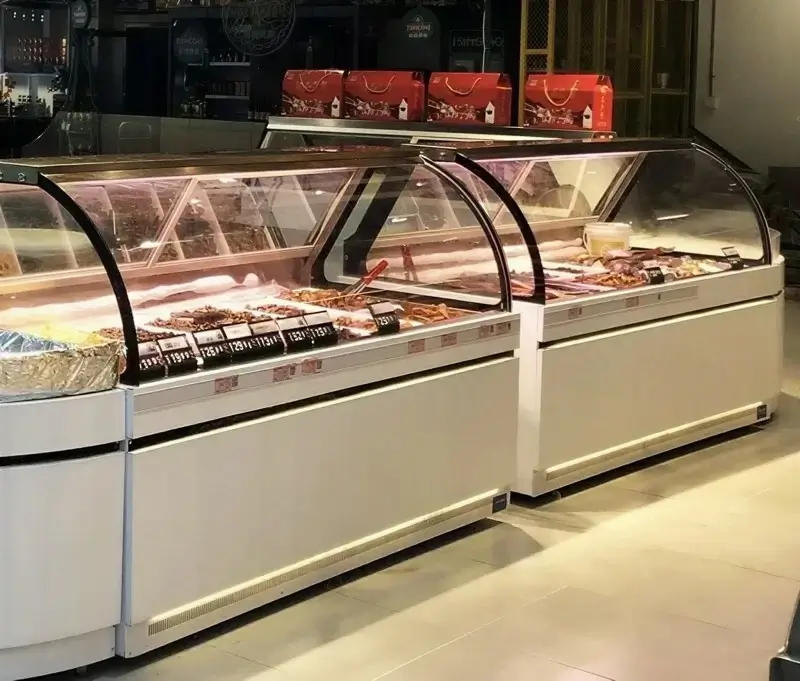
Core Features of Butcher Shop Display Fridges
A dependable Meat Display Refrigerator protects products, shows them attractively, stands up to demanding use, and stays easy to maintain day after day. Those are the features worth examining closely.
Humidity Control to Prevent Drying
If the cabinet air is too dry, fresh meat may lose weight and appear less attractive. The edges can darken, the surface may dry out, and unsold cuts can become harder to present.
Controlling humidity can slow this deterioration, particularly for unpackaged products. The appropriate level varies with the meat type, packaging, airflow, and intended storage time. Buyers should ask suppliers how their refrigeration systems preserve moisture without allowing condensation to build up.
The cabinet should also include:
●Steady airflow that keeps the meat from being exposed to excessive drafts
●Digital temperature controls with an easy-to-read display
●Defrost cycles that run automatically or can be managed manually
●Effective drainage for condensate
Humidity adjustment may also be included where appropriate
High-Visibility Glass to Showcase Quality
High-visibility glass allows customers to view the products without disturbing the refrigerated environment. Anti-fog performance becomes especially important in humid climates and in shops where temperatures shift frequently.
Lighting deserves the same attention. Neutral LED fixtures designed for food displays should make products easier to see without giving them an unnatural color. Because LEDs generate less heat than many traditional lamps, they may also lessen unnecessary demand on refrigeration.
The glass should open or lift without difficulty so it can be cleaned. Grease, fingerprints, and condensation can quickly spoil the display, which means staff need a safe way to reach and clean both sides.
Heavy-Duty Build for All-Day Use
Butcher shop equipment can operate continuously for years. With a durable construction, it is less likely to require service interruptions, and keeping it sanitary becomes easier.
Food-contact surfaces need corrosion-resistant materials that are easy to clean, such as appropriate grades of stainless steel. Features like removable trays, smoothly finished interior corners, accessible drainage points, and serviceable condenser areas can cut down the time required for cleaning.
The refrigeration system also needs to match the shop’s conditions. A cabinet beside cooking equipment or in direct sunlight carries a higher cooling load than one operating in a controlled room.
| Feature | What to Evaluate | Business Benefit |
| Temperature control | Consistency and recovery time | Protects safety and shelf life |
| Humidity management | Moisture retention and condensation | Helps limit drying and weight loss |
| Display glass | Product visibility and resistance to fogging | Improves presentation |
| Construction | Stainless steel and removable components | Makes cleaning easier |
| Compressor system | Climate rating and access for servicing | Supports dependable operation |
| Lighting | Low-heat, food-appropriate LEDs | Enhances products efficiently |
How to Choose the Right Size & Type
Choosing the right cabinet starts with a few practical considerations: sales volume, available space, service style, local climate, and the products being displayed. Before asking for quotations, shop owners should note these requirements.
Match Capacity with Daily Sales
Base the decision on average sales and demand during peak days rather than floor space by itself. Consider the quantities of packaged and unpackaged products, delivery frequency, and the number of stock rotations expected each day.
A practical sizing process begins with documenting normal and peak display volumes. Measure the installation area, doorways, and access routes as well, leaving sufficient clearance for ventilation and maintenance. Allow approximately 15–20% additional capacity for seasonal growth, while choosing a display depth that supports orderly stock rotation.
For inventory that will remain frozen for an extended period, a separate Meat Freezer may be appropriate. The display refrigerator, in contrast, should hold only the fresh products needed for efficient daily turnover.
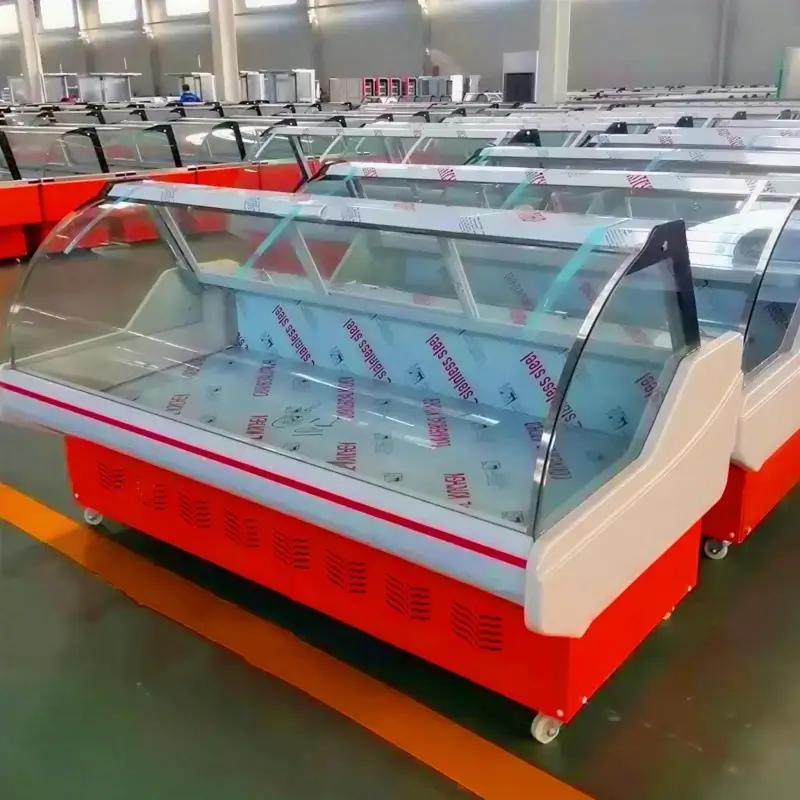
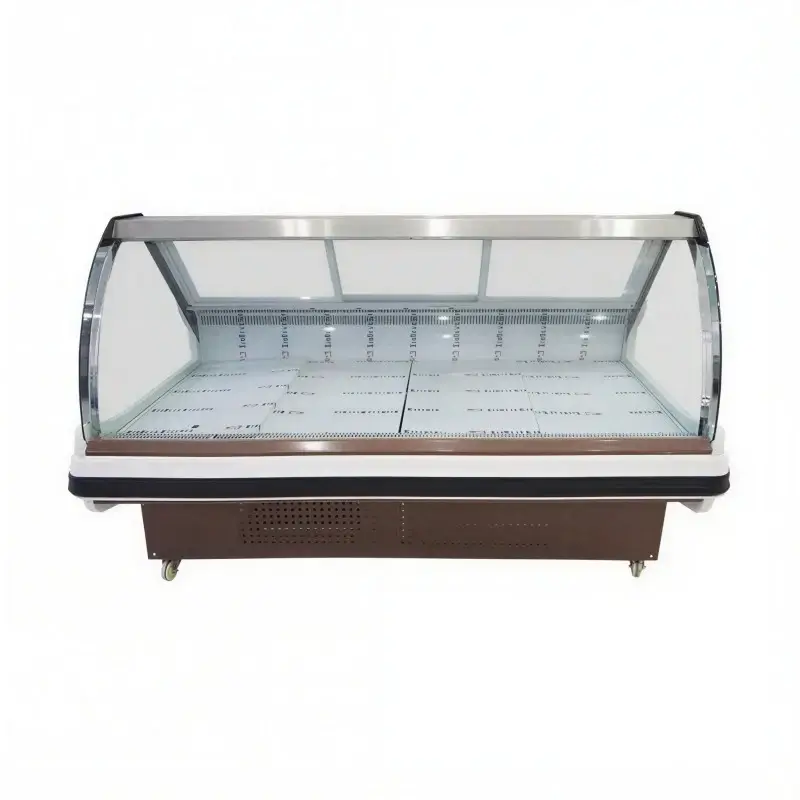
Pick the Optimal Cooling Mode for Your Climate
Static cooling creates gentler airflow, which may reduce surface drying on unpackaged meat. Fan-assisted systems distribute cold air more evenly and usually restore lower temperatures more quickly after loading or during periods of customer activity.
The best option depends on the operating conditions. Static cooling makes more sense when moisture retention is the main concern. In warmer climates, or in stores with heavy customer traffic, fan-assisted cooling may be a better match. For larger installations, remote refrigeration can be considered if heat and noise must stay out of the sales area.
Select plug-in units when simpler installation and flexible placement matter more.
Before ordering a meat display refrigerator, review its climate class, refrigerant, electrical requirements, noise level, energy consumption, and warranty. Check, too, whether local service is available and whether the unit carries the food-safety and electrical certifications required in the buyer’s market.
Final Buying Recommendation
A butcher shop needs a meat display refrigerator that will protect product quality through the busiest trading hours—not one that merely appears capable in an empty showroom. Before comparing final prices, request the technical documentation, assess how easy the unit is to clean, and confirm the after-sales support on offer.
If you can, perform a temperature-mapping test after installing the refrigerator. The test may identify warmer areas and indicate whether the controller is accurate. It can also help staff establish safe loading practices from the start.
Frequently Asked Questions
What temperature should a meat display refrigerator maintain?
Set the cabinet according to local food regulations. Many fresh-meat displays operate at about 0–4°C, with temperatures monitored continuously and recorded each day.
How much display capacity does a growing butcher shop need?
Estimate the largest display volume you’re likely to need, allow room for air circulation, then increase that figure by 15–20%. The added capacity keeps seasonal demand from making the cabinet feel cramped.
Is static or fan-assisted cooling better for fresh meat?
Static cooling may reduce moisture loss in unpackaged meat. Fan-assisted systems, on the other hand, restore lower temperatures faster in hot, busy shops. The better choice still depends on the product design.