
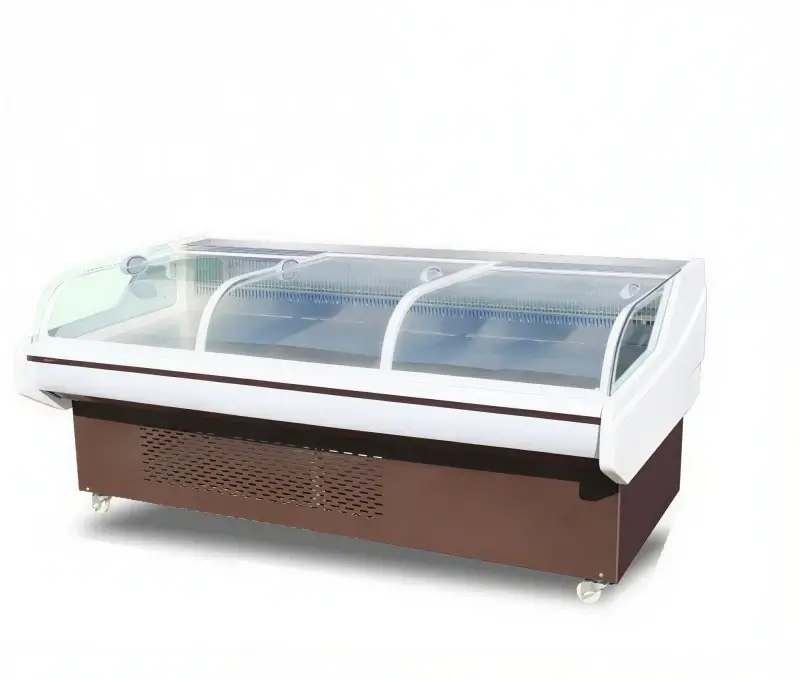
Why Traditional Meat Display Freezers Fall Short
Retailers often discover that standard freezer designs fall short when meat needs to be both visible and kept at the right performance level. Flat-front models may produce blind spots and reflections, so products disappear from view at certain angles. Temperature swings around door seals and in corners can also lead to frost buildup and uneven freezing, putting product quality at risk. The result is weaker sales alongside growing operational headaches—problems traditional designs do not solve, while a Curved Glass Display Freezer avoids these issues.
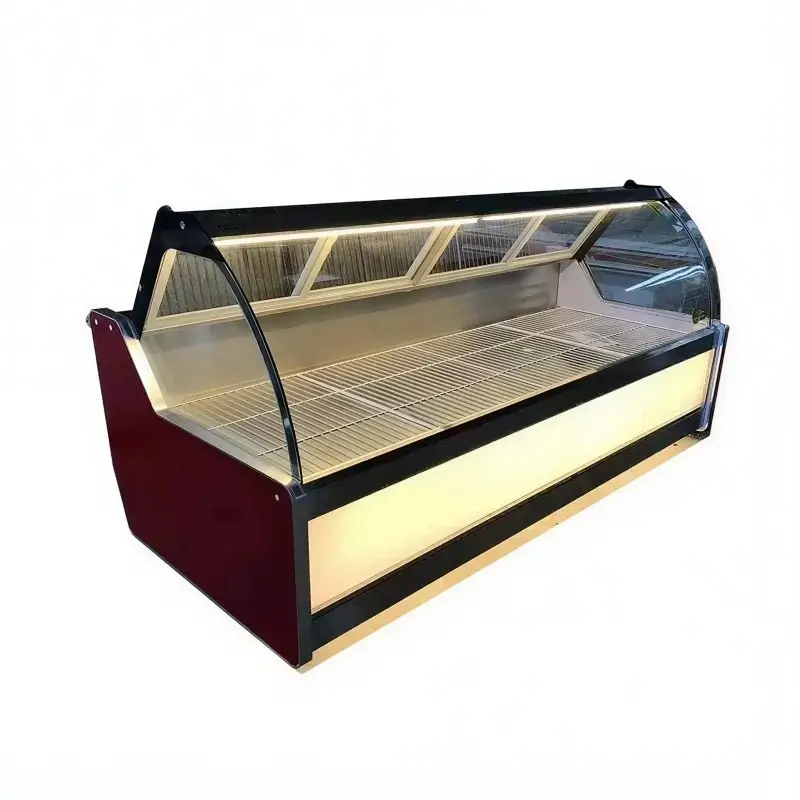
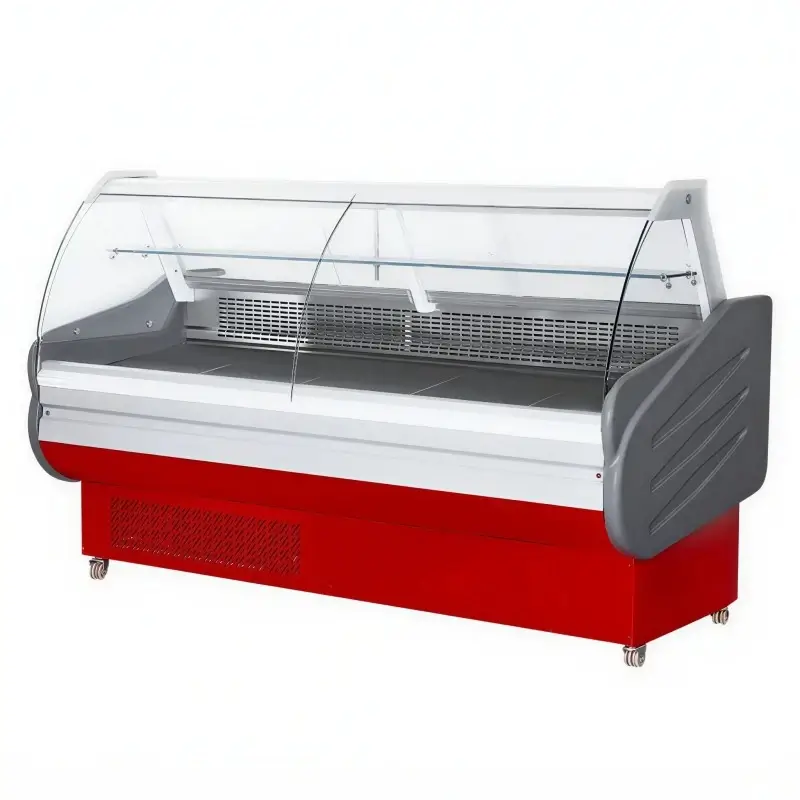
Limited Viewing Angles Reduce Visibility
Flat glass panels offer customers a limited front-facing view. From an angle, shoppers see mostly reflections rather than products, and impulse purchases may be missed. Rectangular cabinets distribute light unevenly, casting shadows that can hide premium cuts. Traditional Display Freezer layouts force retailers to choose between efficient storage and product visibility, while curved designs eliminate that compromise.
Inconsistent Temperatures Risk Meat Quality
Rectangular freezer cabinets can circulate air unevenly, especially around their sharp corners and edges. The lower sections tend to collect cold air, while warmer pockets develop near the top shelves, creating temperature differences of 5-8°F within a single unit. Flat doors also allow more warm air to enter when opened frequently; this may trigger defrost cycles and send internal temperatures higher. Those fluctuations accelerate freezer burn and ice-crystal formation, harming the texture and appearance of meat.
Inadequate Design for High-Traffic Retail
Standard freezers are built mostly for storage, not customer engagement. Their boxy design occupies valuable floor space without doing much to draw shoppers’ attention. Chest-style units create an additional problem: customers must lift and hold the heavy lid as they compare products, making browsing awkward. Faced with that inconvenience, shoppers may spend less time at the freezer, potentially lowering conversion rates in competitive retail settings.
Core Advantages of Curved-Glass Meat Display Freezers
Modern curved-glass display freezer technology overcomes limitations found in traditional models and adds performance benefits that reshape the way frozen meat is presented.
Panoramic Curved Glass for Maximum Visibility
Curved glass panels give customers clear views as they approach from different angles, with fewer blind spots. Because the arc is uninterrupted, their attention moves naturally across the entire product range. The design also limits glare and reflections by directing ambient light away from customers rather than back at them. LED lighting set along the curve distributes illumination evenly across each display level, ensuring that premium products receive consistent spotlighting throughout operating hours.
Retailers report 40–60% better visibility than they get with flat-front alternatives. Since the design curves around the unit, shoppers can see the products while walking by rather than having to stop directly in front of them. This is especially useful during peak traffic, when the aisle gets crowded.
Precise Temperature Control for Lasting Freshness
Curved cabinet geometry helps air move more effectively, with fewer dead zones. Refrigeration systems built for these spaces maintain temperatures within ±2°F across the storage areas. The continuous door seals follow the curve to create airtight closures, avoiding the corner gaps often found in rectangular designs. This precision protects Meat Freezer inventory from temperature abuse and the resulting loss of quality.
Advanced defrost systems use evaporator coils shaped to match the glass arc, which helps prevent frost buildup without the temperature spikes caused by traditional defrost cycles. Sensors monitor conditions at multiple points along the curve, so the system can make adjustments before variations affect product quality.
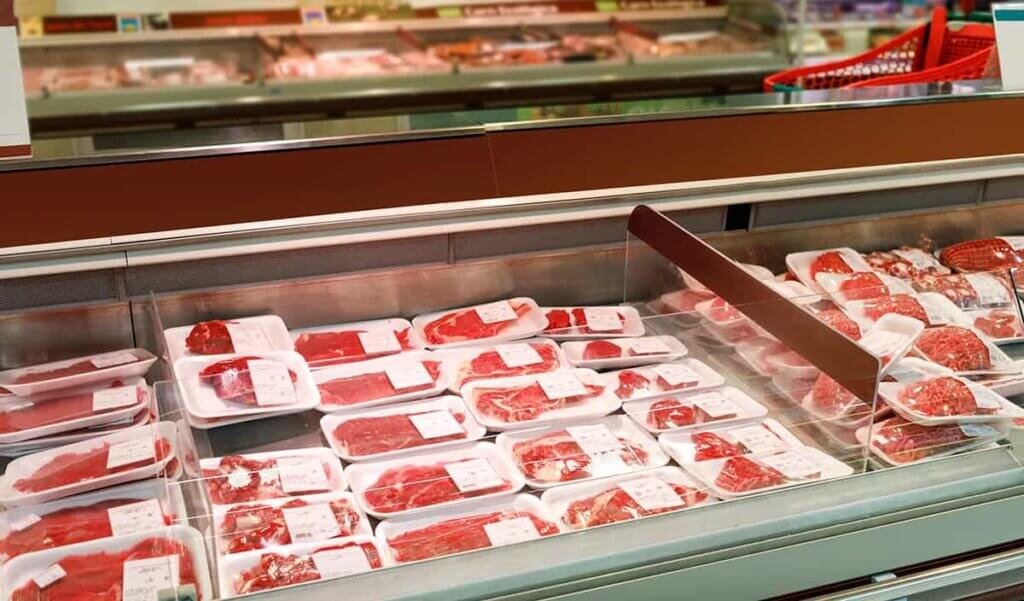
Island Design for High-Traffic Retail
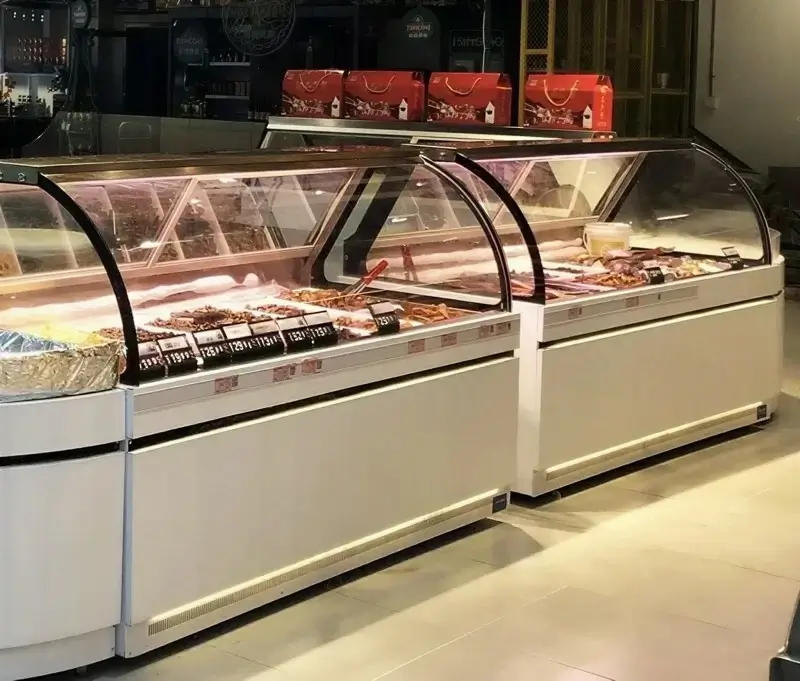
Glass Top Island Freezers use curved glass to make frozen-food sections destination areas rather than ordinary shelving. Since shoppers can reach them from every side, several customers can browse at once without causing bottlenecks. When positioned in high-traffic zones, these units increase product exposure by 300-400% compared with wall-mounted alternatives: passing shoppers see the display as they follow their natural path.
Self-service convenience lets customers browse and compare products, which often leads to larger baskets. Gas-assist hinges make the curved lids easy to move; they require little effort and close automatically, helping maintain temperature. Their ergonomic design also eliminates physical barriers that could otherwise restrict engagement with frozen products.
Comparison Table: Curved vs. Traditional Freezer Performance
| Performance Factor | Traditional Flat-Front | Curved Glass Design |
| Viewing Angle Range | 45-60 degrees | 180-270 degrees |
| Temperature Consistency | ±5-8°F variation | ±2°F variation |
| Customer Engagement Time | 8–12 seconds on average | 20–30 seconds on average |
| Reflection/Glare Issues | High from most angles | Minimal from all angles |
| Multi-Customer Access | One shopper at a time | 2–4 shoppers simultaneously |
| Floor Space Efficiency | 60–70% display utilization | 85–95% display utilization |
| Impulse Purchase Rate | Baseline | 35–50% higher |
| Energy Efficiency | Standard consumption | 15–25% lower consumption |
Selecting the Right Curved Glass Meat Display Freezer
Choosing equipment suited to operational demands helps prevent costly mismatches and ensures the investment is used well.
Match Capacity to Daily Sales Volume
Start by calculating average daily frozen-meat sales; that number can then guide the display’s capacity. High-volume retailers generally need 15–25 cubic feet per section, enough room for fast-moving stock without constant restocking. A specialty butcher shop focused on premium cuts may instead choose a smaller 8–12 cubic-foot model to maintain a boutique presentation. Weekend and holiday spikes matter, too: during those peak selling periods, displays need 30–40% additional capacity so they do not run empty.
Select the Right Size for Your Store Layout
Measure the usable floor area with two things in mind: customer movement and ADA access. For island configurations, keep 48-60 inches of clearance on every accessible side, giving customers enough room to browse comfortably. Along walls, curved units should leave aisles 36-42 inches wide to reduce congestion during busy periods. Ceiling height affects lighting performance as well. If units are taller than 54 inches, additional overhead lighting may be needed to adequately illuminate the bottom shelves.
Pick the Optimal Cooling Mode by Climate
Ambient temperature and humidity shape the refrigeration specifications a store requires. In hot, humid climates, refrigeration systems generally need greater compressor capacity, typically delivering 20-30% more BTU output than standard ratings. In areas with low humidity, injection systems help keep products from becoming excessively dehydrated. Variable-speed compressors respond to changing ambient conditions by adjusting their output, reducing operating costs by 15-25% in moderate climates while maintaining consistent performance during extreme weather.
Key Selection Criteria
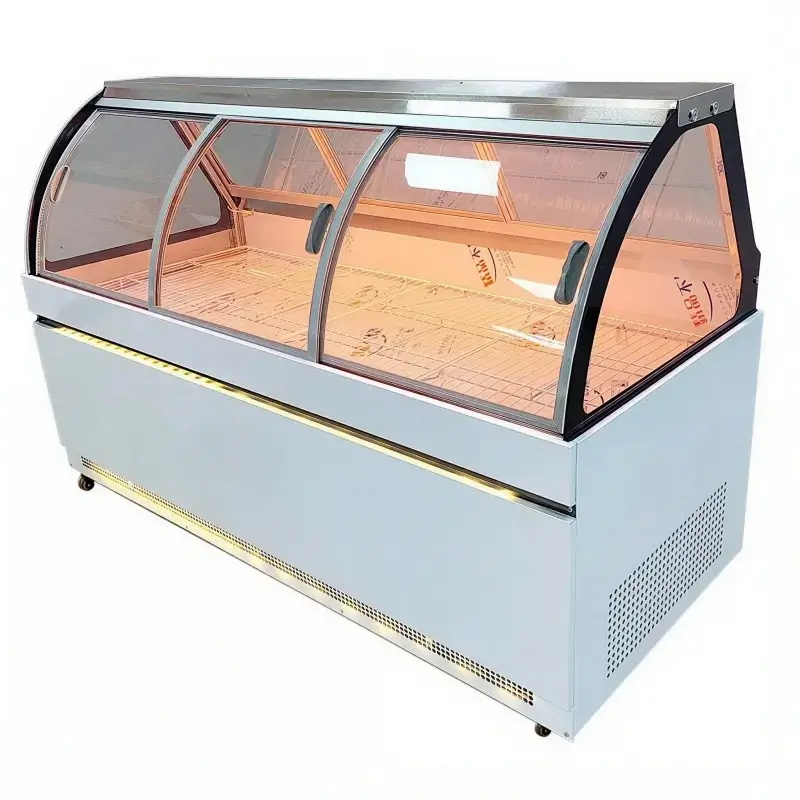
When comparing curved glass freezer options, begin with the unit’s construction. Stainless steel frames and commercial-grade components should be built for continuous operation.
The glass deserves attention too: multi-pane insulated glass, low-E coatings, and anti-condensation properties are all worth looking for.
The defrost system should also be checked. Automatic defrost with minimal temperature deviation helps protect product integrity.
Lighting Technology – LED systems with adjustable intensity and color temperature can make products more appealing
Warranty Coverage – Extensive parts and labor warranties show the manufacturer’s confidence in the unit’s durability
Frequently Asked Questions
Q1: What temperature should curved glass meat display freezers maintain?
Quality units consistently maintain temperatures between 0°F and -10°F. Keeping meat within this range preserves its quality and helps prevent freezer burn, allowing products to retain their appearance and texture throughout the display period.
Q2: How does curved glass improve energy efficiency compared to flat designs?
By limiting the surface area exposed to ambient conditions, curved geometry allows the insulation to work more effectively. Improved airflow and fewer thermal bridges mean these models typically use 15-25% less energy than comparable flat-front models.
Q3: Can curved glass freezers accommodate meat packages of different sizes?
Premium models feature adjustable basket systems and dividers that accommodate packages of different sizes. Since the layout can be rearranged without tools, retailers can change displays quickly when inventory mixes shift during seasonal changes and promotions.