
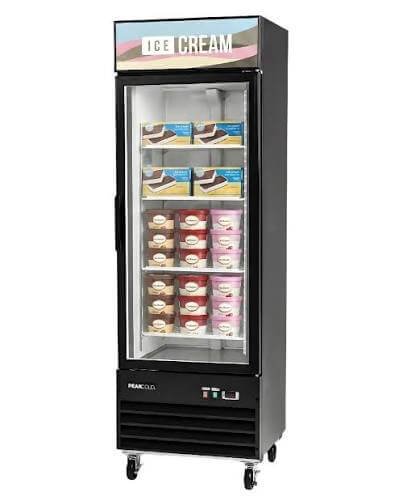
Scoopable texture is the result of control, not luck. The temperature must stay within a narrow range across the entire tub—from the surface where the scoop goes in to the base sitting on the freezer floor. Focusing only on the number shown on a digital controller can hide the real issue: temperatures shift over time and are not necessarily the same throughout the cabinet.
Why Temperature Alone Does Not Tell the Full Story
Standard storage freezers run at −18°C or colder. That temperature works for long-term storage, but it can make ice cream so hard that scoops shatter and staff have difficulty serving it. For scooping service, a Commercial Ice Cream Freezer generally holds the product between −12°C and −14°C, keeping it workable while maintaining food safety margins.
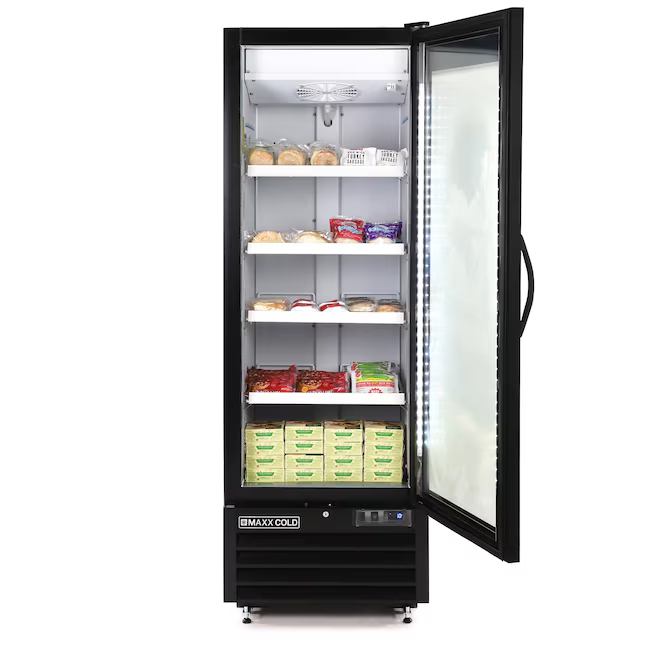
Observations from gelato shops and scoop counters suggest that three factors matter more than the target setpoint. The first is keeping the temperature consistent from the top of the tub to the bottom. Just as important is how quickly the gelato recovers after the lid is opened for service. Humidity control also matters, since it helps prevent ice crystals from forming on the surface.
Simply lowering the temperature rarely fixes texture complaints. Better stability usually does.
The Right Temperature Range for Service
Different service formats require different temperature setpoints. A back-of-house holding freezer should not run at the same temperature as a front-of-house display freezer, even if both contain the same product.
Storage vs. Display Setpoints
| Application | Target Range | Purpose |
| Bulk storage freezer | −22°C to −25°C | Long-term holding and texture preservation |
| Scoop display cabinet | −12°C to −14°C | Ready-to-serve, scoopable texture |
| Impulse retail display | −18°C to −20°C | Pre-packaged units, no scooping |
| Transport and staging | −18°C to −20°C | Short-term hold between locations |
A commercial ice cream freezer designed for scoop service should not double as bulk storage. Its required setpoints conflict, meaning it cannot properly handle both functions.
Tempering Between Zones
Ice cream moved directly from −25°C storage into a −13°C scoop cabinet often develops surface cracks or ice crystals. Keeping it at −18°C for two to four hours before serving reduces the temperature shift and helps preserve its texture.
Common Texture Problems and Their Causes
Most texture complaints follow one of four operational patterns. Once you know which one you’re dealing with, you can avoid spending hours adjusting the controller in ways that never reach the underlying issue.
1. Ice Crystals on the Surface
Visible crystals generally indicate humidity cycling, not an incorrect temperature. Each time the lid opens, warm, moist air enters. The moisture freezes again on the coldest surface—the ice cream.
Practical fixes:
- Train staff to close the lids fully between scoops rather than leaving them ajar
- Inspect the lid gasket to see how tightly it compresses
- Position the freezer away from direct sunlight and HVAC returns
2. Rock-Hard Product That Resists Scooping
If a scoop bends before it reaches the tub, the service setpoint is too low. Operators often discover that their Ice Cream Freezers are running at −20°C, despite a display specification of −13°C. Recalibrating the controller usually resolves the issue within one service cycle.
3. Soft, Melting Product at the Edges
Soft edges generally point to restricted airflow within the cabinet, high ambient temperatures, or overloading. In a Display Freezer, products stacked above the load line can let cold air escape when the lid opens because they block the return-air path.
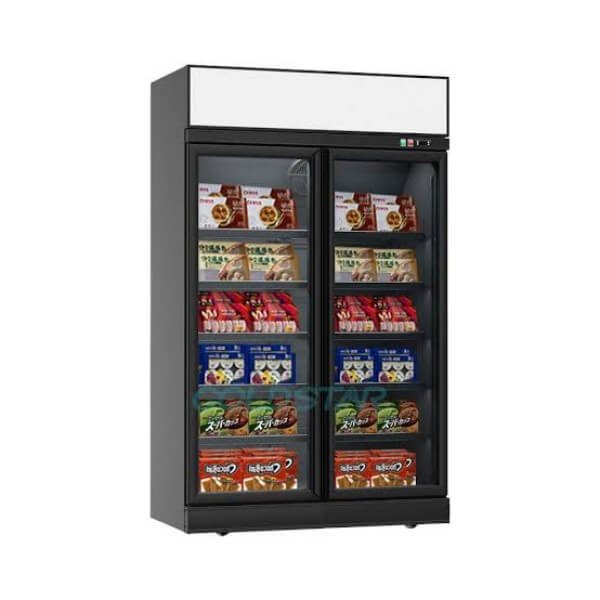
4. Uneven Hardness Across the Tub
Older cabinets without forced-air circulation often develop temperature stratification. With static cooling in a Glass Top Island Freezer, the temperature difference between the top and bottom of the tub can reach two degrees. Rotating the tubs during a shift helps balance their exposure and produces more consistent serving temperatures.
Practical Daily Routine for Scoop Operators
The Five-Step Morning Checklist
A straightforward daily routine helps maintain consistent texture from one week and month to the next. In well-managed scoop shops, it usually includes:
- At opening, compare the controller reading with a calibrated probe thermometer
- Record the freezer temperature at three points during the day
- Each morning, move tubs from the back to the front
- Once a week, wipe away interior frost buildup to maintain airflow
- Every month, check the gaskets for compression set or tears
Record the readings each time. This paper trail can reveal gradually developing problems before they affect the product.
Four Loading Rules to Enforce
Overloading is the main reason freezers perform poorly. Every Commercial Ice Cream Freezer has a marked load line, usually 50mm below the rim. Stack products above that point and the cold-air curtain becomes blocked, making the compressor run continuously.
Loading rules worth enforcing:
- Never stack tubs above the load line
- Leave a finger-width gap between tubs to allow air to circulate
- Store the highest-turnover flavors near the front, where the lid will be open for the least amount of time
- Group products with similar densities together to balance cold demand
Final Perspective on Getting It Right
A consistent, scoopable texture relies less on costly equipment than on disciplined operating habits. With the correct setpoints, careful loading, and daily checks, a mid-range Commercial Ice Cream Freezer can outperform a premium cabinet that is used casually. The controller has a role, but it cannot fix every problem. Staff routines and installation conditions ultimately determine what comes out on the scoop.
FAQ
Q1: What temperature should a scoop display freezer maintain during trading hours?
Most operators set the freezer between −12°C and −14°C. This keeps the product firm enough for portion control while still pliable enough for staff to serve.
Q2: How often should the temperature controller be recalibrated?
Checking it every three months is generally effective. Digital displays may drift over time, and a calibrated probe thermometer can catch discrepancies before customers notice changes in texture.
Q3: Can one freezer serve both storage and display purposes?
Not effectively. Storage calls for temperatures of −22°C or colder, while ice cream for scooping is best kept at about −13°C. A single freezer serving both functions can compromise texture quality and food-safety margins.