
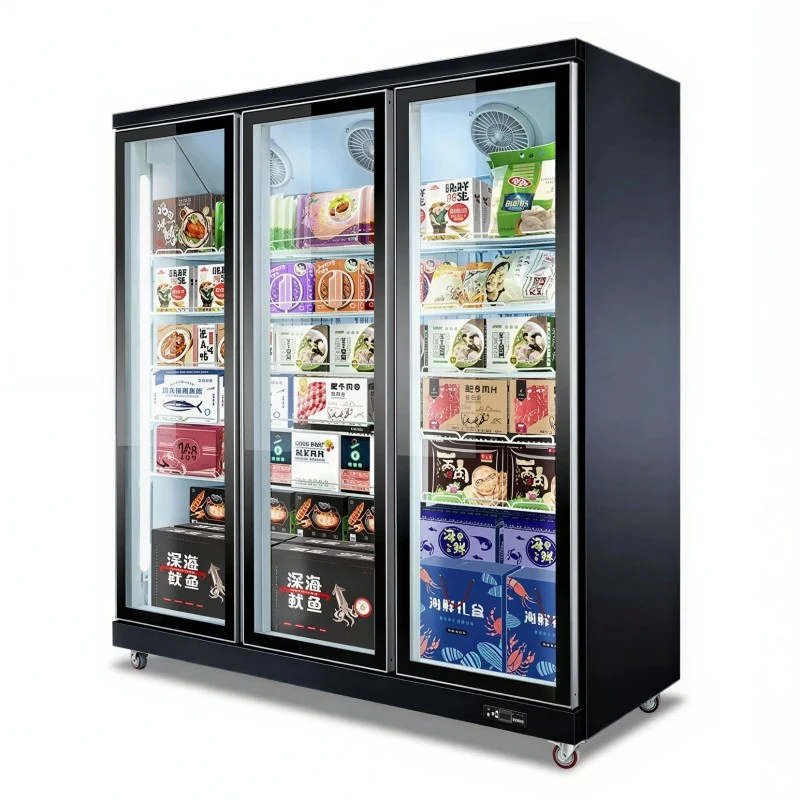
Energy bills have a quiet effect on the profitability of every foodservice and retail operation. A single inefficient commercial display refrigerator may add hundreds of dollars to annual expenses, while a well-chosen unit can make up its higher purchase price within two or three years. Operators often begin by comparing purchase prices, yet equipment’s total lifetime cost provides a more useful measure, and efficiency accounts for much of that calculation.
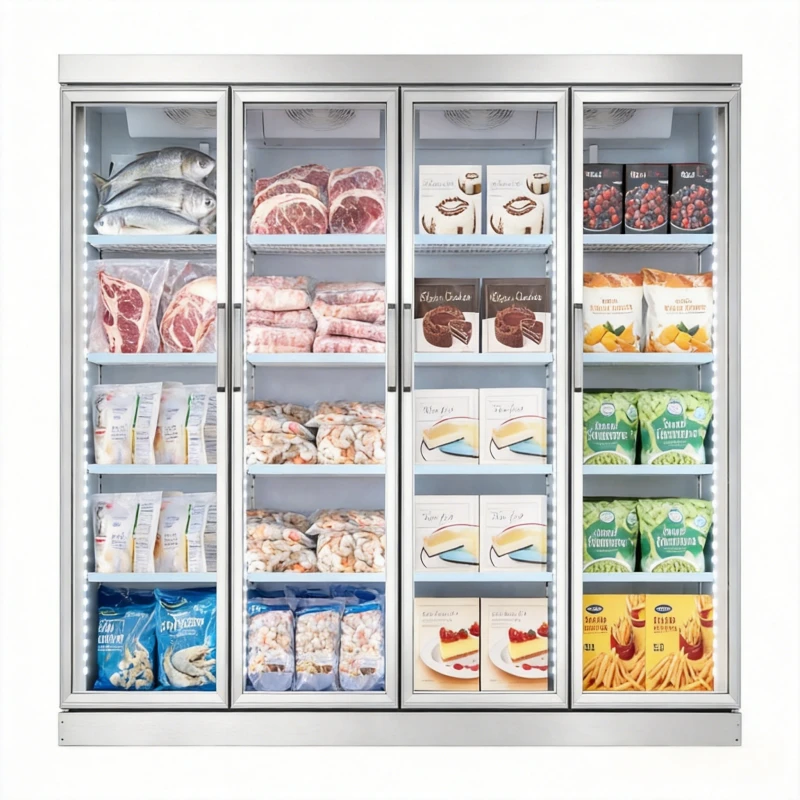
Why Efficiency Deserves More Attention Than Price
A refrigerator runs continuously, 24 hours a day, seven days a week. Across ten years of use, even small wattage differences can accumulate fast. Owners who regularly track their utility bills after switching to efficient models report reductions of 20–35%, and those savings show up before the second year ends. With monthly operating expenses factored in, the purchase price carries less weight.
Core Factors Behind Refrigerator Efficiency
Several components determine how much energy a display unit uses. Understanding them helps buyers ask more informed questions before approving a purchase.
The main considerations include
- Compressor type and horsepower rating
- Door design, gasket quality, and seal integrity
- Insulation thickness and foam density
- Interior lighting technology
- Fan motor efficiency and airflow design
- Ambient placement and ventilation clearance
These factors are connected. A high-efficiency compressor will provide less benefit if the gaskets are poor, and even premium insulation cannot compensate for a door that remains open during busy hours.
Compressor Technology Matters Most
Variable-speed compressors adjust their output as demand changes. Fixed-speed units, in contrast, operate at full power before cycling off and on. Under typical retail conditions, variable-speed systems use roughly 25–40% less energy. Inverter-driven models cost more upfront, but they consume less electricity and experience less mechanical wear, which can extend equipment life and reduce utility costs.
Comparing Common Display Refrigerator Configurations
Different formats work better in different retail settings, and energy use changes accordingly. Under normal conditions, operators can generally expect the following from each category.
| Configuration | Typical Annual Energy Use | Best For | Efficiency Notes |
| Single Glass Door Upright | 1,800–2,400 kWh | Convenience stores, cafés | A balance between visibility and consumption |
| Double Glass Door Upright | 3,200–4,500 kWh | Higher-volume retail | Energy use depends on how often the doors are opened |
| Beverage Refrigerator | 1,500–2,800 kWh | Drink-focused outlets | LED-heavy design, smaller compressor |
| Open Air Display | 4,000–6,500 kWh | Grab-and-go setups | By far the highest running cost |
The Glass Door Advantage
A Commercial Glass Door Refrigerator offers a practical middle ground: products remain visible, while thermal efficiency is maintained. Triple-pane doors filled with argon gas transfer far less heat than older double-pane models. Heated glass frames prevent condensation without sharply increasing electricity use, and modern anti-fog coatings extend that benefit further.
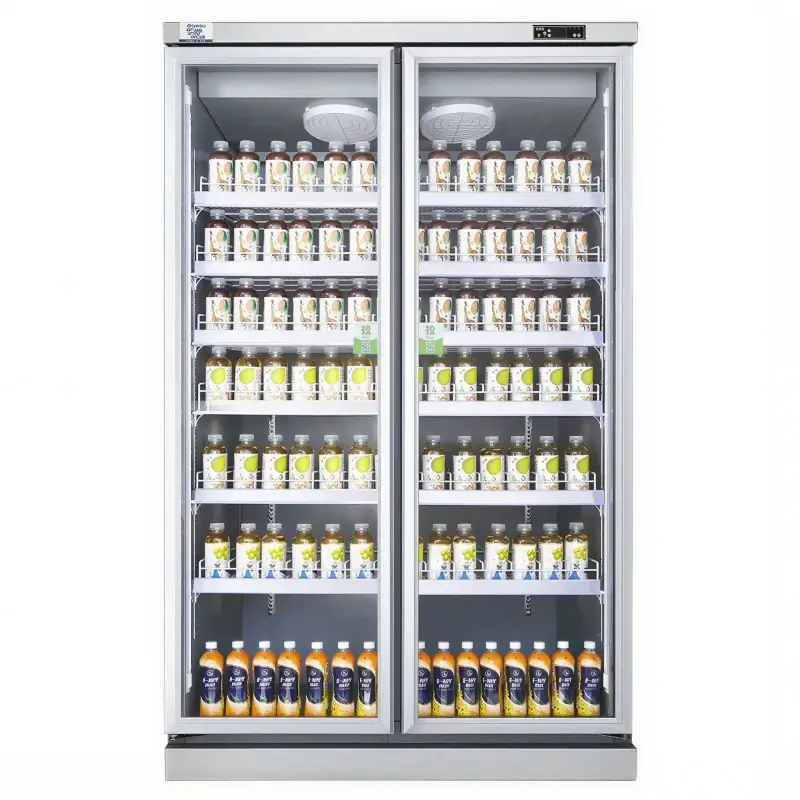
Why Glass Doors Outperform Open-Front Cases
Operators who replace open-front cases with glass-door units often see the largest single efficiency improvement available in retail refrigeration. The explanation is straightforward. Because closed doors allow less cold air to escape, the compressors cycle less often.
How Lighting Affects the Total Picture
Interior lighting draws less power than the compressor, but it still influences total consumption. Older T8 fluorescent tubes release heat into the cabinet, forcing the compressor to work harder to counter it. By contrast, LED strips consume around 60% less electricity and generate very little heat, so the compressor cycles less often. Retailers that upgrade just the lighting often see overall energy use drop by 8–12%.
Practical Steps to Improve Efficiency
Even an efficient unit may perform poorly if everyday operating habits are overlooked. Consistent care can help protect the investment:
- Keep units away from ovens, dishwashers, and direct sunlight.
- Leave at least three inches of clearance behind the cabinet so air can circulate.
- Inspect door gaskets monthly and replace any that have hardened or developed gaps.
- Clean the condenser coils every 90 days to help prevent efficiency loss.
- Set the temperature according to the manufacturer’s recommendations rather than making it colder than necessary.
Each adjustment costs little and helps preserve the efficiency advantage promised with the original purchase.
Matching the Unit to Its Intended Use
Choosing by Application: Front-of-House vs. Back-of-House
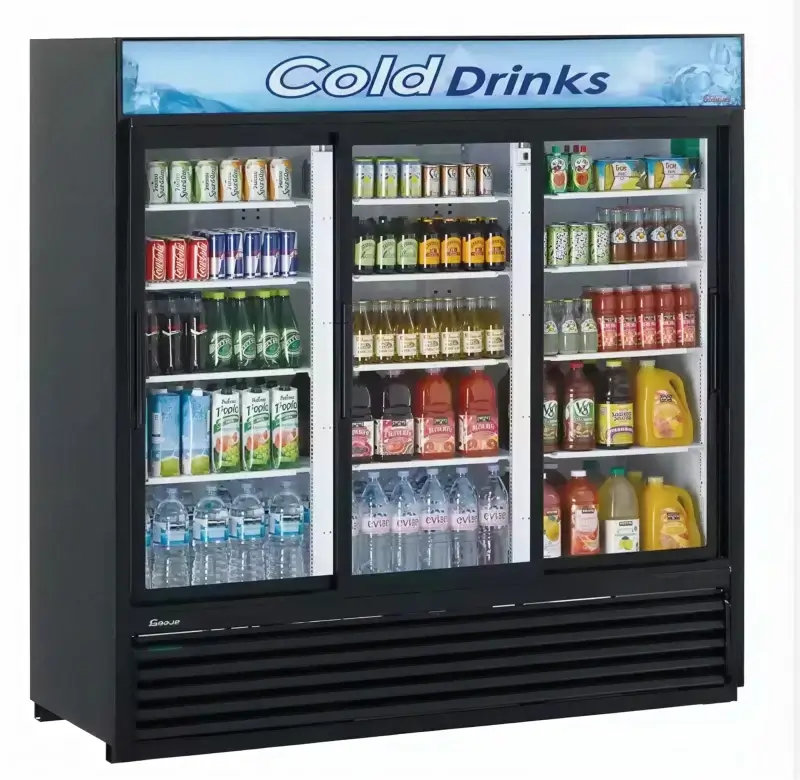
The intended retail setting should shape the purchase. For bottled beverages, a Beverage Refrigerator is better suited to frequent door opening, since its shelving and airflow support faster temperature recovery. In a back-of-house area, where staff does not need to see the contents, a general Commercial Refrigerator with solid doors is often a better fit. Even an efficient unit can waste energy if it is assigned the wrong job.
Reading Efficiency Ratings Honestly
ENERGY STAR ratings offer a useful baseline, but the conditions around a unit also affect how it performs. A refrigerator tested in a controlled 75°F setting could behave differently in a kitchen that reaches 90°F. For demanding installations, owners should request performance data from suppliers gathered at the ambient temperatures they anticipate.
The Long-View Takeaway
Efficiency depends on more than any single feature. The compressor, door quality, lighting, and everyday operating habits all contribute, and buyers who weigh them together often select units where the higher initial price pays for itself, making budgets easier to manage for years. Cheap equipment can look affordable in the first month, only to become expensive by the twelfth.
FAQ
Q1: How much can efficient models actually save on utility bills?
Selecting suitable units may cut annual refrigeration energy costs by 25–35%. For models that include premium features, the upfront investment is usually recovered within two to three years.
Q2: Do glass-door refrigerators use more energy than solid-door models?
Yes, but the difference is small. Modern triple-pane glass filled with argon reduces the gap significantly while keeping products visible, helping drive impulse sales.
Q3: How often should condenser coils be cleaned in a busy retail setting?
Under standard conditions, clean them every 60–90 days. In kitchens or dusty areas, monthly cleaning is needed, since dirty coils may raise energy consumption by 20% or more.