
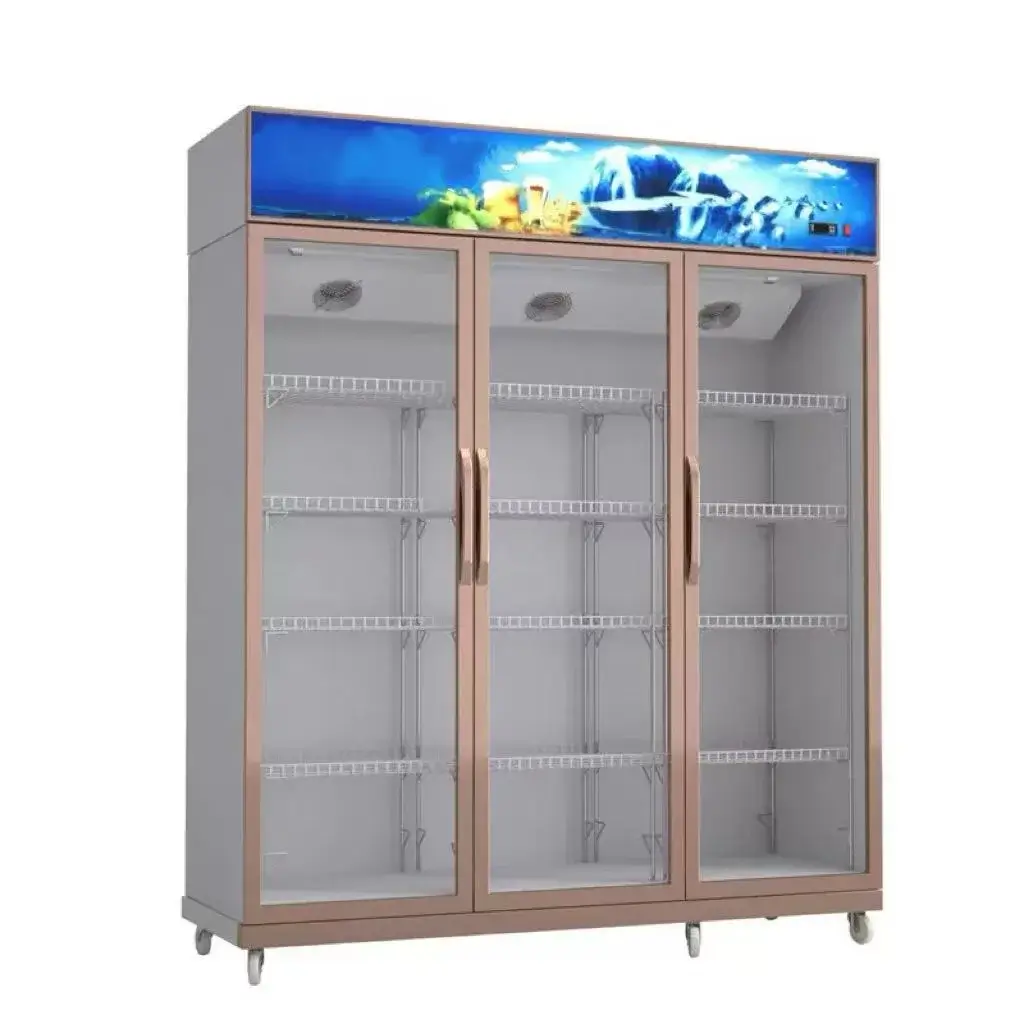
You can always fix the decision to buy glass door commercial refrigerators one at a time later. Buying them in bulk isn’t. One mistake on one cabinet that costs a few hundred dollars becomes a fleet-wide issue across twenty locations, costing you rework and freight, years of excess energy draw, and lost sales while cabinets sit waiting for parts.
Before you place a bulk order, six things should be settled in writing: the capacity and door configuration each location needs; the refrigeration system and refrigerant that meet each market; the certifications covering the exact model and factory; the customization scope and production capacity behind the quotation; the pricing ladder, order quantity, trade terms, and lead time; and the sampling, inspection, and warranty terms.
The questions below are in the order they should be asked because each answer narrows the next.

Why Buying Single Units is Different Than Bulk Ordering
Volume makes a product choice a supply program: a standard specification, repeatable across locations, backed up by interchangeable spares and priced to withstand a ten-year asset life.
The amount is multiplied by three errors. Energy first: a cabinet that costs 25 percent more than a certified comparable adds that excess to every site, every hour, for a decade. Second is compliance: a refrigerant that’s OK at home can prevent clearance or sale abroad, and the fix is a redesign. Third is physical fit. If a cabinet won’t fit through an opening or if it needs clearance the store doesn’t have, it won’t go anywhere. Then build a list per location, and confirm that each item can be produced off one platform.
Questions About Capacity, Doors, and Footprint
Request volume pricing only after defining capacity, door style, and installation envelope per store type. These three variables will drive cabinet dimensions, compressor sizing, and unit price.
Matching Capacity to Throughput and Store Mix
Capacity should be driven by throughput and exhibition strategy, not floor area alone.
| Type | Average capacity | Application common |
| Undercounter | 4 to 12 cu ft | Bar and counter service— |
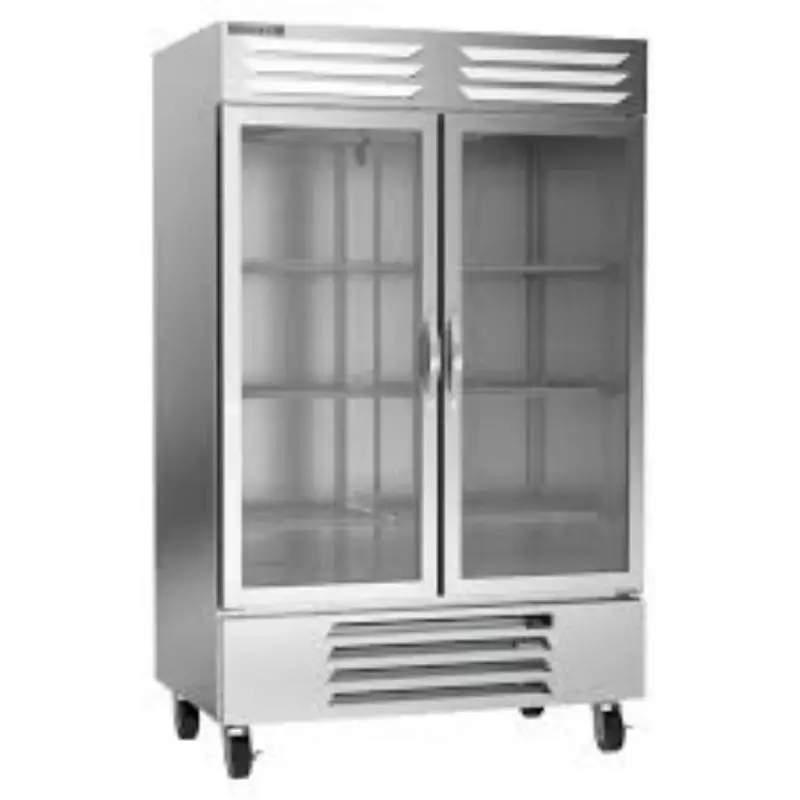
| Single door upright | 10 to 25 cu ft | Café and convenience store |
| Double door upright | 25 to 50 cu. | http://ft.Grocery restaurant aisle |
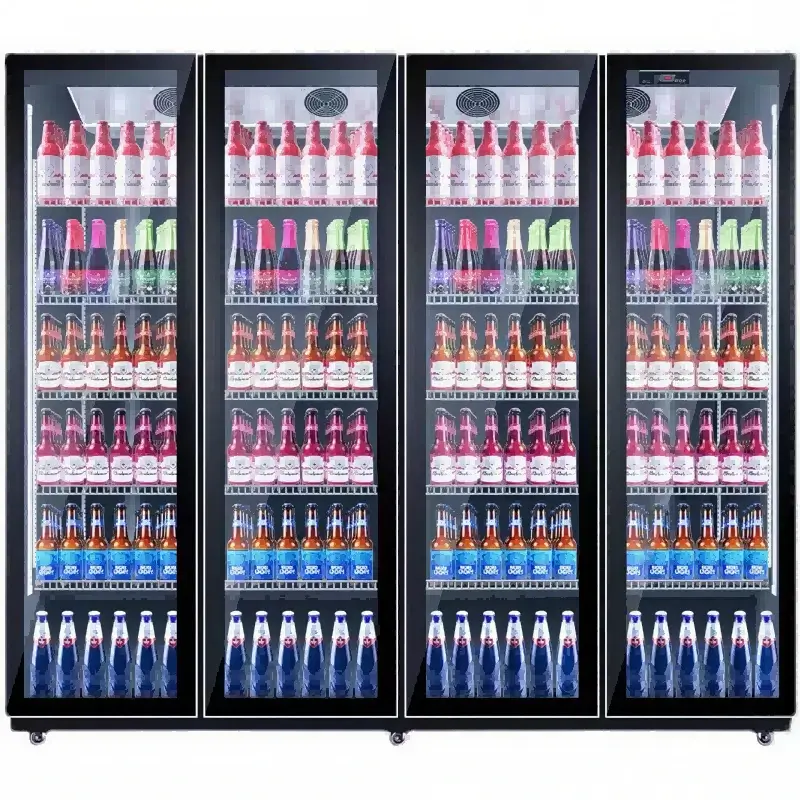
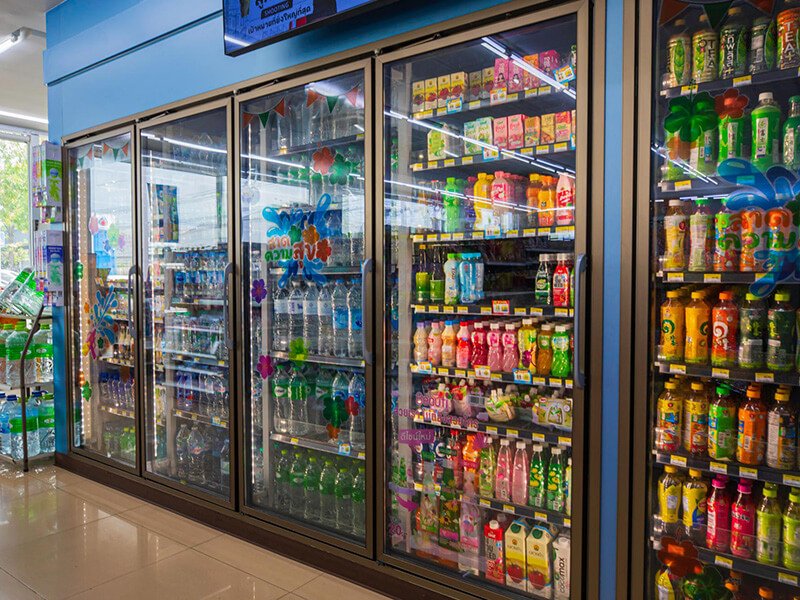
| multi-door showcase | 50 to 90 cu ft | Supermarket, mass retail |
Ask how much nominal volume is left after shelving and airflow and what load each shelf can support.
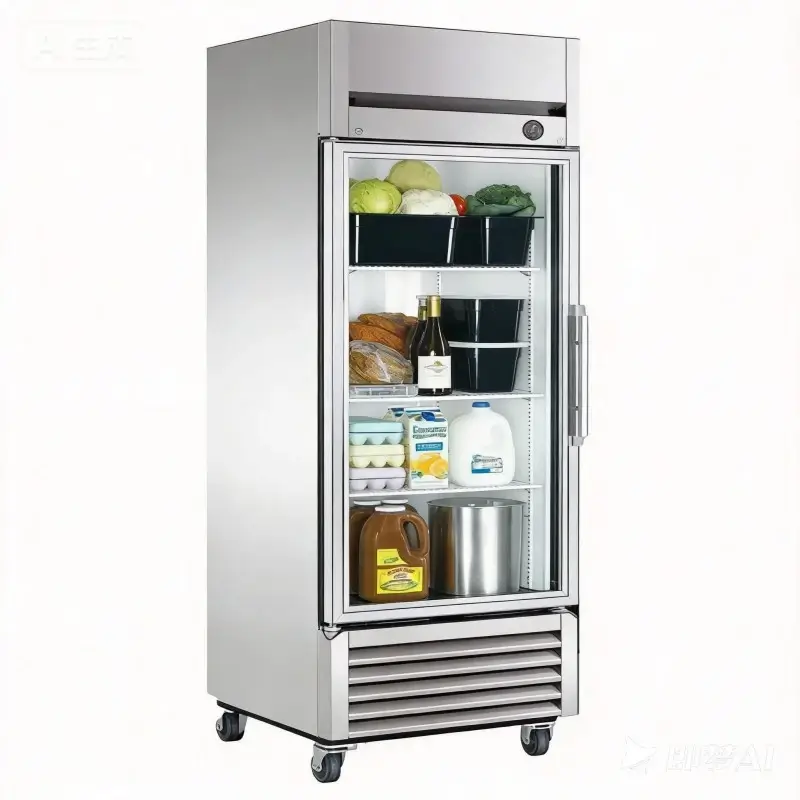
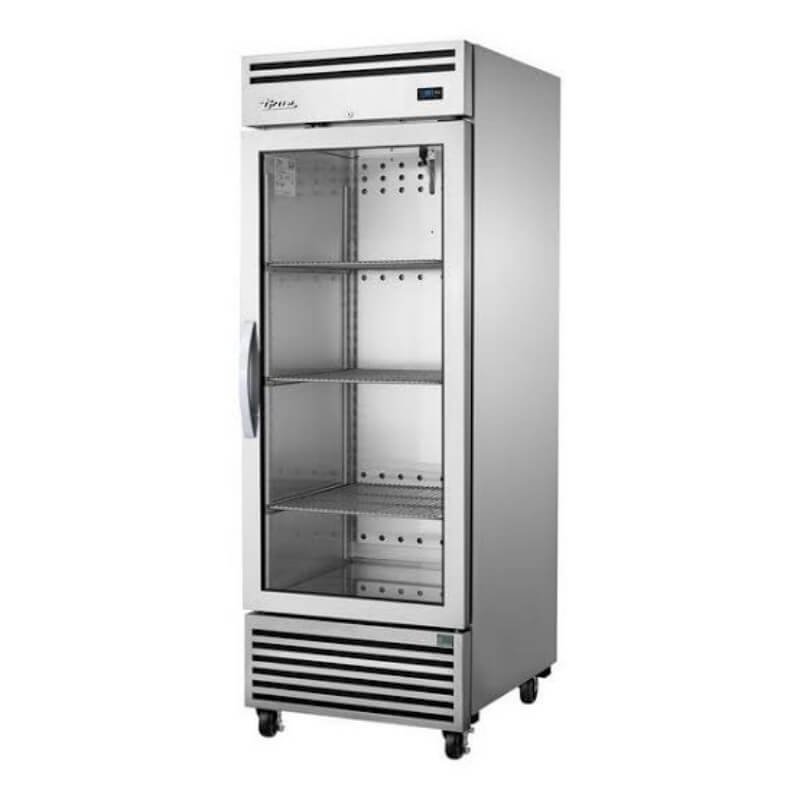
Glass, Door Configuration, and Control of Condensation
Swing doors are easier to maintain and seal better; sliding doors are better for narrow aisles but have more parts and lose cold air faster. In humid climates, an unheated glass door will fog and drip on stock, so it’s often necessary to have heated, multi-pane tempered glass with a low-emissivity coating. Verify that the glass is heated.
Clearance, Ventilation, and Installation Restrictions
All cabinets should be provided with nameplate voltage and phase and have free airflow around the condenser. Using the wrong size breaker and/or a unit pushed flush against a wall overheats the compressor and can void the warranty.
Questions about Refrigeration System and Energy Performance
Select the compressor and refrigerant for each destination market and then confirm efficiency against an independent rating. The system determines both compliance and your highest cost of ownership line.
Compressor type and installation location
Hermetic compressors are simpler and less expensive, but variable frequency drive compressors modulate to demand, reducing energy use and noise. Bottom-mount units pull in cooler air at floor level and are easier to service, while top-mount units are less expensive but more difficult to clean. Knowing https://en.wikipedia.org/wiki/Refrigerator helps you to judge what a quotation offers.
Refrigerant, Charge Size, and Regulatory Phase-Out
Now, new cabinets are dominated by propane, isobutane, and mildly flammable blends, each with use conditions covering charge size, ventilation, warning labels, and the technician certification required. https://www.epa.gov/snap means that today’s decision to use higher-warming refrigerants will affect resale value and serviceability later. Ask which refrigerant the unit uses and whether the model will still be supported after the next regulatory step.
Energy Rating, Yearly kWh, and Total Cost of Ownership
A fleet’s cost is dominated by everything but the purchase price. Certification criteria and qualified model lists for commercial refrigerators and freezers are published at https://www.energystar.gov/products/commercial_refrigerators_freezers. This provides a reasonable basis for comparison when ambient conditions are similar. Over a 10-year life, energy is typically 40 to 55 percent of the cost, purchase price 25 to 40 percent, and maintenance 10 to 20 percent.
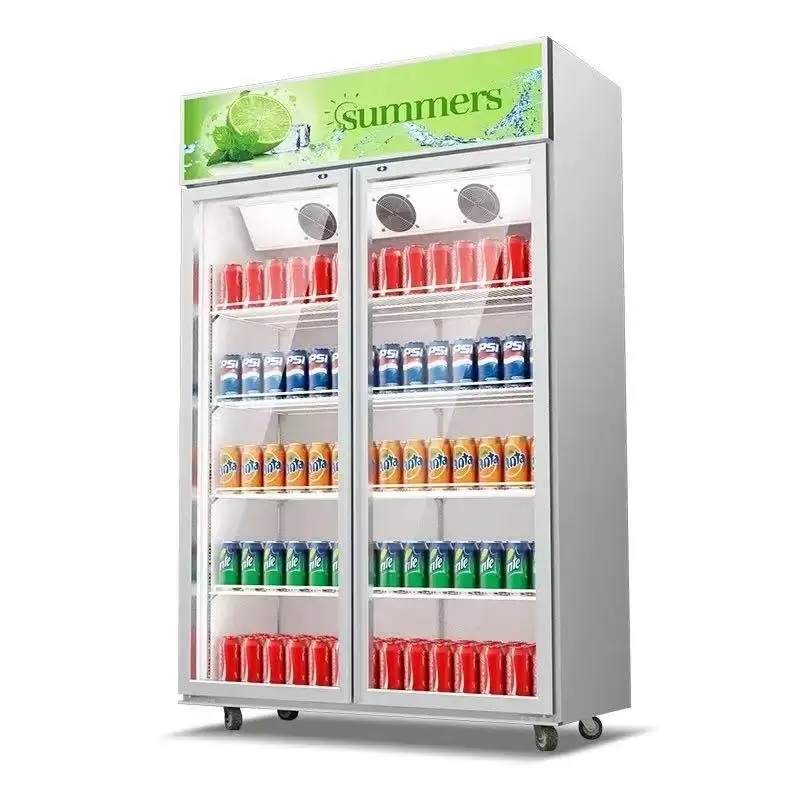
Material, Sanitation, and Certification Questions
Certification is per-model, per-market, not a company claim, so check which certificates cover the exact cabinet and the factory that builds your order.
Food-Contact Materials and Cleanability
Cleanable and corrosion-resistant interior surfaces in contact with food. Grade 304 stainless steel is much more resistant to pitting and chloride attack than grade 430, a factor to consider near dishwashers and in salt-heavy prep areas. Inspectors first examine removable drip pans and gaskets that seal around the entire perimeter.
Certifications Matched to All Destination Markets
Requirements are a matrix, not a checklist.
| Requirement | What is included | Typical usage |
| Food equipment sanitation standards | Material safety, cleanability, temperature uniformity | International Foodservice |
| Listing for electrical safety | Wiring, condensate containment, grounding | USA and Canada |
| Certification of energy efficiency | Consumption above baseline in the United States, linked to CE marking of rebate and limits of substances verified | Restricted materials and safety European Union |
| Quality and environment systems | Worldwide sourcing, plant process control |
Get copies of certificates specifying the model and the manufacturing site. A certificate held by a trading office, and not the factory, does not protect your order.
FAQs on Factory Capability, Customization, and Branding
Confirm what the supplier will customize, at what quantity threshold, and if that customization affects certification. Then, confirm that the factory performs its critical processes in-house.
OEM & ODM Scope
Standard options are logo and panel graphics, color and finish, voltage and frequency, plug type, packaging, and manual language. Ask about setup and plate fees and if the modified configuration is still certified.
Checking a Genuine Manufacturer
A supplier that talks about its own foaming line, its own bending equipment, and its own quality inspectors is acting like a factory. A supplier that answers in terms of product categories rather than processes is frequently an intermediary. Ask them about their monthly output, their export markets, and whether they have shipped similar cabinets to your market.
Questions on price, MOQ, and container planning
Ask for a price ladder, not a single quote, and treat container economics as part of the specification because order quantity, mixed-model rules, and loading efficiency move landed cost more than unit price negotiation does.
| Driver factors for cost and lead time | Implication on the sequence |
| Order quantity degree | More volume = lower cost/unit |
| Basis of Minimum Order Quantity | By model, per order, per container |
| Number of combined vehicles | More models = more handling cost |
| Customization | Fees for logo, plate, and packaging per run |
| Selection of system and refrigerant | Inverters & specialty refrigerants are premium. |
| Season | Peak months extend the queue. |
| Lead Time Terms of Payment Trade |
Explicitly agree on trade terms, as they determine who will arrange and pay for freight, insurance, and customs. Normally, payment is a deposit and the balance before shipment. Understand the lead time differences between off-season and peak months and how long the quotation is valid for.
Container Loading, Packing & Damage to Freight
Twenty-foot containers are fine for small trial volumes, but the best freight economics per unit are in a forty-foot or high-cube container. Request a loading plan. Agree on liability for damage in transit and claims.
Sampling, Inspection, and Guarantee Questions
Never release a bulk run without an approved reference unit and written inspection plan. Please confirm the warranty and spare parts path before the first container ships.
Pre-shipment inspection and pilot order
Order a pilot quantity and keep one approved cabinet as the contract reference. Agree on the sampling standard for pre-shipment inspection. Request temperature pull-down and uniformity data. Confirm door cycle and gasket checks. State whether an independent inspection agency may attend.
Service Network, Spare Parts, and Warranty
Whole-unit and compressor warranties usually last different lengths of time, so read both. Check which parts are wear parts, which spares are on the shelf for rapid dispatch, and whether you have a service agent in your area.
FAQs
How many glass-door fridges will fit in a 40 ft container?
It is determined by cabinet size and packaging, and the good number is the one in a loading plan drawn for your models. Typically, a forty-foot high cube container will hold approximately forty to sixty single-door cabinets, eighteen to thirty double-door cabinets, and far fewer multi-door cabinets.
Can I mix models in the same bulk order?
Most factories do allow it. Usually, the number of models is limited to 2 or 3 per container to keep loading efficient. Mixing can increase the effective minimum for each model or add a handling fee, so get the rule in writing.
How do I compare energy costs across bulk orders?
Registered annual consumption per model multiplied by your electricity rate and operating hours multiplied by unit count and years of use. In the absence of registration, ask for test data at a given ambient temperature and door opening cycle.
Bulk Buying Glass Door Commercial Refrigerators: Ask the Right Questions About Capacity, Doors, Refrigerant, Certifications, MOQ, and Container Planning.