
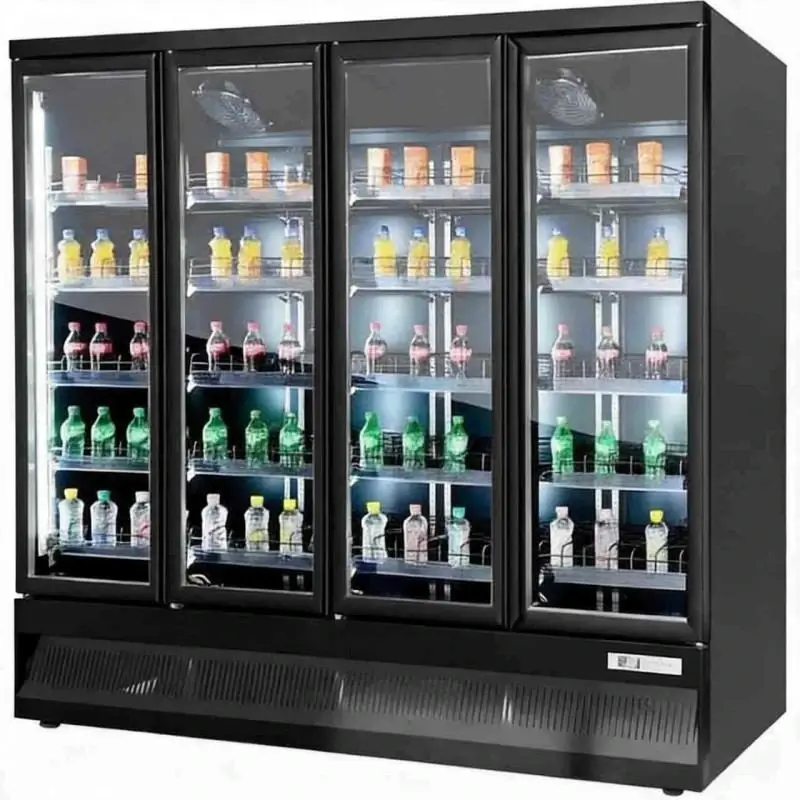
Retailers can tailor glass beverage refrigerators to fit their needs, including capacity, branding, shelving, cooling, lighting, and controls, to enhance product visibility, operations, and retail performance.
Yes, retailers can customize a glass beverage refrigerator to match store dimensions, product categories, branding requirements, and daily operating conditions. Typical choices are exterior color, brand graphics, adjustable shelving, door configuration, temperature controls, LED lighting, voltage, and refrigeration systems.

But true customization goes beyond slapping on a logo or changing a cabinet color. Retail buyers need to consider the product display inside the refrigerator, how the product is accessible to customers, how quickly it can be restocked, how stable the temperature is, and the energy consumption.
In practice, you get the best results when you define operational requirements before discussing appearance. A good-looking refrigerator may catch your eye, but it still has to keep safe temperatures during busy times, frequent door openings, and changing store conditions.
Why should you customize a glass beverage fridge
Standard refrigeration equipment will work for many shops but may not be suitable for every retail environment. In convenience stores, supermarkets, bakeries, cafés, petrol stations, and specialty beverage shops, the layout and merchandising priorities vary.
Benefits of a Custom Glass Beverage Refrigerator for Retailers:
- Better use of limited floor space
- Serve drinks at eye level
- Match equipment to store branding
- Sort different sizes of beverages
- Improve consumer access to products
- Reduce the time staff spend on restocking
- Support special temperature requirements
It’s a consistent retail observation that customers make faster purchase decisions when they can clearly see product labels, prices, and available flavors. Clean glass, balanced lighting, and organized shelves can affect product presentation and sales performance.
Retailers comparing equipment types can also read How to Choose a Commercial Beverage Refrigerator by capacity, temperature range, store traffic, and long-term operating costs.
WHAT ARE RETAIL SHOPS ABLE TO CUSTOMIZE
Customization is dependent on the manufacturer, the order size, the certification requirements, and the production capabilities. Some changes are just branding changes, and some are engineering changes.
Size of Cabinet and Capacity of Storage
Cabinet size should be based on the space available in the retail outlet and the volume of product expected. A compact unit may be ideal for a checkout area, while a wider model can accommodate supermarkets or convenience stores with heavy traffic.
Buyers should take measurements:
- Installation width, depth, and height
- Clearance for door-opening
- Space for ventilation around the cabinet
- Access routes for delivery and installation
- Bottle and can shelf dimensions
A single-door cabinet works well in a tight spot. A Double Door Display Refrigerator will increase display capacity and allow retailers to segment drinks by type, brand, or temperature zone.

Branding & Exterior Appearance
Retail branding can integrate refrigeration equipment into the store’s visual identity. You can customize the unit with a choice of cabinet colors, illuminated top panels, side graphics, logos, door decals, and branded price strips.
The branding should be clear and not block the customers’ view of the products. Having too many graphics on the glass can reduce visibility and make the display feel too busy. In general, less is more, resulting in a cleaner, more professional-looking design.
Product Organization & Shelving
Adjustable shelves offer retailers flexibility when product sizes vary. Beverage cans, water bottles, juice containers, and large soft drink bottles require different shelf heights and weight capacity.
Shelf customizations may include:
- Shelves flat or sloped
- Adjustable shelf levels
- Extra strong shelves for heavy bottles
- Price tag holders
- Product dividers
- Gravity feed merchandising systems
Slanted shelves can improve front-facing display, and product dividers make sure tidy rows are maintained during trading hours.
Glass, Doors & Lighting
Glass doors should provide good visibility but at the same time limit heat transfer and condensation. Buyers may choose double- or triple-pane insulated glass, heated glass, or anti-fog solutions, depending on the climate and the store environment.
LED lighting can illuminate labels without generating too much heat. Vertical LED strips distribute the light over several shelves better than one light at the top.
The door design also impacts daily use. Self-closing doors reduce the risk of being left open, while durable handles and hinges accommodate high-frequency customer access.
Main Customization Options
The table below describes the major options and their practical impact on the retail.
| Customization Area | General Options | Retail Benefit | What to Check |
| Door configuration | Single, double, or multi-door | Capacity and space are sufficient. | External & internal dimensions |
| Temperature control | Mechanical or electronic controller | Maintains constant product temperature | Range and operating accuracy |
| Glass system | Double-pane, triple-pane, heated glass | Improves insulation and visibility | Anti-fog performance |
| Shelving | Adjustable, angled, reinforced shelving | Suits different packaging | Load capacity of the shelf |
| Lighting | LED lighting, vertical or horizontal | Improves product display | Replaceability and brightness |
| Branding | Colors, logos, light boxes, decals | Strengthens store image | Artwork Format and Longevity |
| Refrigeration system | Self-contained or remote | Adapt to installation conditions. | Ventilation and access for service |
| Electrical spec | Voltage and plug type by region | Local installation support | Market compliance requirements |
A professional supplier should provide technical drawings before production. These drawings enable the buyer to verify the dimensions, shelf spacing, compressor location, electrical requirements, and branding locations.
Looks Should Take a Back Seat to Cooling Performance
A bespoke refrigerator must still offer reliable cooling performance under real retail conditions. There may be frequent door openings, warm product loading, high ambient temperatures, or limited ventilation for the unit.
This is why retailers must provide suppliers with accurate information about:
- Anticipated temperature and humidity of the shop
- Customer traffic per day
- Beverage types and package sizes
- How often to resupply
- Temperature range required
- Available ventilation and electric power
Why Proper Cooling System Sizing and Airflow Matter
This information assists the manufacturer in choosing an appropriate compressor, condenser, evaporator, and airflow design. If your refrigeration system is too small, it may not be able to cope with peak hours, but if you buy one that is too big, your purchase price and operating expenses will be higher.
A Commercial Glass Door Refrigerator should evenly spread the cold air throughout the cabinet. Hot spots may result from poor airflow, especially if staff are overloading shelves or putting products against air outlets.
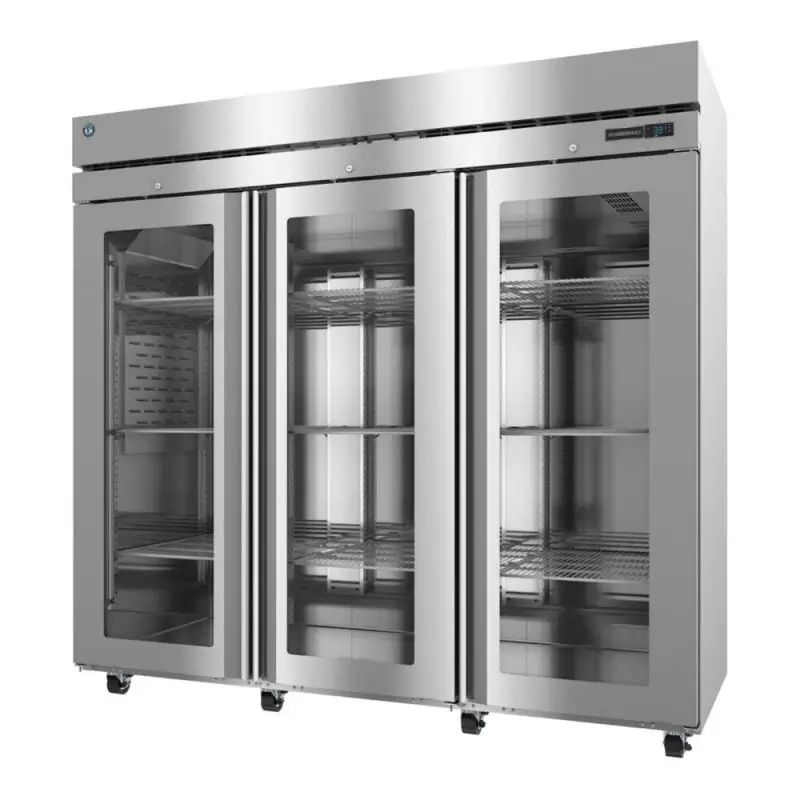
Retailers with food-service operations may also compare a commercial kitchen glass door reach-in refrigerator to a display version. Reach-in equipment is more about storage durability and kitchen workflow, while beverage display equipment is more about merchandising and customer visibility.
How to Plan a Customized Refrigerator Order
A structured purchasing process avoids misunderstandings and costly rework.
Step 1: Define the Retail Objective
The buyer should decide first whether the unit will be used for impulse purchases, high-volume beverage storage, premium product presentation, or branded promotions. This decision influences cabinet size, number of doors, lighting, and shelf layout.
Step 2: Prepare Product and Site Info
Retailers will be asked to supply site measurements, photos, beverage dimensions, estimated storage quantities, and local electrical specs. Accurate information will allow the supplier to give a suitable recommendation rather than an assumption.
Step 3: Review Drawings and Specifications
Review before approval of production: buyers
- Size of general cabinet
- Usable internal capacity
- Number and location of shelves
- Temperature range
- Type of refrigerant
- Voltage and power rating
- Glass & lighting specifications
- Logo location and cabinet colors
Please create a specification sheet that includes all approved information. Verbal agreements alone can lead to uncertainty at inspection or delivery.
Step 4: Confirm Your Compliance Needs
Certification Requirements Depend on the Target Market. Buyers may need to verify electrical safety, food-equipment sanitation, refrigerant regulations, and energy-efficiency standards, depending on the region and application.
Certifications must match the exact model and electrical configuration being purchased. Buyers should not assume that approval for one model applies to a customized version but should request relevant documentation.
Step 5: Plan for Inspection and After-Sales Support
The supplier shall test temperature performance, door alignment, lighting, controls, electrical safety, and exterior finish before shipment. Overseas buyers can verify the order by photos, videos, inspection reports, or third-party checks.
Retail Value and Price of Customization
Customization can drive up the initial purchase price, particularly if a project requires new cabinet dimensions, molds, refrigeration changes, or low-volume production. Changes such as custom colors or branded stickers tend to be cheaper than structural changes.
The cheapest quote is not always the best commercial value. Retailers should consider total cost of ownership, including:
- Energy consumption
- Cleaning needs
- Spare parts availability
- Maintenance access
- Warranty protection
- Expected duration of life
- Risk of product downtime
A well-planned beverage refrigerator can improve visibility, add more usable display space, and make restocking easier, adding value. For stores with limited floor space, learning to maximize retail space with a beverage display refrigerator can help decide the right cabinet depth, shelf arrangement, and door configuration.
Choosing the Right Commercial Refrigerator Supplier
It helps if a good supplier understands refrigeration engineering and retail merchandising. Buyers should look for good communication, realistic lead times, complete documentation, and proof of quality control.
Helpful questions include:
- Has the supplier done similar retail projects?
- Can it produce detailed technical drawings?
- What parts and refrigerants does it use?
- Are spare parts accessible to local technicians?
- How does it test for temperature stability?
- What is covered by the warranty?
- Does it support repeat orders with similar specifications?
Another thing a good commercial refrigerator supplier should tell you is the limits of customization. No responsible manufacturer will accept a design that compromises the flow of air, structural safety, cooling system performance, or regulatory compliance.
Final Recommendation
A custom glass refrigerator for beverages can assist retail stores in providing reliable cooling with better product presentation. The most valuable customization is around cabinet dimensions, shelf flexibility, glass performance, lighting, cooling capacity, branding, and local compliance.
Retail buyers should start with their operating requirements and then choose visual features that will support those requirements. A custom refrigerator with proper dimensions, approved drawings, performance testing, and written specifications can be a functional long-term retail asset, not a mere decorative display.
FAQs
How long does it take to manufacture a custom fridge?
Standard customization is four to eight weeks after approval of drawings and specifications; however, compressors, glass, and certification requirements can cause production extensions.
Is it possible to customize the order quantity?
Minimum order quantities vary depending on the level of modification. Branding can help small-batch producers, but structural changes usually demand greater production commitments from retail buyers.
What after-sale services should retail buyers ask for?
Buyers should request written warranty terms, spare-parts availability, technical manuals, remote troubleshooting, and response-time commitments before confirming a customized refrigerator order.