
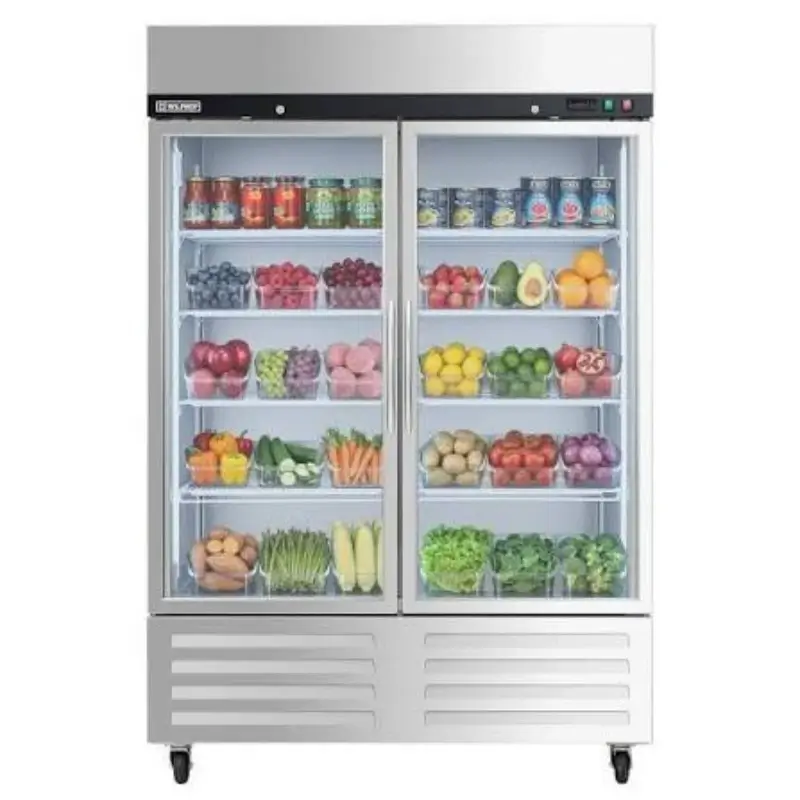
What Is a Glass-Door Reach-In Refrigerator
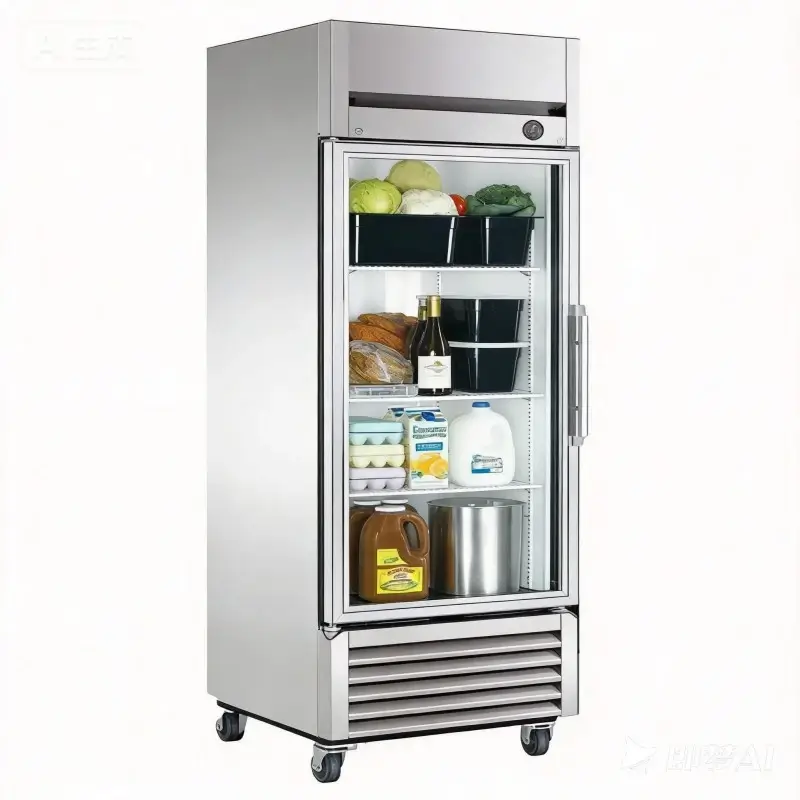
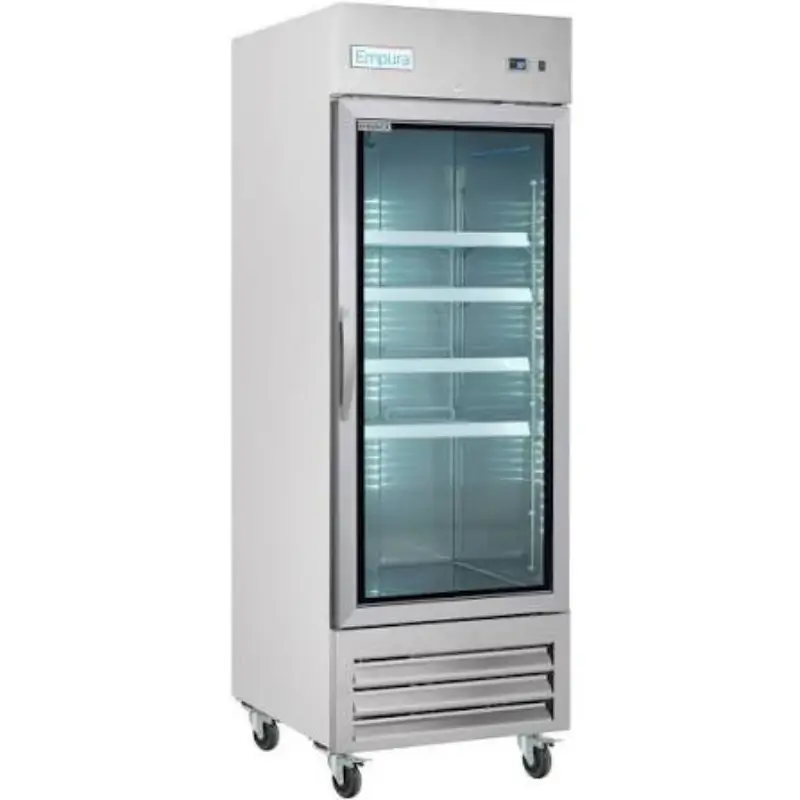
A Glass Door Reach In Refrigerator is designed for commercial kitchens and food-service operations. Staff can check its contents through the transparent doors without opening them, helping speed service during busy periods while the refrigerator maintains a steady temperature.
Most stand between 72 and 82 inches tall. Models may have a single door or as many as three, while tempered or double-pane glass panels withstand repeated impacts and temperature changes. Commercial Refrigerator units typically hold food at 33°F to 38°F, meeting health-code requirements for perishables.
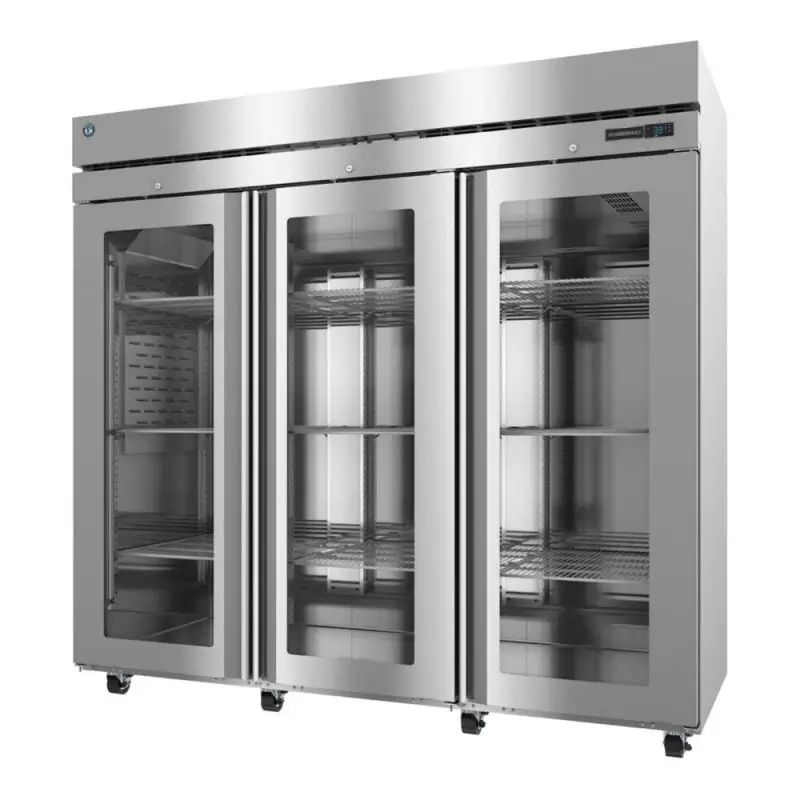
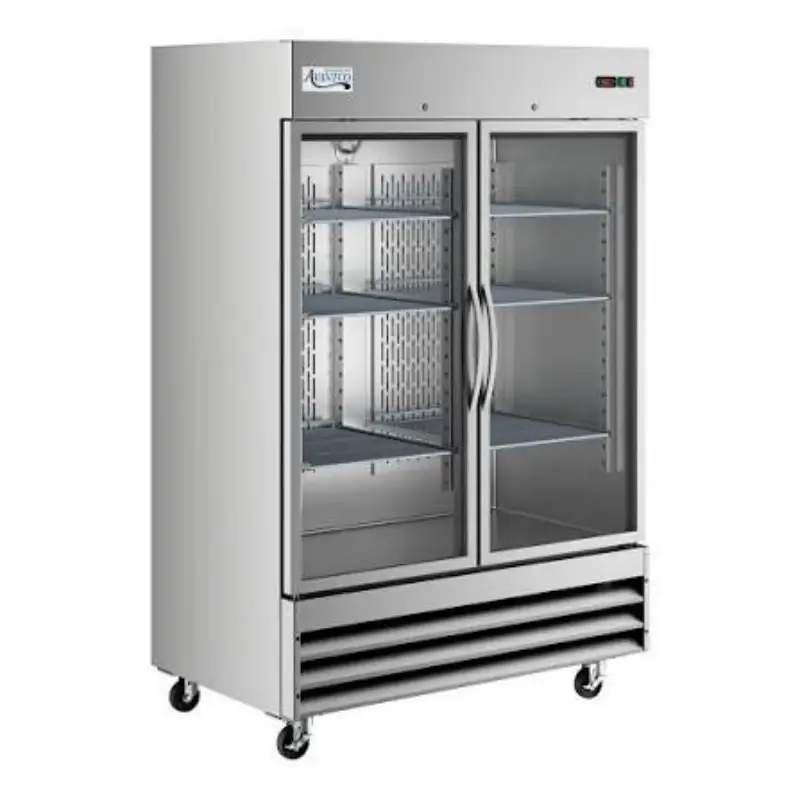
Problems With Standard Refrigerators
Many restaurants begin with ordinary solid-door models. During a rush, staff might open one dozens of times in an hour—and its limitations become obvious fast.
Unstable Temperatures
Standard refrigerators struggle to maintain a stable temperature when their doors open repeatedly. Each opening lets in warm air, forcing the compressor to work longer and cycle more often. During lunch or dinner rushes, the temperature can shift by 5–10°F, which accelerates spoilage and may create health-code problems. All that extra cycling consumes more energy and wears out the equipment sooner.
Poor Visibility
Opaque refrigerator doors keep the contents out of sight. During a rush, staff must open them to check supplies, sometimes repeatedly while searching for one ingredient. Each opening releases cold air and can cause a traffic jam, slowing prep and adding pressure as cooks work against tight ticket times.
Weak Durability
Standard models rarely survive the punishment of commercial kitchens. Thin materials can buckle, hinges wear down under repeated use, and door gaskets deteriorate after hundreds of openings each day. Heavy stockpots and bulk containers can leave shelves sagging as well. Replacement comes sooner than expected, along with repair bills operators never budgeted for.
Advantages of Glass Door Reach-Ins
The Glass Door Reach In Refrigerator addresses several problems found in standard refrigeration equipment. Restaurants that replace older units with glass-door models often report smoother daily operations and closer control of food costs.
Consistent Temperature Control
Built for demanding kitchens, these refrigerators typically use stronger compressors and improved insulation. Some advanced units have digital controls that adjust cooling based on how frequently the doors open. During the busiest service periods, that response can keep temperatures within 1–2°F. More stable cooling helps food stay fresh longer, reducing waste from premature spoilage. Many models also alert staff when temperatures begin to drift, allowing them to act before products are lost.
Clear Visibility
Transparent refrigerator doors speed up stock checks. Staff can spot ingredients that need replenishing without opening the unit again and again, reducing door-open time by an estimated 60–70%. Managers can review supplies while the cooling cycle runs, giving the kitchen a quicker view of what is ready for prep and service. Premium models include low-energy LED interior lighting, and front-of-house staff can check availability as they take special orders.
Commercial-Grade Build
Commercial glass-door refrigerators are made to take years of heavy use. Their stainless steel hinges can handle more than 100,000 opening cycles, and the magnetic gaskets maintain a reliable seal as they age. Shelves support 75–100 pounds without sagging, while the frames stand up to moisture and cleaning chemicals. Regular maintenance typically gives these refrigerators a lifespan of 10–15 years.
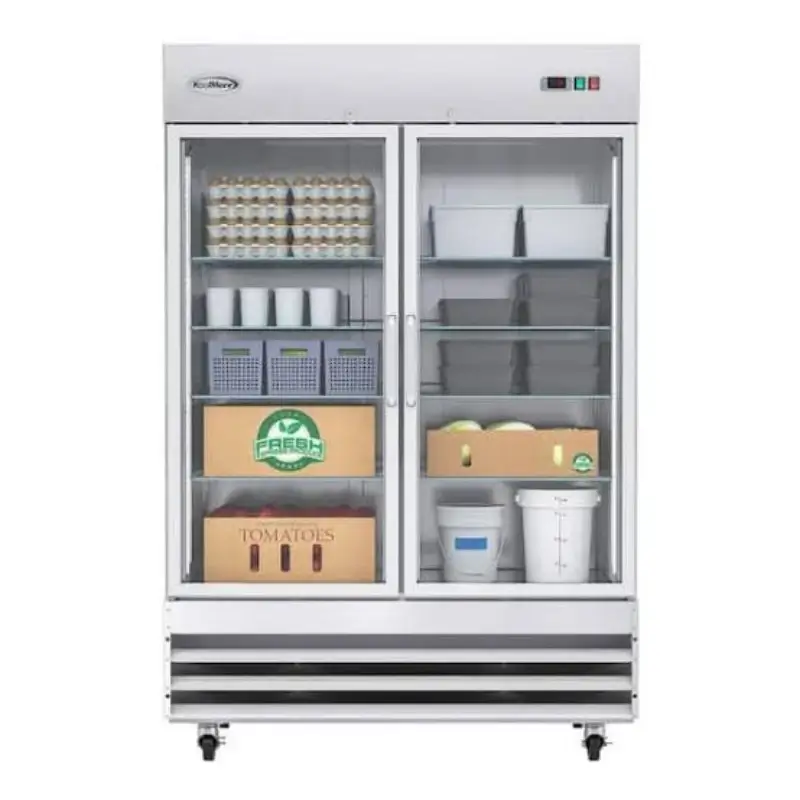
Glass-Door vs. Standard Refrigerator
| Feature | Glass-Door Reach-In | Standard Refrigerator |
| Visibility | The full interior remains visible | You must open the door to see what is inside |
| Temperature Stability | Stays within ±1–2°F during service | Can fluctuate by ±5–10°F during peak hours |
| Effect of Door Openings | Minimal, because staff can see the contents before opening the door | More frequent openings while staff search for items |
| Construction | Commercial-grade components | Light-duty residential construction |
| Energy Use | High-efficiency compressors | Standard compressors |
| Maintenance | Lower because the construction is sturdier | Higher as components wear |
| Initial Investment | $2,500-$6,000 per door | $1,200-$2,500 per door |
| Lifespan | 10-15 years | 5-8 years |
Glass-door models require more money upfront, though lower energy consumption, reduced food waste, and a longer service life can make up the difference over time.
Buying Guide
Choosing a Commercial Reach In Refrigerator starts with matching its specifications to the demands of everyday use. Those choices shape performance and satisfaction throughout the unit’s working life.
Energy Efficiency
The electricity a refrigerator consumes becomes part of its operating cost over time. ENERGY STAR-certified models use 20-30% less energy than standard units, though the compressor design matters too. Scroll compressors are quieter and more efficient, while reciprocating models usually cost less to buy and still perform reliably. Variable-speed compressors adjust their output with cooling demand, cutting unnecessary power use.
Look at the refrigerator’s rated daily consumption, measured in kilowatt-hours (kWh). A standard two-door glass model typically uses 8–12 kWh each day. Over a decade, choosing one that consumes 9 kWh rather than 12 kWh daily could cut electricity costs by roughly $1,300 at average commercial rates.
Door Type and Layout
Glass doors should suit the kitchen’s workflow. Full-height models make the most of limited space and work well when one unit stores large quantities of the same product. Half-height versions put the upper compartment within easier reach while helping the lower compartment hold its temperature. Check that each door opens clear of aisles and nearby equipment; self-closing hinges preserve the seal if someone leaves it ajar.
The interior layout matters, too. Shelves that can be repositioned accommodate containers of various sizes, and drawers near the bottom put everyday items close at hand. Because wire shelving leaves space for air to move, it helps keep the temperature consistent.
Final Thoughts
Busy commercial kitchens need refrigerators built for constant use and strict food-safety demands. With a glass door reach-in refrigerator, staff can check the contents without opening it, which reduces warm-air exposure and makes service faster. Precise temperature control and heavy-duty construction add to the upfront cost, but they also improve efficiency and extend the unit’s working life.
Refrigeration upgrades deserve more than a glance at the purchase price. Account for the full ownership cost: reduced energy consumption, less food waste, and fewer service calls can make up the difference quickly. In most high-volume kitchens, the savings cover the extra expense within 18-24 months.
FAQs
Q: How cold should a refrigerator in a commercial kitchen be?
A: Health codes generally require perishable food to remain at 38°F or below. Setting the unit between 35–37°F provides extra protection while usually keeping the contents from freezing.
Q: How often should a commercial refrigerator receive professional maintenance?
A: Schedule professional service every six months. Staff should clean the condenser coils and door gaskets monthly; that routine can add years to the refrigerator’s service life.
Q: Can you install a glass-door refrigerator in an outdoor kitchen or next to a hot food-preparation area?
A: Standard models may have trouble once the surrounding temperature rises. Select one rated for ambient temperatures above 100°F with a reinforced cooling system.