
Why the Right Refrigerator Drives Convenience Store Profits
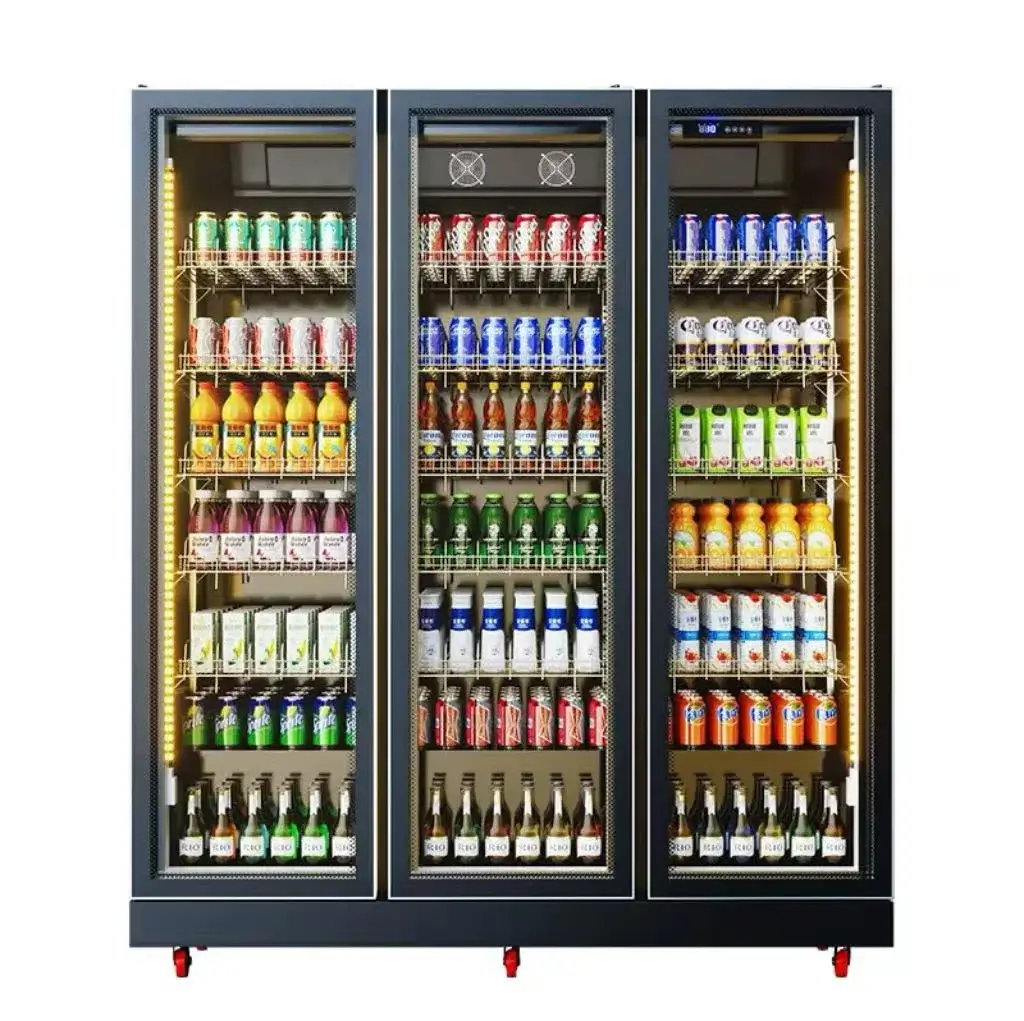
Convenience stores depend heavily on impulse buying. Cold beverages, ready-to-eat meals, and snacks usually generate 30-40% of daily revenue, which makes refrigeration central to every sale: products need to stay cold, visible, and appealing. Choose the wrong glass door refrigerator commercial unit, and the cost comes in two ways—higher energy bills, followed by lost sales when the doors fog or temperatures fluctuate.
Store owners who select their equipment with care can generally recover the extra cost within 18-24 months. Higher throughput and lower utility expenses account for the savings.
What Distinguishes the Best Units
Commercial glass-door refrigerators do not all perform the same way in convenience stores. The doors can be opened hundreds of times a day, ambient temperatures shift, and products must stay visible from top to bottom. The features below matter most:
1. Anti-Fog Glass Technology
Fogged doors lose sales: customers walk past products they can’t see. Triple-pane low-E glass, heated frames, and anti-condensation coatings help keep the surfaces clear, even in humid conditions. Frequent door openings during peak hours make condensation worse.
2. High-Traffic Door Hinges
In high-traffic locations, standard hinges may wear out within a year. Commercial-grade, self-closing models rated for 300,000+ cycles are designed for continual customer use. Cam-lift hinges also place less pressure on the gaskets, helping the seals last longer.
3. LED Interior Lighting
Bright, evenly distributed LED light makes products easier to spot and can increase sales. Vertical LED strips often work better than fixtures mounted overhead because they illuminate the bottom shelves, where cheaper impulse items typically sit.
4. Digital Temperature Controls
Analog thermostats may drift over time. Digital controllers paired with external displays let staff monitor temperatures without opening the doors, which helps protect product quality and energy efficiency.
Comparing Configurations for Convenience Retail
The right layout depends on the floor space available, the product mix, and customer movement through the store. Common formats include:
| Configuration | Typical Capacity | Best Use Case | Avg. Footprint |
| Single Glass Door | 20-25 cu. ft. | Small stores, endcaps | 27″ wide |
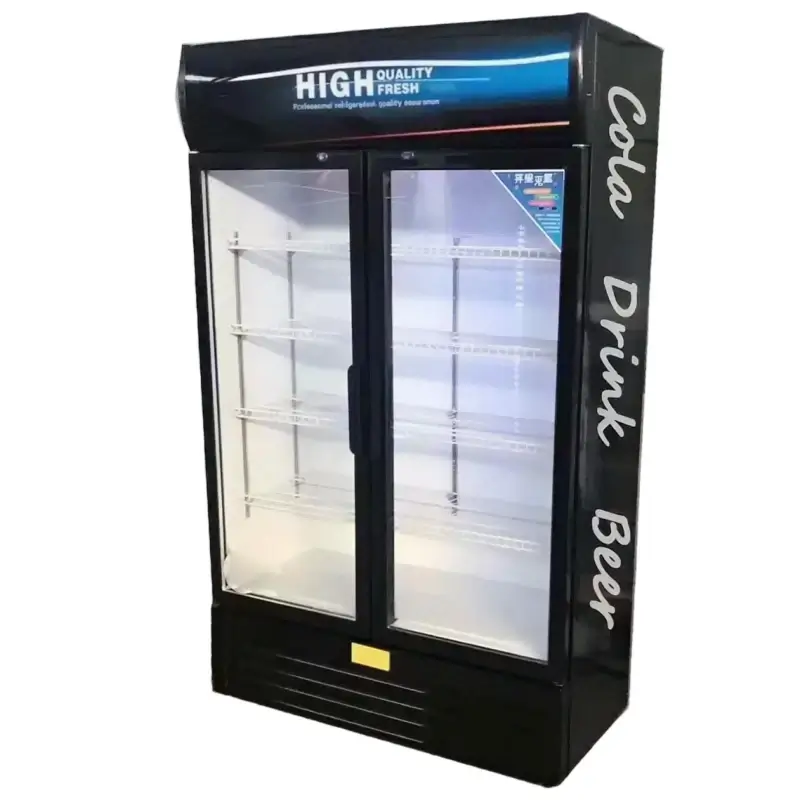
| Double Glass Door | 45-50 cu. ft. | Mid-size c-stores | 54″ wide |
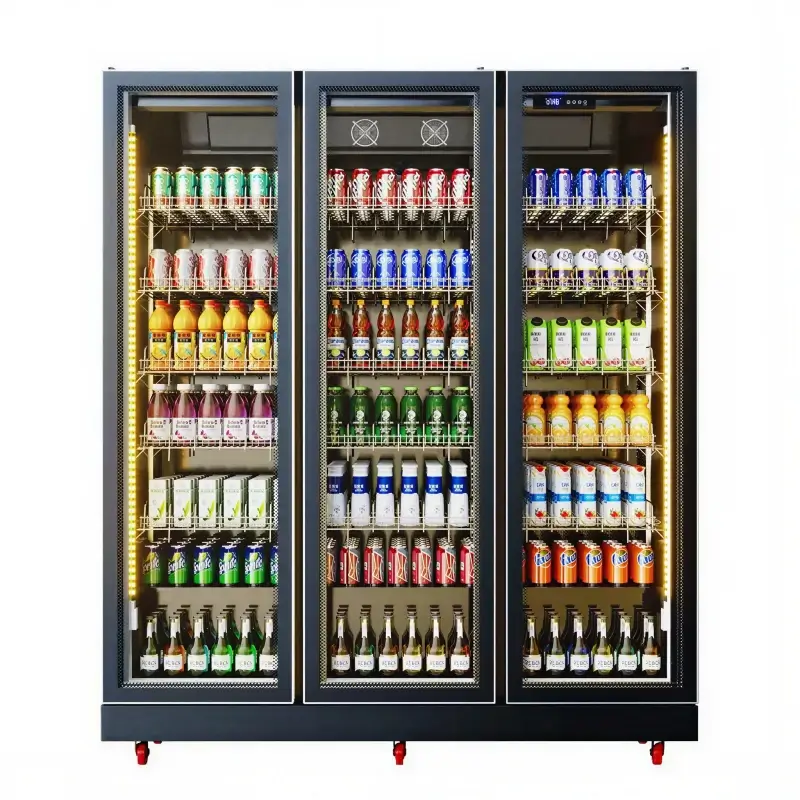
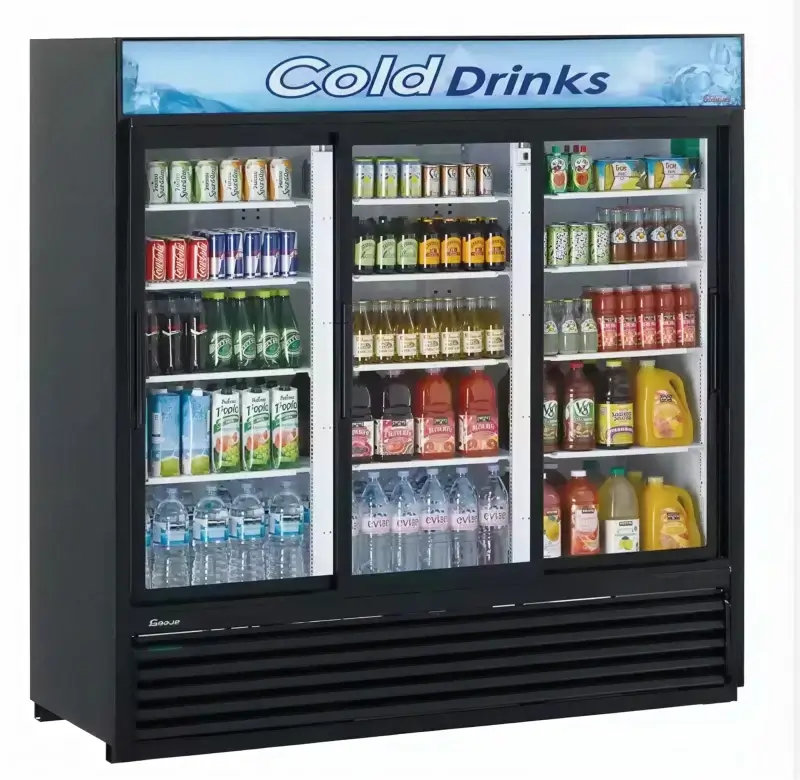
| Triple Glass Door | 70-80 cu. ft. | High-volume locations | 81″ wide |
| Swing-Door Reach-In | 23-72 cu. ft. | Back-of-house prep | Varies |
| Undercounter Beverage Unit | 5-10 cu. ft. | Checkout impulse zones | 24″-36″ wide |
Multi-door merchandisers tend to deliver the strongest sales per square foot. Smaller operators may see a better ROI, however, by placing a single-door unit alongside a Beverage Refrigerator at the register.
Practical Buying Checklist
Drawing on experience from dozens of store openings, these are usually the most important checks:
- Confirm that the unit has ENERGY STAR certification, which can help keep operating costs under control.
- Check that the compressor warranty lasts at least 5 years.
- Start by confirming the refrigerant: R-290 outperforms legacy HFCs.
- Each shelf needs to be adjustable and capable of supporting at least 100 lbs.
- Measure the full delivery route beforehand. Oversized units routinely cannot fit through standard doorways.
Skipping any of these steps typically leads to costly retrofits or premature replacements.
Backroom Storage Considerations
Front-of-house merchandisers attract attention, but the equipment behind the scenes matters just as much. A well-planned layout keeps overstock organized in a Commercial Reach In Refrigerator, shortens restocking time, and helps prevent temperature abuse during transfers. Convenience operators should allow backroom capacity of roughly 1.5x their display capacity, giving delivery cycles room to proceed without overcrowding.
Solid-door reach-ins consume less energy than their glass-door counterparts, making them the better choice when shoppers do not need to view the merchandise. Across a chain, the savings can accumulate quickly.
Common Mistakes That Hurt Store Performance
Even experienced operators sometimes make avoidable refrigeration choices:
- Undersizing capacity: Packing units to 100% of their inventory capacity forces the compressors to work harder and shortens equipment life.
- Ignoring ambient class ratings can cause premature failure; for example, a Class 3 unit placed in a Class 4 environment may fail early.
- Skipping preventive maintenance can increase energy use by up to 30% once condenser coils become dirty.
- Choosing the cheaper option instead of the more efficient one can backfire; over its lifespan, a low-cost unit often ends up costing $2,000 more.
- Noise is another concern. A loud compressor may drive customers away from nearby aisles.
To avoid these problems, assess each purchase by its total cost of ownership rather than by the sticker price alone.
Placement Strategy Inside the Store
Where the unit is placed can matter as much as its specifications. Even a premium glass door refrigerator commercial installation may underperform if positioned poorly. Beverage doors might work best along the back wall, encouraging customers to move through the store, while related categories stay together—energy drinks near snacks, for instance, and water near healthy foods. Keep refrigerators at least 6 feet from entry doors as well, since this helps reduce condensation load.
Keeping 3–4 inches of space behind the unit helps air circulate properly. Stores that adhere to these guidelines regularly report cold-case sales 10–15% higher.
Final Recommendations
For a convenience store, the best glass-door refrigerator setup makes products easy to see without giving up durability, energy efficiency, or straightforward servicing. Anti-fog glass, heavy-duty hinges, LED lighting, and digital controls deserve priority. The layout should be based on actual traffic patterns rather than aspirational sales targets. Display merchandisers also need sufficient reach-in storage behind them, and compressor quality should not be compromised. Operators who take this approach consistently outperform competitors in both revenue and margin.
FAQ
Q1: How many glass door refrigerators does a typical 2,500 sq. ft. convenience store need?
A: Most stores this size need 3-5 door faces. That is usually enough space for chilled beverages while still leaving room for grab-and-go food and dairy products.
Q2: What temperature range is best for merchandising mixed beverages?
A: Set the units between 34°F and 38°F. That keeps drinks refreshingly cold without freezing more sensitive products, including juice and dairy-based beverages.
Q3: When should convenience store operators replace commercial refrigeration units?
A: Properly maintained units typically last 10-15 years. Even so, declining efficiency can make replacement worthwhile after year 8, especially in high-traffic locations.