
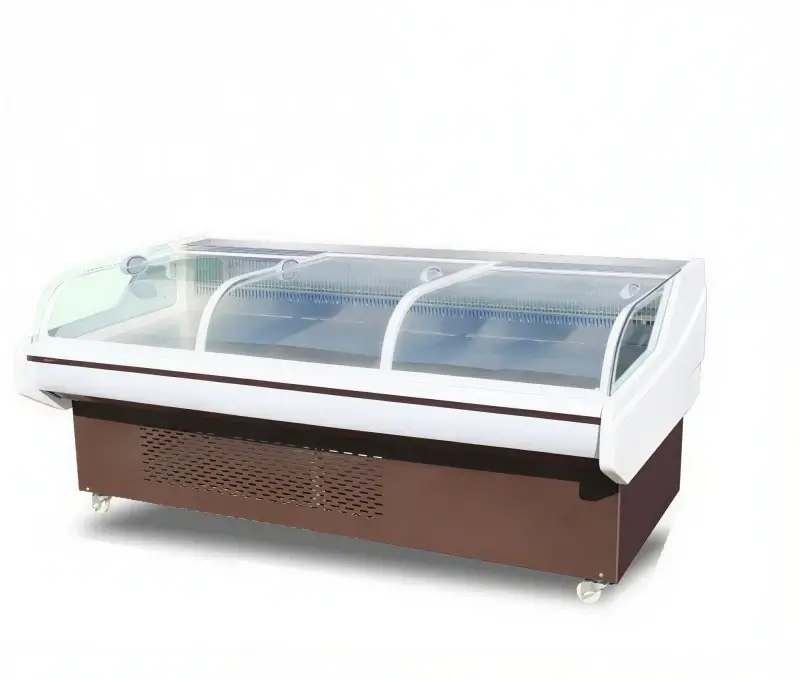
A butcher’s display refrigerator affects more than meat freshness. It can shape customer confidence and daily revenue, making it one of the shop’s major equipment purchases. Yet many buyers rush the decision, focusing on price or a familiar brand. Experienced butchers inspect the details first: temperature control, product visibility, operating costs, and whether the unit fits the shop’s day-to-day work.
This guide looks at how experienced meat retailers compare display options, from technical specifications to the way each unit fits within a shop. It gives buyers, whatever their scale, a practical basis for making the right choice.
Why the Right Display Unit Matters More Than Most Buyers Expect
A meat display refrigerator does more than keep products cold. In a butcher shop or supermarket meat department, it is the centerpiece of the sale: it helps preserve meat, shapes shoppers’ impressions of its quality, and supports food-safety compliance.
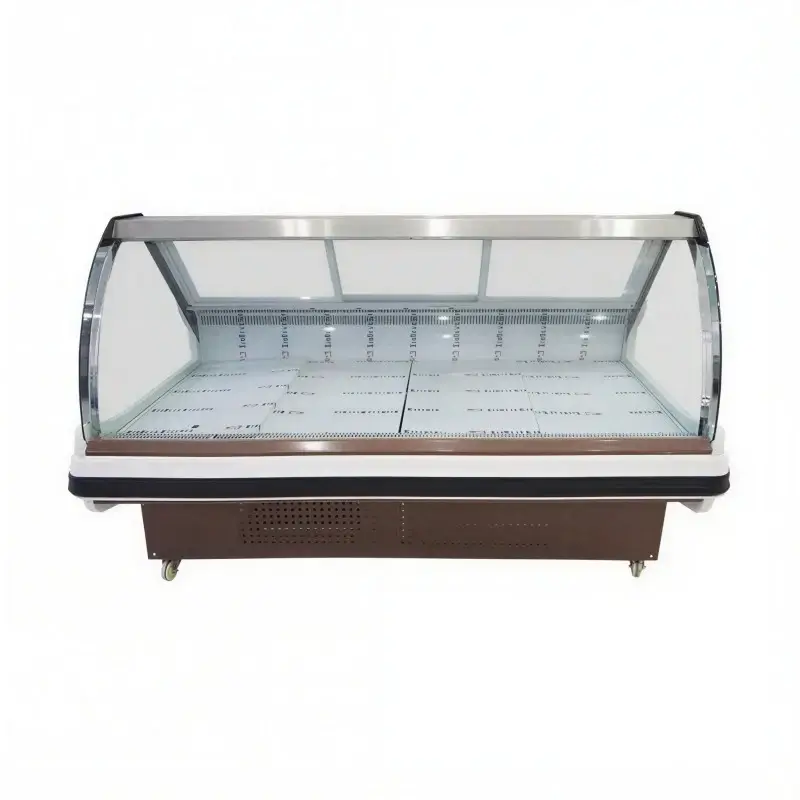
Product Safety and Shelf Life
Keep fresh meat at 0°C–4°C, the temperature range required by food safety authorities. Poultry, ground beef, lamb cuts, and cured meats do not all respond the same way to small temperature shifts. A display unit designed for meat offers better protection, since general-purpose coolers can move beyond the safe range during busy periods when staff repeatedly open the doors.
Butchers generally see spoilage fall by 8% to 15% after switching from standard coolers to display cases designed for meat. The savings vary with the products they sell and the shop’s daily volume.
Customer Perception and Purchase Behavior
A shopper often decides whether meat looks worth buying before reading a label or checking the price. Color, surface moisture, and the way the cut sits in the case all register within seconds. Good lighting and thoughtful placement let customers see the meat plainly, while dim bulbs, fogged glass, or an overcrowded shelf can make fresh products seem questionable.
Butcher shops that replace or refresh their display equipment regularly tend to attract more walk-in customers and raise the average value of each purchase. The case begins selling the meat before anyone on staff speaks.
What Experienced Butchers Look For
Selecting a meat display refrigerator involves more than scanning a catalog. Seasoned buyers consider how each model fits the shop’s daily work and how customers move through the display.
Temperature Range and Stability
Temperature control comes first. A unit that cannot hold a safe temperature is not worth much, regardless of its other features. Look for digital settings from –2°C to 6°C, automatic defrosting that avoids sharp spikes, and separate zones so different meats can be displayed together without mixing their storage conditions. Staff should also receive an alarm when the temperature falls outside the chosen range.
Fans push chilled air around the case, keeping the temperature steadier and reducing warm spots by the front glass, where room air affects products most.
Display Area and Visibility
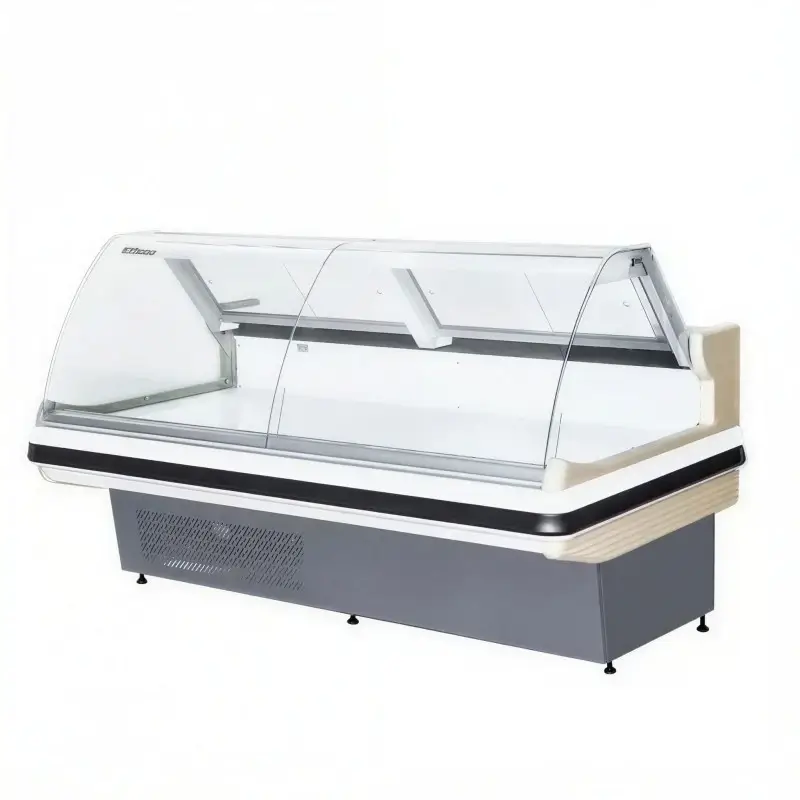
A larger display lets a butcher put more products in view, but extra size by itself proves little. What matters is how the case presents the meat: angled trays, tiered shelves, or curved front glass can improve sightlines without using more floor space.
Experienced operators recommend a unit that keeps every product in plain view. When items sit in hidden corners or behind stacked trays, customers may overlook them entirely.
Build Quality and Hygiene Design
Clean meat display areas daily. Stainless-steel interiors with rounded corners leave bacteria fewer places to gather. Removable drip trays and drainage channels make washing faster, while sealed, smooth joints avoid exposed screws and awkward gaps. Food-grade shelving resists stains and corrosion.
That design makes closing cleanup faster and can reduce compliance problems during health inspections.
Open-Front Cases vs. Glass Door Units
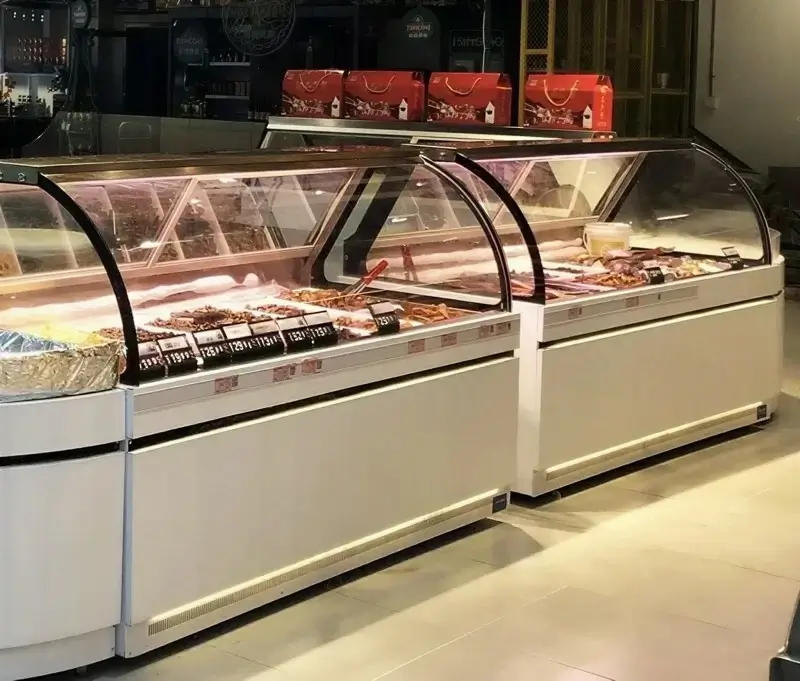
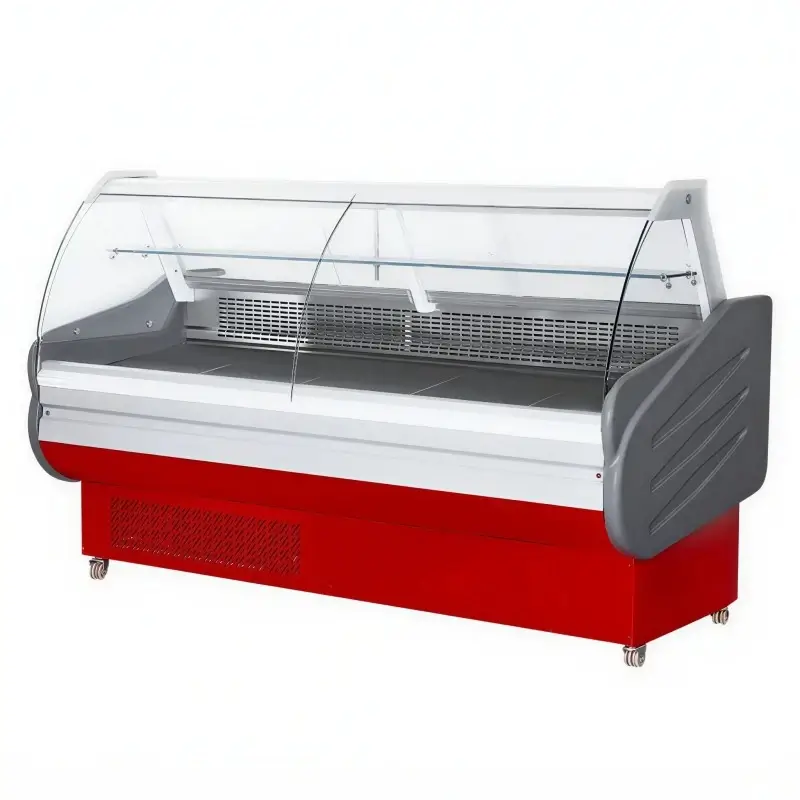
Most meat displays use one of two setups. The right choice depends on the store’s layout, how customers move through it, and the staff’s daily routine.
Open-Front Display Cases
Shoppers can see and sometimes take the products themselves without opening a door, which speeds things up. That suits busy supermarkets, where people move quickly, and employees frequently refill and tidy the shelves. The trade-off is higher energy use: cold air spills from the open front, so the refrigeration system must work harder to maintain its set temperature.
Glass Door Display Models
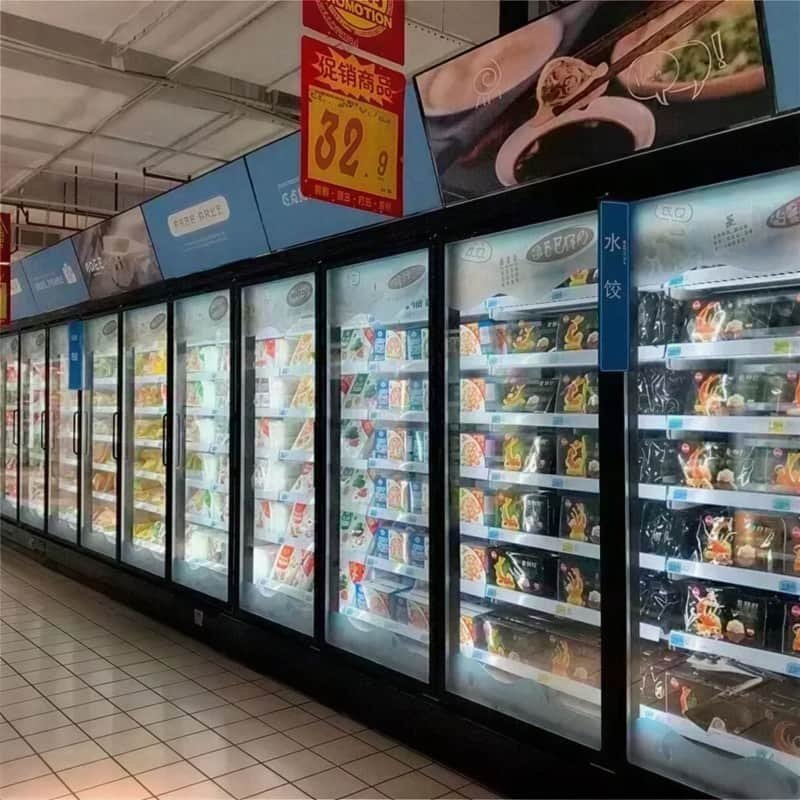
A commercial glass door refrigerator consumes less power and maintains a more even temperature. Because the front stays sealed, less cold air escapes, which lowers electricity use and helps food keep longer. For butcher shops with moderate customer traffic or small crews, it keeps refrigerated products cold without requiring frequent checks.
Anti-fog, low-emissivity glass preserves a clear view of the products and limits heat transfer. Customers see the meat almost as vividly as they would in an open case, while the enclosed unit consumes energy more efficiently.
The table compares both designs on a key concern for commercial meat retailers.
| Factor | Open-Front Display Case | Glass Door Display Unit |
| Customer access | Immediate, no barrier | Requires opening a door |
| Energy use | Usually higher, since cold air keeps escaping | Usually lower, because the enclosed space holds it in |
| Temperature control | Moderate; nearby air can affect the temperature | High; the interior climate stays steady |
| Best suited to | Busy supermarkets | Butcher shops and specialty retailers |
| Maintenance | More frequent, as the condenser has to work harder | Less frequent |
| Product shelf life | Typically 12–24 hours at peak visual quality | Typically 24–48 hours at peak visual quality |
| Noise | Moderate to high | Low to moderate |
For many butcher shops, a glass-door case strikes the right balance: it shields the meat, consumes less power, and still lets customers see what’s available.
Matching the Unit to the Business Type
A local butcher has different display needs from a supermarket meat counter. Choosing the wrong case can become an expensive mistake.
Small to Mid-Size Butcher Shops
Most shops display between 15 and 40 cuts. With limited floor space, the owner or a small crew typically handles preparation and serves customers. A compact, energy-efficient unit measuring about 1.2 m to 2.0 m wide fits the setting well, particularly when it has adjustable shelves and easy-to-clean surfaces. It offers adequate capacity without making the shop feel cramped.
Butcher shops can keep cured meat, sausages, and marinated products in a single unit, provided it has separate temperature zones. Each item remains at the temperature it needs.
Supermarket Meat Departments
Supermarkets often require display cases at least 3 m long. Because customers are constantly moving through the store, the cases need to handle heavy use, maintain safe product temperatures, and give staff quick access without holding up checkout. Models made for supermarkets and butcher shops typically combine longer display beds with stronger compressors and modular sections that connect into a continuous row.
Supermarkets can move heat and compressor noise away from the sales floor with remote compressor systems, making the shopping area quieter and more comfortable.
Features That Separate Good Units from Great Ones
Cooling meat is just the baseline. Better display refrigerators also include design choices that shape everyday operation, maintenance demands, and long-term costs.
LED Lighting Quality
Lighting can shape a shopper’s impression of meat more than people might expect. The wrong color temperature may make beef look gray or give pork an unnaturally pink cast. LEDs rated from 2700K to 3200K preserve the fresh red and pink tones of the cuts while producing too little heat to warm the display surface.
Use LED strips made for meat-display cases, placing them along each shelf’s top and front edge to spread light evenly across the products. Avoid fluorescent tubes; they generate excess heat and may change the meat’s color. Confirm that the LEDs carry the required food-safety certifications.
Drainage and Condensation Management
Meat releases moisture all day. In a well-designed display case, condensation and drips run into concealed drains that staff can flush in minutes. If those drains fail, water pools under the products, creating sanitation issues and accelerating spoilage.
Energy Efficiency Ratings
Refrigerated displays can consume a large share of a butcher shop’s recurring electricity costs. Efficient compressors, variable-speed fans, and good insulation help bring those bills down. Butchers who compare energy ratings before purchasing typically spend 15–25% less on refrigeration electricity each year than those who choose equipment based only on its sticker price.
Common Purchasing Mistakes to Avoid
Even experienced buyers can make expensive mistakes by looking only at the upfront price. Consider the total cost across 5–7 years, along with whether the display can handle future demand. A unit that seems large enough at first may feel cramped within months. Placement matters as well; equipment near cooking stations or south-facing windows must work much harder.
After-sales support can turn into a major expense when it is overlooked. If the compressor fails or the thermostat stops working, a responsive technical team can make all the difference.
Noise is another concern, particularly in small shops where customers stand or work close to the unit.
These problems can become costly over time. Butchers who compare their options before buying are generally happier with their choice two to three years later.
Making the Final Decision with Confidence
A well-designed meat display refrigerator must keep food safe, present it attractively, and remain practical to clean and maintain without exceeding the shop’s budget or available floor space. No single model suits every store, which is why the evaluation process matters.
Butchers and supermarket operators should begin with three basics: expected daily sales, the products they plan to stock, and the floor space they have. Once those requirements are clear, comparing suitable models becomes much easier.
Supermarkets and butcher shops can compare current commercial meat display refrigerators for supermarket and butcher shop by looking at storage capacity, temperature control, and how clearly they present products. A commercial glass door refrigerator adds enclosed chilled storage alongside the open display, which is especially useful for packaged or pre-marinated meat and gives the shop more space for different products.
The right equipment and a well-planned setup can cut waste, improve sales, and help prevent costly breakdowns over time.
Frequently Asked Questions
What temperature range is best for displaying fresh meat commercially?
Food safety standards generally recommend keeping fresh meat between 0°C and 4°C. Poultry should remain closer to 0°C, while cured products can tolerate slightly higher temperatures.
How often should a butcher shop clean its meat display refrigerator?
Clean the display surfaces and drip trays daily. Set aside time once a week to clean the entire unit, including its drainage channels and condenser coils.
Can a single display unit hold fresh cuts alongside frozen meat products?
Standard meat-display refrigerators keep food chilled, not frozen. Frozen goods require a separate freezer designed for below-zero temperatures, with an airflow system built for that job.