

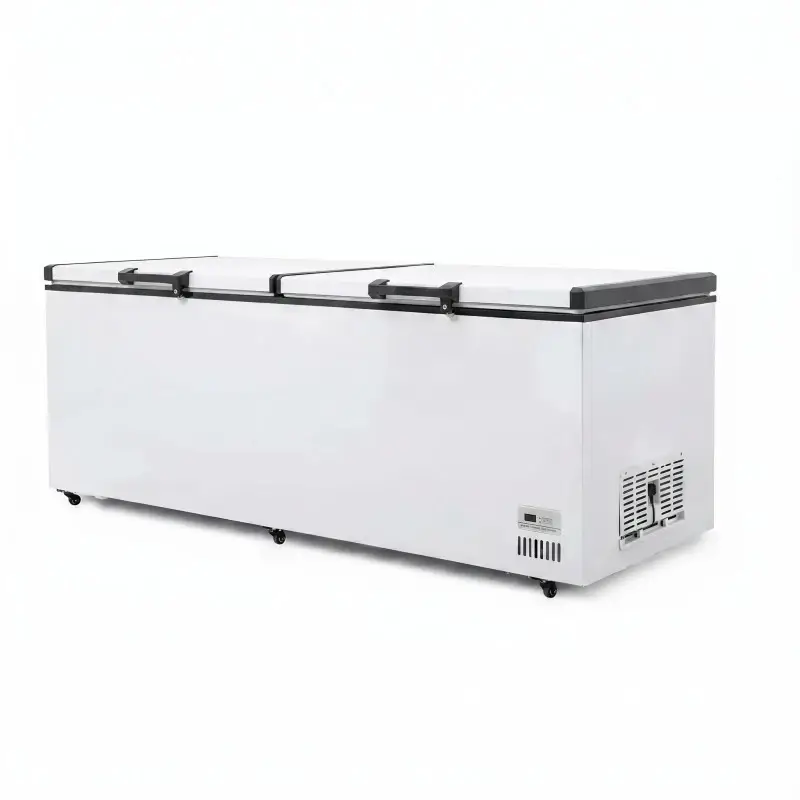
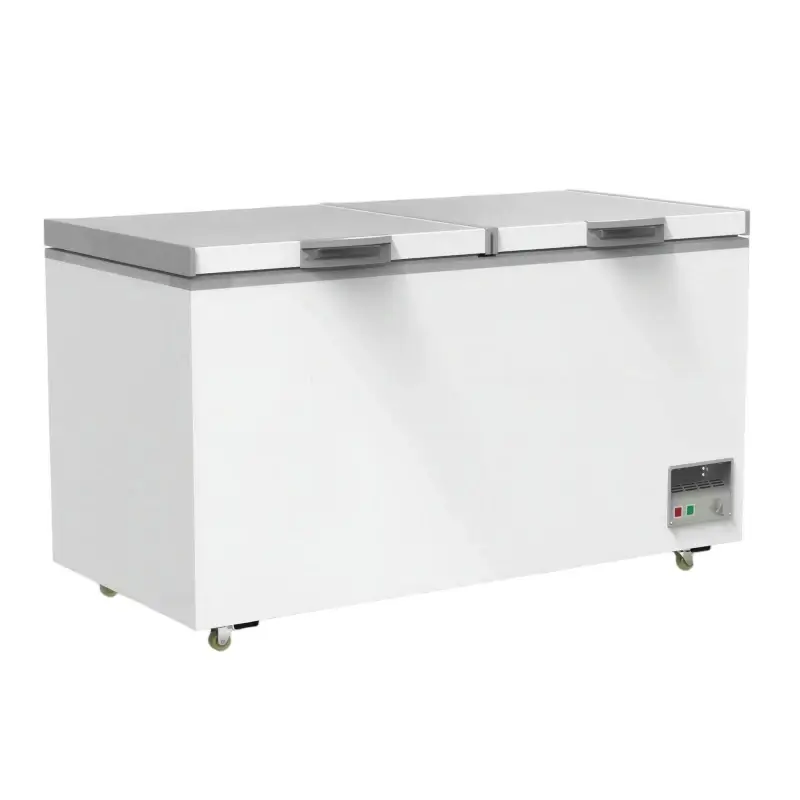
Restaurants, caterers, convenience stores, and pharmaceutical facilities all depend on reliable frozen storage for food or medicine. A Commercial Chest Freezer can maintain consistently low temperatures without complicated controls, yet capacity is only one part of the buying decision. Power use, day-to-day performance, and long-term running expenses affect both efficiency and profit.

Understanding Commercial Freezer Types
Frozen storage comes in several forms, but the choice often depends on whether access or efficiency matters more. Upright freezers are easier to organize and search, whereas Chest Freezer units usually hold cold longer and use less energy. Their horizontal design keeps the heavier cold air settled inside when the lid is opened, reducing temperature changes. For businesses storing goods over long periods, that consistency may be more valuable than quick retrieval.
Start with the amount of stock you need to store. A small café may manage with a compact Chest Freezer, but a wholesaler or large food-service operation could require a Large Chest Freezer. Check the volume first, then compare the available features.
Key Factors in Selecting Your Commercial Chest Freezer
Capacity Requirements
Start with capacity, but measure the space available first. The freezer needs to hold your current inventory with enough room for expected growth over its working life. Too little space can disrupt daily operations and force an early replacement; too much takes up valuable floor area and raises energy costs.
Chest Freezer capacity is usually measured in cubic feet or liters. A small shop may need only 7–10 cubic feet, while a larger food-service business may require more than 20. Wholesalers and distribution centers generally use several Large Chest Freezer units so they can separate product categories and keep inventory moving.
Recommended capacity by business type:
| Business Type | Recommended Capacity |
| Small retail shop or café | 7–12 cubic feet |
| Medium restaurant | 12–18 cubic feet |
| Large food-service operation | 18–25+ cubic feet |
| Wholesale or distribution | Several units of 20+ cubic feet |
Temperature Performance and Consistency
Commercial Freezer units need a stable temperature. Quality units typically stay between -10°F and -20°F (-23°C to -29°C), protecting food quality and safety. Temperature swings can cause freezer burn, complicate compliance with safety standards, and reduce how long products last.
A display outside the unit lets staff check the internal temperature without opening the door. That matters in healthcare and food service, where records must document compliance with temperature regulations. Higher-priced models can sound an alarm as conditions drift beyond the acceptable range, giving operators early warning that the equipment could fail.
Energy Efficiency and Operating Costs
Energy use keeps adding to operating costs long after purchase. A low-priced freezer with weak insulation may run almost nonstop, and the extra electricity can eventually cost more than the difference between an economy model and a premium one. Better insulation and compressor design allow energy-efficient Chest Freezer units to cut power use while maintaining steady performance.
Choose a unit with Energy Star certification, or the comparable efficiency label in your region. To earn one, a model must meet strict limits on energy consumption. Check the insulation as well. Efficient units commonly use 2–3 inches of high-density foam, which slows heat transfer and means the compressor does not need to run as often.
Energy efficiency comparison table:
| Feature | Standard Model | Energy-Efficient Model |
| Insulation Thickness | 1.5–2 inches | 2.5–3 inches |
| Annual Energy Cost | $180–240 | $120–160 |
| Compressor Type | Standard | Variable Speed |
| Recovery Time | 45–60 minutes | 30–40 minutes |
| Payback Period | N/A | 2–3 years |
Build Quality and Durability
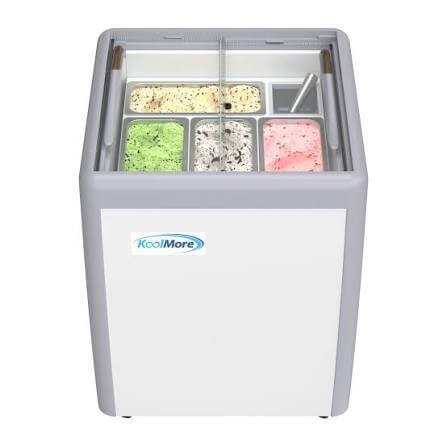
Commercial equipment takes a beating every day, often for years. That makes the construction of a Commercial Chest Freezer directly relevant to both its lifespan and upkeep. Start with the cabinet. Higher-quality models typically use a powder-coated steel exterior to withstand rust and impacts, while the inside has an aluminum or heavy-duty plastic liner that remains durable in very low temperatures.
The lid assembly deserves close attention. On commercial-grade units, reinforced hinges withstand constant opening without sagging or slipping out of alignment. Adjustable self-closing hardware keeps the lid steady while staff load or restock it, then draws it shut securely. A durable gasket seals out warm air, helping the freezer hold its set temperature and limiting frost buildup.

Operational Considerations
Defrost Systems
Commercial Chest Freezer units typically use either manual or automatic defrosting. With a manual unit, staff switch it off periodically and clear away the frost by hand. The freezer cannot operate during that brief task, but these models usually cost less and contain fewer mechanical parts. Automatic units handle the cycle themselves, though their interior temperature may rise slightly during each defrost.
Manual-defrost units can still make sense for businesses handling sensitive inventory or meeting strict compliance rules. They require more upkeep, but they avoid automatic cycles, which helps keep temperatures stable and limits thermal swings. Automatic systems may suit smaller teams or irregular schedules because they cut down on maintenance labor.
Storage Organization Features
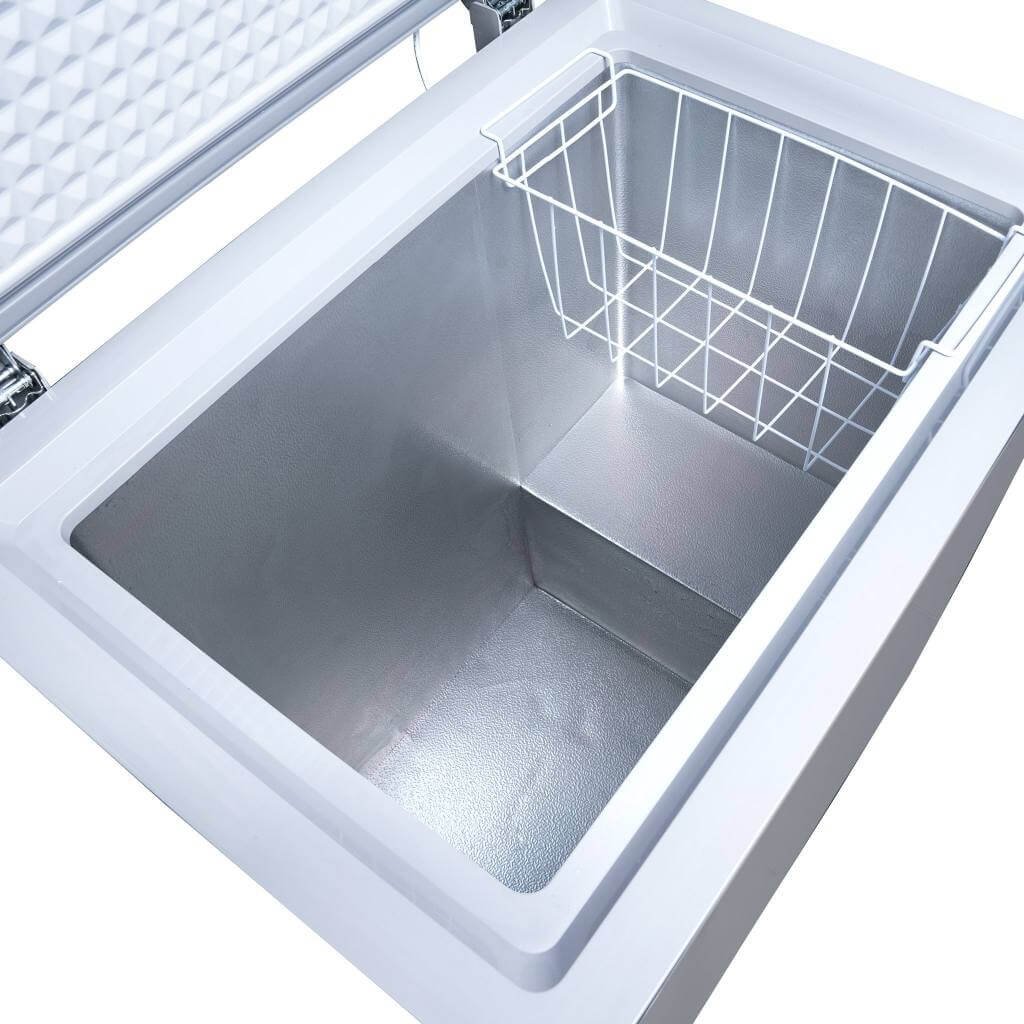
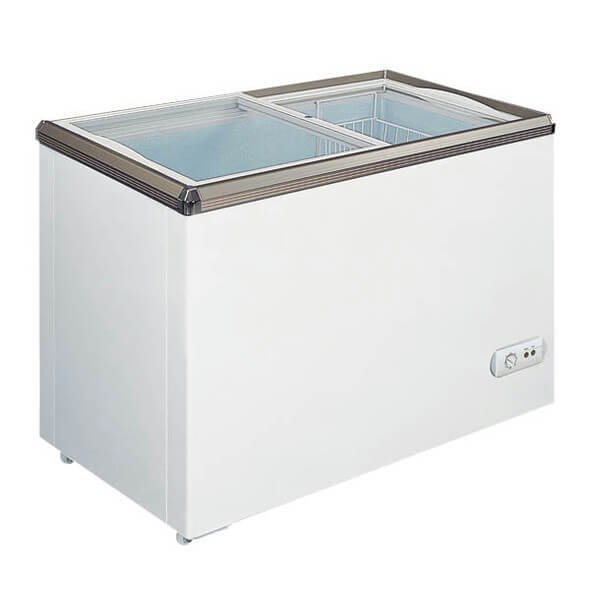
A Large Chest Freezer is much less frustrating when everything has a designated spot. Adjustable wire baskets divide the interior and keep frequently used food from getting lost underneath heavier packages. Since the baskets are open, cold air can circulate through them.
Some commercial models include interior dividers, making it easier to separate raw proteins from prepared food or keep catering orders together. Items are quicker to locate, so the lid stays open for less time and the unit uses less energy to hold its temperature.
Mobility and Placement
Heavy-duty casters let you roll a Commercial Chest Freezer aside for cleaning or facility changes. Lock the wheels once it is in place. Before buying, measure the available floor area and leave enough space around the vents for air to circulate.
Where you put the unit matters. Leave about 3–6 inches of open space beside its vents so heat can dissipate, and keep it in a climate-controlled room away from ovens and direct sunlight. That reduces strain on the compressor.
Advanced Features Worth Considering
Digital Controls and Monitoring
Modern Commercial Freezer units are simpler to monitor and adjust. Their digital thermostats let operators change the setting by one degree at a time, and an LCD shows the temperature inside. Higher-end models may also store readings over time, creating records for compliance.
Refrigeration managers can check temperatures from a phone or computer, even when they are away from the equipment. If a unit goes beyond its set range or the power cuts out, an alert gives them time to act before products spoil and losses mount.
Security Features
A sturdy container alone is not enough for businesses holding valuable goods. Its lid should block unauthorized access and guard against theft or tampering. Depending on the model, access may require a key, combination, or digital lock that records each entry.
When several staff members share a facility, each programmable access code records who opened the unit and the time of access. That log supports inventory checks and can reveal when a staff member needs more training because equipment was handled improperly.
Warranty and Service Support
Commercial equipment can be expensive upfront, so examine the warranty and repair terms before buying. Compressor coverage often runs for 5–7 years, while parts and labor usually receive only 1–3 years of protection. An extended plan could add useful coverage, but weigh its price against the equipment’s expected lifespan and how heavily the business will use it.
Service availability depends on both the manufacturer and your location. A reliable local technician can make the difference when a machine fails, since downtime may stop operations while you wait for repairs. Manufacturers sometimes sell paid service agreements for critical breakdowns, with quicker response times guaranteed.
Cost Analysis and ROI
Initial Investment vs. Lifecycle Costs
The purchase price is only the beginning. A Commercial Chest Freezer that costs more upfront may consume less electricity and last longer, making it cheaper over its working life. Include installation, yearly power use, repairs, maintenance, the expected service life, and any stock that might spoil if the unit fails.
Better-insulated freezers with more efficient compressors generally make up their higher upfront price through reduced energy bills within 2–4 years. After that, the lower running costs continue for the rest of the freezer’s service life.
Matching Capacity to Actual Needs
Equipment that is too large consumes unnecessary energy and floor space. A unit that is too small creates its own problems: businesses must reorder more frequently, while purchasing and menu planning become harder. Review past usage, choose a capacity that reflects actual demand, and allow an additional 15–20% for growth and seasonal changes.
As demand grows, a business may be better off adding several medium-capacity Chest Freezer units than relying on one Large Chest Freezer. If one needs maintenance, the others can continue handling the workload.
Making the Final Decision
Begin with capacity, temperature range, and any features you cannot do without. Once the choices fit your budget, weigh the remaining differences—controls, storage layout, and appearance.
Ask several manufacturers for the full specifications, then compare energy use, warranty coverage, and service support directly. Whenever possible, run the equipment under normal working conditions or schedule a demonstration; problems that never appear in a brochure may surface before you buy.
Speak with businesses that use similar equipment. Their owners can tell you how dependable it has been, how quickly the manufacturer responds when something goes wrong, and whether they remain satisfied after years of use—details a specification sheet will never provide.
Frequently Asked Questions
Q1: How large should a Commercial Chest Freezer be for a medium-sized restaurant?
A 14–18 cubic-foot freezer usually meets the needs of a medium-sized restaurant. That capacity can hold roughly a week’s inventory while leaving enough space to rotate stock and avoid wasting room.
Q2: How often does a manual-defrost Commercial Chest Freezer need defrosting?
For most units, every 3–6 months is sufficient. In a busy setting, though, frequent lid opening or high humidity can lead to faster ice buildup and require more frequent defrosting.
Q3: Are Large Chest Freezer units significantly more expensive to run than smaller models?
They use more electricity, yet an efficient large model typically adds only 30–50% to annual operating costs compared with a mid-size freezer, while offering twice the storage space.