
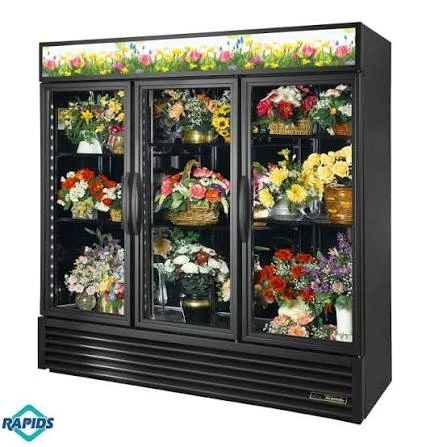
Fresh flowers have a short window on the sales floor. Wilting may begin before customers notice an arrangement’s color or design: petals sag, edges brown, and stems soften. The right flower fridge slows that decline while keeping bouquets easy to see. Temperature matters, too. Each variety has its own needs, and an incorrect setting can leave flowers unsold and destined for the bin.


Understanding Floral Refrigeration Requirements
Temperature Precision Matters
For most cut flowers, storage at 34°F to 38°F works best. Those temperatures slow respiration and ethylene production without harming delicate blooms. Tropical varieties such as orchids and anthuriums need warmer conditions, close to 50°F; roses and carnations can handle temperatures as low as about 34°F.
Flowers generally handle steady warmth better than repeated shifts in temperature. Once conditions move beyond the ideal range, every extra degree can shorten vase life by 10–15%. That can be hard to prevent in a busy shop, where customers keep opening the door, but a quality flower fridge can hold the cabinet within ±1°F.
Digital controls monitor the cabinet continuously and adjust cooling as demand shifts instead of cycling it mechanically. The flowers stay fresh longer, while less inventory is thrown away.
Humidity Control Systems
Cut flowers keep best when relative humidity stays between 80% and 90%; moist air slows water loss from the stems and petals. Below that range, fragile varieties such as hydrangeas and garden roses can wilt within hours. Most commercial food-storage refrigerators maintain just 60%–70% humidity, which is too dry for dependable flower preservation.
A floral refrigerator needs moist air, but not so much that water beads on the flowers. Wet surfaces invite botrytis and bacteria, which can quickly reduce display life. Getting that balance right takes precise engineering; a converted food-storage unit will not do the job.
Smart systems monitor humidity and mist flowers only when they need it. The plants stay healthier, while excess water and moisture-related damage are kept down.
Evaluating Display and Visibility Features
Commercial Glass Door Refrigerator Benefits
A glass door lets shoppers examine products and assess their freshness before they pay. They can see how much remains in stock, too; a nearly empty shelf may prompt an impulse purchase.
Multiple panes keep the exterior pane warmer, so condensation is reduced, and the view stays clearer without adding energy costs. Low-emissivity coatings reflect infrared radiation, cutting heat transfer by 30–40% compared with standard glass and helping indoor temperatures remain steadier.
LED lights show flowers’ colors clearly while producing very little heat. Adjusting the color setting can deepen reds, brighten whites, and make purples look crisper. The result is a more attractive display, which may lead shoppers to buy the pricier arrangement.
Single Door Display Refrigerator Advantages
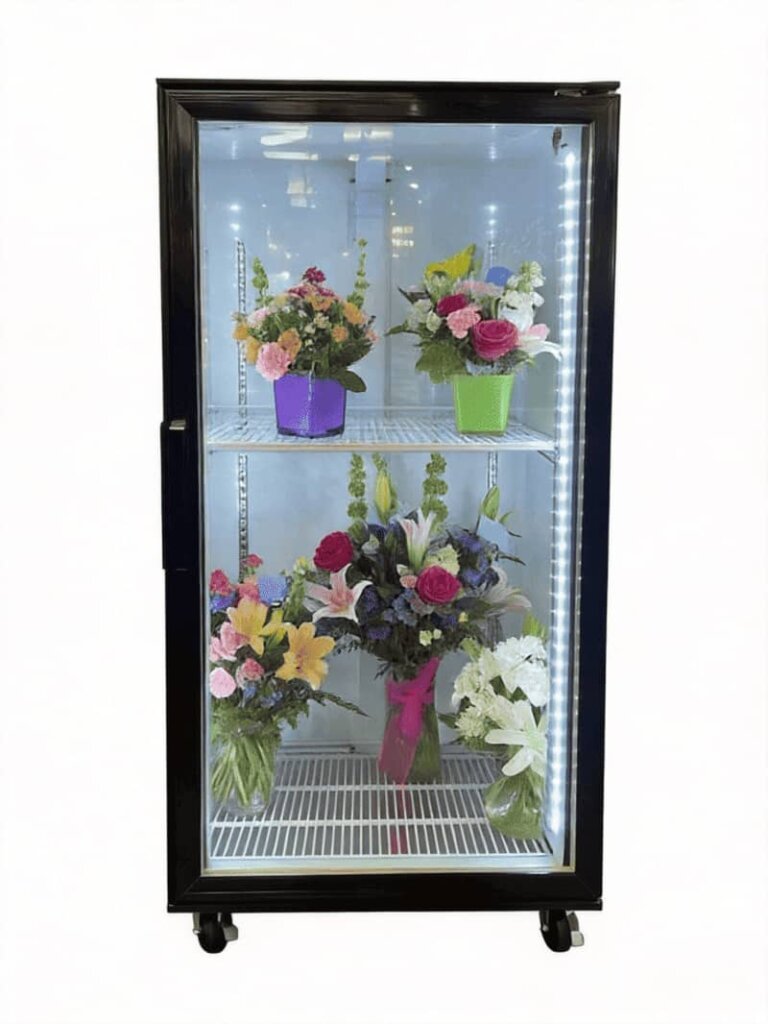
For most small and mid-sized flower shops, a single-door display refrigerator takes up little room. Standard units are about 24–30 inches wide and hold 15–23 cubic feet—enough space for one day’s flowers without crowding the sales floor.
This arrangement works best with a small, carefully chosen range of flowers. Keeping the same stems together makes stock checks quicker and helps staff locate the right variety during busy periods.
A single-door refrigerator loses less cold air, so it generally uses less electricity than a similar multi-door model. It also usually has only one compressor, which can make repairs cheaper—an advantage for florists working with narrow margins.
Capacity Planning and Space Utilization
Calculating Actual Storage Needs
Record your typical sales each day and add them up at week’s end. Keep an eye on stock, too—wedding season can raise demand to three times its usual level, while quieter months require far less inventory.
A flower refrigerator safeguards a florist’s costliest inventory. Premium wholesale roses run $3−$5 per stem, and a single arrangement may use dozens, putting hundreds of dollars’ worth of materials at risk. If the refrigerator fails, even one lost day of vase life can spoil 20−30% of the stock.
Industry guidance estimates that each $50–$75 spent on flowers per day requires about one usable cubic foot of refrigeration. With a $500 daily flower budget, plan on roughly 7–10 cubic feet of storage. Peak seasons can raise that need by another 20–30%, and having the extra room may prevent an emergency equipment purchase.
| Shop Size | Daily Flower Budget | Minimum Capacity | Recommended Capacity | Typical Configuration |
| Small | $200–$400 | 4–6 cu ft | 6–9 cu ft | Single door, 24–30″ |
| Medium | $400–$800 | 7–11 cu ft | 10–15 cu ft | Single/double door, 48–54″ |
| Large | $800–$1500 | 12–20 cu ft | 18–27 cu ft | Double/triple door, 72–78″ |
| Event-Focused | $1500+ | 20–30 cu ft | 30–45 cu ft | Multiple units or walk-in |
Shelving configurations vary
Install shelves at varied heights to fit different stem lengths while making better use of the vertical space. Each wire shelf safely supports 50–75 pounds, and its open design allows air to circulate beneath the products.
Flower buckets sit in designated slots, leaving more shelf room for other stock. Grouping each variety lets staff find stems quickly and reduces handling during arrangements.
Pull-out shelves make deep cabinets far easier to use. Staff no longer have to bend awkwardly or move items aside, reducing bruising and torn petals.
Energy Efficiency and Operating Costs
Evaluating Long-Term Expenses
Keeping these machines running all day can raise electricity costs. ENERGY STAR certified models use 20–40% less power than standard units while maintaining the same temperature control. They usually cost 10–15% more upfront, but the savings on utility bills typically make up the difference within 18–24 months.
Compressor performance affects electricity use as well as temperature control. A fixed-speed model repeatedly starts and stops; a variable-speed unit changes its output when conditions shift. That adjustment can cut power consumption by 15–25% and bring down bills.
The cabinet’s 2–3 inches of high-density foam helps hold cold air inside, even when the power supply fluctuates. Because less heat gets in, the compressor runs less often and consumes less energy over the equipment’s lifetime.
Night Cover Benefits
After closing, insulated covers placed over the glass doors help hold a steadier indoor temperature. They can also cut overnight compressor cycling by 20–30%. Basic cloth or vinyl versions cost $50- $150 and may save $200-$400 in electricity each year.
Staff no longer need to adjust the cover around store hours. The motorized model lowers after closing and retracts before opening, saving energy without adding another daily task.
Location and Installation Considerations
Optimal Placement Strategies
Set the refrigerator somewhere cool and shaded. Leave space between it and heating vents or equipment that gives off heat, including computers and printers. If you don’t, the compressor may run longer and consume more electricity, while the temperature inside becomes less steady.
Before you buy, leave roughly 4–6 inches of space around the condenser’s sides and back. Without enough airflow, it may run hotter, consume more power, and wear out the compressor sooner. Moving or modifying the unit afterward can cost a lot.
Before you plug in the refrigerator, confirm its dimensions and power requirements. Most single-door models use 110V, but larger multi-door units may need their own 220V circuit. The wiring must also support the required amperage, so an electrician’s inspection can catch problems before installation.
Accessibility and Workflow Integration
Staff should be able to reach the refrigerators quickly without having to work around customers. A back room works well when space allows: it keeps the sales area open and makes temperature checks easier.
Put the worktables beside the refrigeration units. Employees can choose stems and assemble arrangements while the flowers are still cool, then return anything unused to storage when the shop gets busy.
Maintenance and Reliability Factors
Daily and Weekly Maintenance Requirements
Check the door seal for cracks or gaps. To test its grip, close the door on a dollar bill and pull. If the bill comes free without much resistance, replace the seal; if it holds firmly, the seal is still doing its job.
Once a week, wipe the interior with a sanitizer approved for food-contact surfaces. Check the drain pans and door tracks while you’re at it; trapped moisture and debris can grow bacteria and cause odors that may reach the flowers.
Long-Term Reliability Considerations
Clean the condenser coils every three months. Dust forces the compressor to run longer, increasing energy use by 20–30% and making it harder to maintain the correct temperature. On most units, the coils are easy to access.
A dependable warranty reflects the manufacturer’s confidence in the equipment. Check that the compressor has coverage for at least 3–5 years and that parts and labor are covered for 1–2 years. If a breakdown could bring your business to a halt, extended protection may be worth the added cost.
Specialized equipment is expensive, so the supplier’s background matters. A manufacturer that regularly works with florists will usually understand flower-storage requirements better than a commercial refrigerator company focused on other industries. Before you buy, check reviews from fellow florists; the refrigerator’s overall rating may offer little useful information.


Budget and Value Analysis
A reliable floral refrigerator is a serious expense: a small single-door model typically costs $2,000−$3,500, while larger units often reach $5,000-$8,000 or more. Cutting the initial cost may prove expensive if poor temperature control ruins the inventory.
The purchase price tells only part of the story. Electricity, upkeep, and flowers ruined by fluctuating temperatures can quickly erase the savings from a cheaper unit. Take a $3,000 model that keeps flowers fresh for two extra days: if it cuts weekly waste by $50–$100 compared with a $1,500 model, that extra $1,500 may be recovered within a year.
Financing lets the equipment start earning money before you’ve finished paying for it. For a new operation, a monthly payment of $100–$200 can be more manageable than one large purchase. Check the total interest first, then weigh it against the inventory savings you expect.
Frequently Asked Questions
Q1: How much refrigerator space should a new florist shop have?
A: For most new shops, 6–10 cubic feet is enough. That space holds roughly 300–500 inventory units per day while leaving some room for special orders as the business expands.
Q2: Can flowers stay fresh in a regular commercial refrigerator when humidity is managed separately?
A: Yes. Still, a floral refrigerator usually works better because it controls humidity and air circulation more precisely while holding the stable temperature cut flowers need.
Q3: What temperature should a refrigerator maintain for different kinds of flowers?
A: Most flowers do best at 36–38°F. Tropical varieties need warmer conditions; if you can, store them in a separate refrigerator. If not, place them on the upper shelves, where temperatures tend to be higher.