
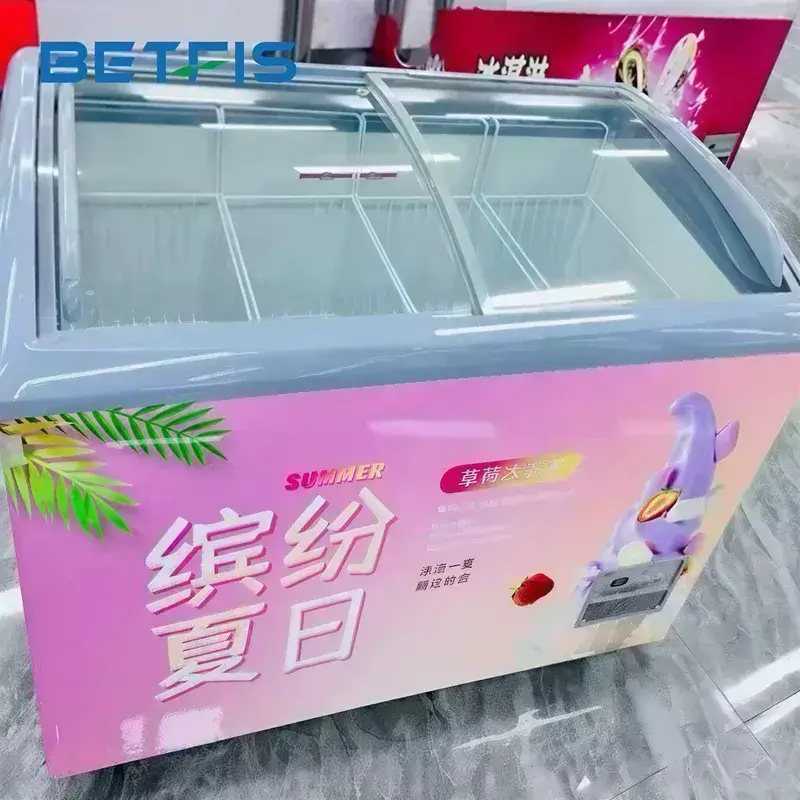
An ice cream shop’s freezer does much more than store tubs. A well-chosen Ice Cream Freezer keeps the product at a steady temperature, presents it attractively, supports daily sales, and helps control running costs without taking up more space than the shop has available.
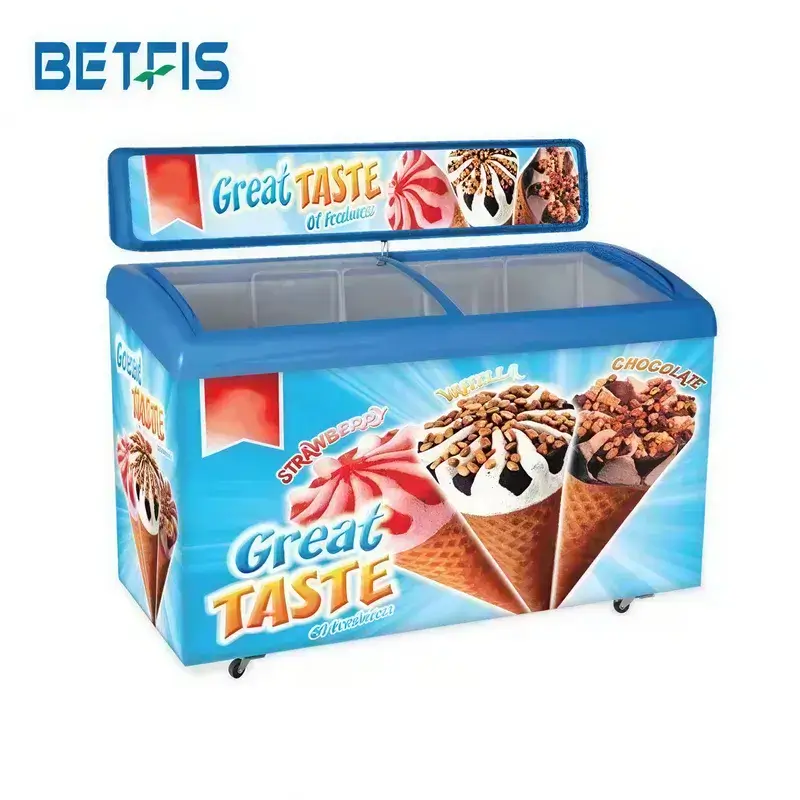
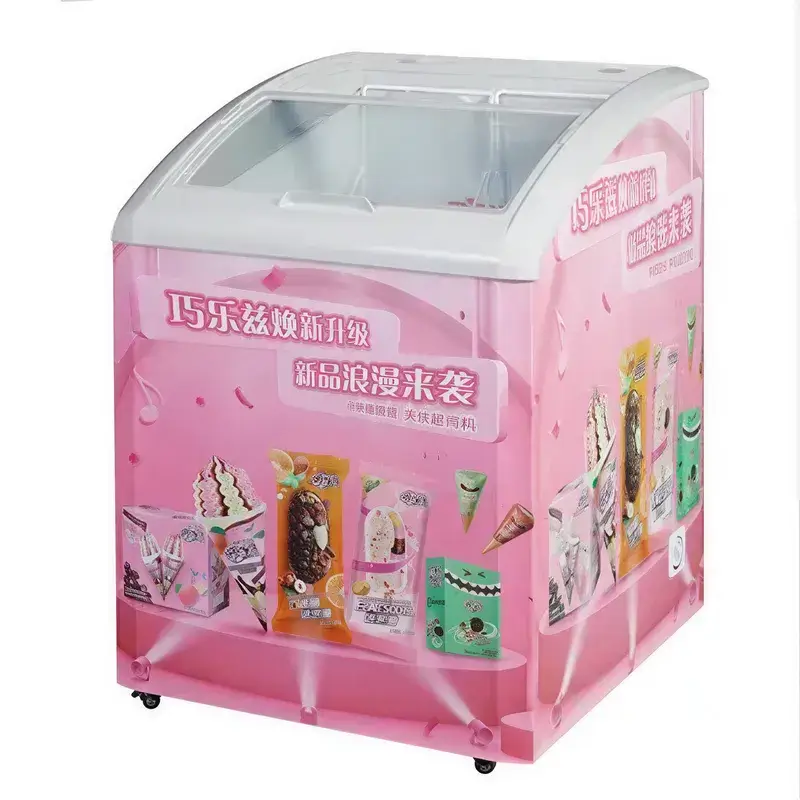
Many shop owners start with price and size. Seasoned operators look beyond those numbers, asking whether customers can see and reach the goods, whether the freezer fits the shop and holds enough stock, and what it will cost to run and maintain. A low-priced model may cost more in the long run if it cannot keep a steady temperature, hides products, or breaks down often.
Every ice cream shop has to decide what its freezer is for. A display model lets customers browse and often leads to impulse purchases, while a chest freezer holds more stock in less space. Some shops keep both: one for serving customers and one for backup inventory.
Why Freezer Selection Matters for Ice Cream Shops
Ice cream needs a consistently cold freezer. Once it melts and freezes again, larger ice crystals can develop, making it coarse and affecting how it looks and scoops. Bad storage can also lead to wasted product and dissatisfied customers.
The freezer affects how people shop. When customers can see the choices clearly, they decide faster. A well-arranged unit also saves staff time and creates space for seasonal products or items with better margins.
The right freezer keeps temperatures steady, reduces spoilage and freezer burn, makes products look more appealing, keeps stock organized, and speeds up service.
●Increase impulse purchases
●Control energy and maintenance costs
●Use available floor space more effectively
Freezer space becomes critical when sales surge—on hot days, holidays, weekends, and during local events. If the unit cannot hold enough stock, the shop may run out of its most popular flavors at the busiest time.
Begin With the Shop’s Business Model
Choose the sales model before comparing freezers. The way the shop plans to sell ice cream will determine which equipment and freezer setup make sense.
Match the Freezer to the Sales Format
A scoop shop mainly needs space for tubs and serving supplies. A convenience store must keep packaged cups, bars, and sandwiches where customers can see them, while a supermarket typically needs display space up front plus room for extra stock in back.
Key Questions to Answer Before Shopping
The main things to find out are:
●Whether the shop sells packaged ice cream, scooped servings, or both.
●How many products must remain frozen.
●How frequently staff restock the freezer.
●Whether customers select their own products.
●Will the shop need more stock during busy periods?
●How much room is available for the freezer?
●Should it sit near the entrance, checkout, or production area?
Let the Selling Method Decide, Not the Budget
A shop selling individual frozen treats needs customers to see the products easily. A bulk buyer may care more about storage space and reliable temperature control. Choose equipment based on how the products are sold—not simply on the budget.
Display Freezers Improve Product Visibility
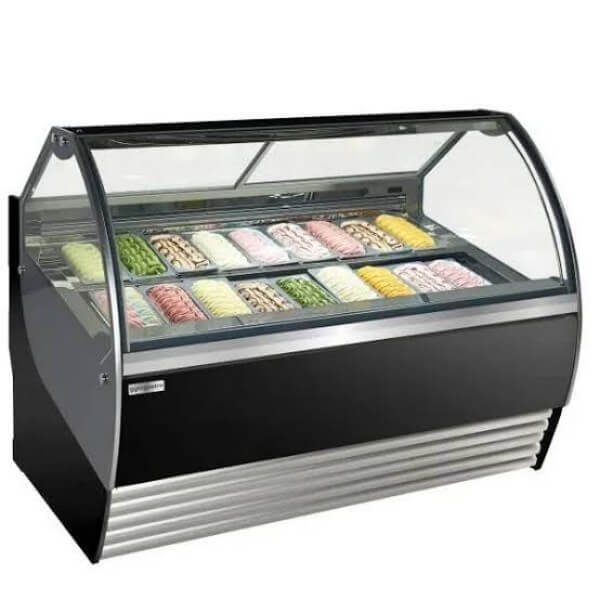
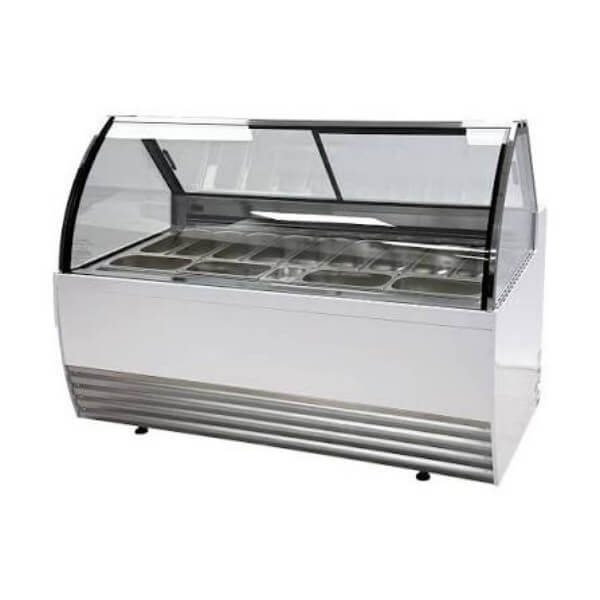
A Display Freezer puts the products in plain view, so shoppers can inspect them before opening the case. Glass doors, sliding lids, lighting, and orderly shelves turn it into part of the shop floor—not just a place to store frozen goods.
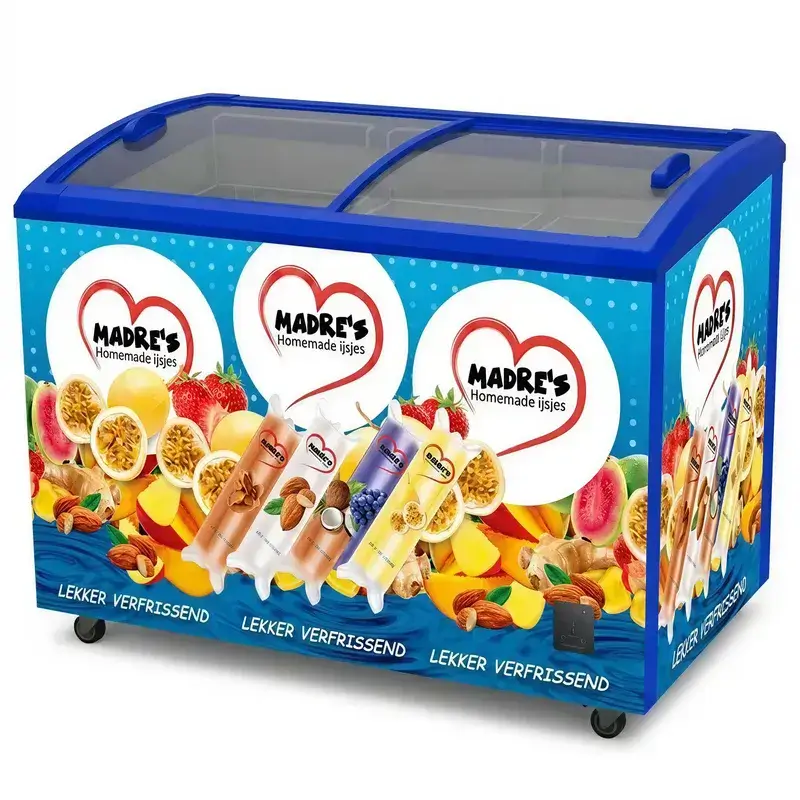
Turn Browsing into Impulse Purchases
Display freezers hold ice cream cups and tubs, frozen bars, sandwiches, cones, popsicles, and other novelty treats. They also work well for premium desserts and seasonal promotions.
Products That Suit a Display Freezer
Being easy to spot can lead to quick purchases. Bright packages and familiar brands draw the eye, and a tempting display can persuade shoppers to add something—particularly near the checkout or in crowded store sections.
Fewer Openings Mean a Steadier Temperature
Because the contents remain visible, customers and staff do not need to open the freezer as often. Less cold air escapes, which helps maintain a steadier temperature.
Features That Improve Ice Cream Merchandising
Not every display freezer helps sell ice cream equally well. Before choosing one, retailers should focus on features that make products easy to see and organize:
| Feature | Retail Benefit |
| Clear glass doors or lids | Let customers view products at a glance |
| Internal LED lighting | Makes packaging and flavors easier to distinguish |
| Adjustable shelving | Accommodates packages in different sizes |
| Anti-fog glass | Preserves visibility in humid conditions |
| Reliable door seals | Keep cold air from escaping |
| Digital temperature display | Make routine temperature checks quick |
| Easy-clean interior | Simplify cleaning and maintenance |
| Compact footprint | Uses less floor space |
Where the freezer goes can affect sales. Place it near the entrance so shoppers notice it right away; put it by the checkout to encourage an impulse buy. Leave the aisles open, though, and allow staff enough space to work.
When a Chest Freezer Offers Better Storage Value
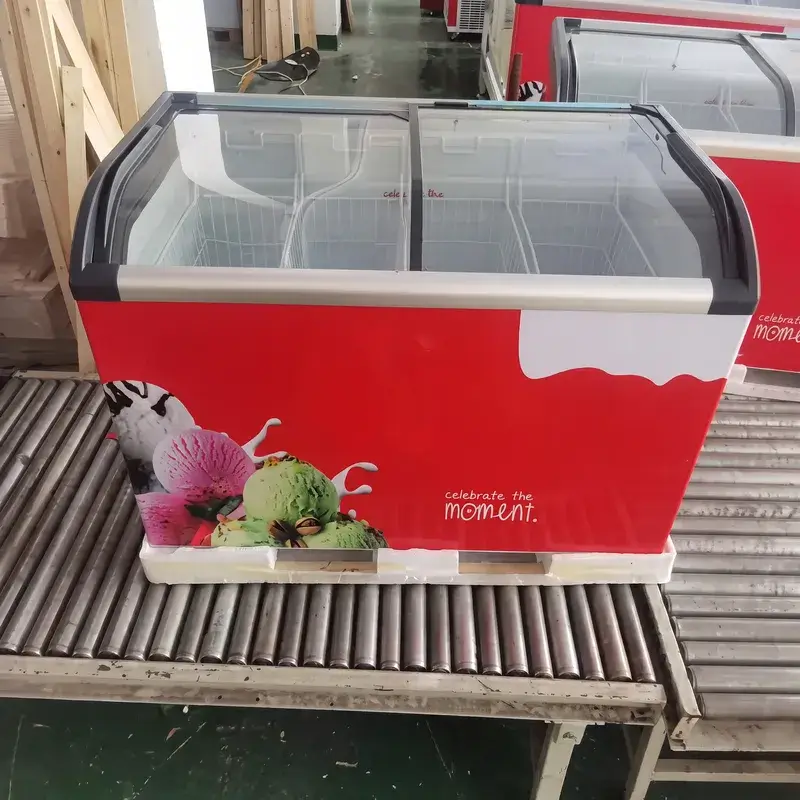
A chest freezer opens upward, giving you substantial storage space. Because the lid releases little cold air, the temperature stays steadier, and the interior remains efficiently packed.
Keep Reserve Inventory Organized and Out of Sight
For shops that need extra inventory nearby, a chest freezer is a practical choice. Keep the contents organized with baskets, dividers, and labels showing the flavor, brand, package size, or arrival date. Because customers cannot browse these freezers easily, they belong in a back room or another quiet area.
They can store backup inventory—large tubs, cartons, and other bulk goods—so stores can handle seasonal surges or wholesale orders. Separating those supplies also reduces pressure on the display equipment.
Plan for the Access Trade-Off
The hardest part is getting to the right product. When the freezer is packed, staff may need to move several packages before reaching one buried underneath. Regular stock rotation and a tidy layout make retrieval much easier.
Pair a Chest Freezer with a Display Unit
Many shops use two freezers: a display model on the sales floor and a chest freezer for spare stock. Customers can see the products easily, while staff keep extra tubs close by and replenish popular items quickly.
Comparing Display and Chest Freezer Designs
Both types can store ice cream for sale, but they suit different daily operations. A display freezer puts products in front of customers and makes them easy for shoppers or staff to reach. A chest freezer works better for bulk or reserve stock, though visibility is limited and items at the bottom may be difficult to retrieve.
| Consideration | Display Freezer | Chest Freezer |
| Main use | Shows products for sale | Holds bulk and reserve stock |
| Customer visibility | Excellent | Limited, depending on the design |
| Access to products | Easy for shoppers and staff | Items at the bottom can be harder to reach |
| Merchandising value | High | Moderate to low |
| Bulk capacity | Moderate to high | Usually high |
| Temperature retention | Good when the seals are strong | Often very good |
| Best location | Sales floor | Backroom or storage area |
| Suitable products | Packaged retail goods | Cartons, tubs, and reserve stock |
A shop can use both. As sales increase, popular items may stay in a display freezer for easy customer access, while extra inventory goes into a chest freezer in the back.
Choosing the Right Size and Capacity
The freezer should hold the shop’s present inventory with some room to grow. A cramped unit means frequent restocking and packed shelves; one that is too large takes up valuable floor space and consumes unnecessary energy.
Size the Unit Around Real Shop Demand
The shop should size the unit around its normal weekly sales, busier seasons, product range, package sizes, delivery schedule, and the room available on the sales floor or in storage.
Required clearance for ventilation and maintenance
Required Clearance for Ventilation and Maintenance
A freezer needs open space around it so air can circulate properly. When it is packed too tightly, employees have a harder time locating products, the unit consumes more energy, and its temperature becomes less stable.
Plan Capacity Across Three Stock Categories
A workable capacity plan separates inventory into three categories:
●Daily sales stock: The products customers purchase most often
●Reserve stock: Additional products held for restocking
●Seasonal or promotional stock: Items purchased for periods of unusually high demand
This helps the shop judge whether one large unit is enough or whether different jobs require separate equipment. Stock is easier to monitor, too, so fewer products expire or get overlooked.
Stable Temperatures Preserve Ice Cream Quality
Temperature control has a major effect on how well ice cream equipment performs. Ice cream may still look frozen after repeated temperature changes have already harmed its texture and quality.
What Keeps a Freezer’s Temperature Steady
A reliable freezer keeps its temperature steady during busy periods, even when staff open the doors or lids again and again. Strong insulation, dependable cooling components, an accurate thermostat, and tight seals all help maintain stable conditions.
Build a Simple Temperature Monitoring Routine
Shop operators need a simple monitoring routine. Staff should record temperatures at fixed intervals and investigate any abnormal reading immediately. A sharp increase may signal a damaged seal, blocked airflow, an overloaded freezer, a power outage, or mechanical trouble.
Handling Habits That Protect Frozen Stock
Good handling also means keeping doors and lids closed as much as possible, never placing warm products in the freezer, leaving clear space around air vents, and arranging stock so it can be removed quickly.
●Check each package for damage or evidence that its contents have thawed.
●Use the oldest purchases first, according to when they were bought and placed in storage.
●If temperatures reach an unsafe level, move the affected products to a backup unit.
These checks help keep products safe and reduce the chance of costly business interruptions. Monitoring storage conditions also lets staff catch problems early, before a small fault ruins stock.
Energy Efficiency and Operating Costs
Ice cream freezers operate nonstop, so their efficiency has a direct effect on the monthly electricity bill. The amount of power they consume depends on their size, insulation, refrigeration system, room temperature, and door-opening frequency.
Right-Size the Freezer to Match Real Storage Needs
Choose a freezer based on how much the store actually needs to store. An oversized unit wastes electricity on space, while an undersized one may leave its compressor running nearly nonstop during busy periods. The right capacity controls both performance and operating costs.
Daily Habits That Lower Electricity Use
A few simple habits make a difference:
● Keep the unit away from ovens, direct sunlight, and other heat sources.
● Follow the manufacturer’s required clearance for ventilation.
● Clean the condenser areas regularly.
● Inspect the door and lid seals, limit how often the unit is opened, and arrange products so cold air can move freely. Defrost it when ice starts to affect performance.
Schedule Maintenance Before Peak Season
Schedule preventive maintenance before the busiest seasons begin. A small reduction in electricity use is not worth allowing frozen goods to rise above safe temperatures; spoiled products, dissatisfied customers, and an emergency replacement may cost much more than ordinary energy consumption.
Shop Layout and Customer Convenience
Position the freezer so customers can look through it easily without blocking the entrance, checkout lines, or service areas.
Put the display toward the front, where customers will see it, but keep it out of direct sunlight and away from anything that gives off heat. A freezer near the checkout may encourage impulse purchases, especially if it contains novelty products or individual portions.
Staff need enough space to restock without blocking shoppers. Heavy cartons moving through crowded aisles slow service and raise the risk of injury; whenever possible, bring stock in from the back or use a separate route.
Small shops can conserve floor space by choosing vertical equipment, while larger stores may have enough room to assign separate units to different product categories. The choice matters less than reviewing the full process: delivery, storage, customer selection, and the final sale.
Hygiene, Cleaning, and Maintenance Requirements
Ice cream freezers require regular cleaning. Packaging scraps, spills, dust, and moisture collect around the cabinet, leaving the equipment looking neglected and raising hygiene concerns.
Follow the manufacturer’s directions, and make sure each product is suitable for the surface you’re cleaning. Pay close attention to handles, door frames, seals, baskets, shelves, and places where condensation gathers.
Start each day with a brief inspection. Look for spills, damaged packages, or anything else that needs attention. Wipe the inside, examine the door and lid seals, remove heavy frost, and clear dust from the vents and condenser. Check the temperature reading and alarms; report strange noises or cooling issues without delay.
Keep the service history. Repeated faults often show up there first. If the freezer struggles to maintain temperature or develops thick frost soon after defrosting, call a qualified technician before a small fault turns into a major breakdown. Inconsistent performance is another warning sign.
Routine servicing extends a freezer’s working life, cuts energy consumption, and improves reliability during busy periods.
How to Select Ice Cream Freezers for Long-Term Value
What Makes an Ice Cream Freezer Worth the Investment
A worthwhile Ice Cream Freezer holds a stable temperature, stores the right amount of stock, displays products clearly, and does not cost too much to operate. Judge it by those ongoing costs and benefits, not only by its purchase price.
Specifications to Verify Before You Order
Before ordering, the buyer needs to verify the unit’s interior and exterior dimensions, usable storage capacity, temperature range, and controls. They should also check the door or lid, power requirements, cleaning and defrosting procedures, warranty coverage, access to replacement parts, and whether it will work reliably in the shop’s ambient conditions.
Why the Supplier Matters as Much as the Machine
The supplier matters just as much. A reliable company should give you accurate specifications, help with installation, explain maintenance, and respond quickly when problems arise. Good support can prevent unpleasant surprises after the equipment is in place.
Choose Equipment That Leaves Room to Grow
Choose equipment that leaves room for the shop to grow. If premium desserts, frozen yogurt, novelty products, or larger packages may be added later, adjustable shelves and spare capacity could save the owner from replacing unsuitable equipment. A small amount of planning now can prevent a costly change later.
Conclusion
The right freezer makes a noticeable difference in an ice cream shop. Display models let customers see the choices, while chest freezers provide extra space for bulk supplies and backup stock.
A good freezer plan begins with the shop’s sales pattern, storage needs, and the way employees restock while working around the space. Choose equipment that maintains a stable temperature, fits the available room, keeps products accessible, uses energy sensibly, and is easy to clean and repair.
Retailers often do better with two freezer types. A display freezer puts best-selling products where customers can see them; a separate storage unit keeps reserve stock tucked away. Clean both regularly, load them properly, check their temperatures, and rotate inventory so sales stay steady.
Frequently Asked Questions
Q1: What type of freezer suits a small ice cream shop?
A compact display freezer is often the best fit. It shows the products clearly without using much floor space, so customers can make their choice quickly.
Q2: Should an ice cream shop choose a display freezer or chest freezer?
A display freezer suits customer service: products remain visible and within easy reach. For backup inventory, choose a chest freezer, particularly when you need more space and a stable temperature.
Q3: How often should commercial ice cream freezer temperatures be checked?
Take a temperature reading at scheduled times every day. Check the freezer immediately if the temperature seems unusual, the power fails, a door seal is damaged, or cooling appears to be failing.