

Understanding Key Temperature Differences in Cake Storage
Bakery operators need to match the storage equipment to how long the cakes must last. A Cake Freezer runs at -10°F to -20°F, freezing moisture inside the baked goods and stopping bacterial growth entirely. Cakes may remain usable for months rather than days. Refrigerators stay warmer, between 35°F and 40°F, so they only slow microbial activity; they preserve a fresh texture for cakes meant for sale within a short time.
Temperature differences shape the right use for each system. Freezing suits production bakeries that make cakes in batches and decorate them later, along with retail shops managing seasonal changes in inventory. Refrigeration fits display cases and short-term storage, especially when customers usually buy and eat the products within 24–72 hours. The wrong equipment can hurt quality and limit the business’s flexibility.

Temperature Ranges and Their Impact on Cake Quality
Freezer Temperature Parameters
Commercial cake freezers hold temperatures from -15°F to -20°F. This freezes water molecules into ice crystals and nearly halts biochemical activity, allowing decorated cakes to keep their structure for 2–6 months, depending on the recipe and packaging quality.
A cake freezes best when its temperature drops quickly. Blast freezers create smaller ice crystals, which helps protect the cake’s structure. A standard freezer usually takes 4–6 hours to freeze a fully decorated cake. Once solid, the cake tolerates temperature changes better, though consistent below-zero storage remains the safest option.
Rich chocolate cake and cheesecake usually freeze well. Their higher fat content helps control moisture, which keeps the texture from falling apart. Desserts with fresh fruit, custard, or meringue are a different story; thawing can make them unpleasantly soft or watery, so refrigerate them instead.
Refrigerator Temperature Specifications
Cake refrigerators generally keep display cases between 36°F and 38°F, cold enough to slow spoilage without freezing the moisture in delicate frosting or drying out the crumb. For cakes served the same day or the following day, that temperature range works especially well.
Cake displays need a stable temperature. If it swings by more than 5°F, condensation builds up quickly, leaving frosting wet and causing colors to bleed. Retail cases face this problem often because customers and staff open the doors repeatedly. High-quality display freezers and refrigeration units reduce those temperature changes through advanced compressors and well-designed evaporator systems.
Cakes topped with whipped cream, fresh fruit, or delicate fondant should stay refrigerated. Left at room temperature, they deteriorate quickly; frozen storage can leave the texture damaged. Keep the display case at roughly 80–85% relative humidity to protect the finishes and maintain the appearance that prompts impulse purchases.


Storage Duration and Inventory Management
Long-Term Freezer Storage Capabilities
A cake freezer lets production bakeries prepare cakes ahead of busy periods. During slower weeks, staff can make celebration cakes and store them for graduation and wedding seasons or holiday demand. This spreads out the workload, cuts labor costs, keeps equipment running, and reduces the rushed production that often affects quality.
Proper freezing can keep a cake in good condition far longer than refrigeration:
| Cake type | Refrigerated shelf life | Frozen shelf life | Quality notes |
| Buttercream-frosted | 3–5 days | 2–3 months | Freezes very well, with little change in texture |
| Fondant-covered | 5–7 days | 3–4 months | Freezes well; thaw it slowly to limit condensation |
| Cheesecake | 5–7 days | 4–6 months | An excellent candidate for freezing; its texture may even improve |
| Topped with fresh fruit | 1–2 days | Not recommended | The fruit usually turns mushy after thawing |
| Whipped cream frosted | 2-3 days | Not recommended | Texture collapses during freezing |
| Mousse cakes | 2-3 days | 1-2 months | Freeze before garnishing |
This storage method gives bakeries room to accept big orders without racing the clock. Wedding cakes benefit especially: decorators can freeze the layers weeks ahead, thaw them later, and add the fresh finishing touches shortly before delivery.
Short-Term Refrigeration Planning
Refrigerated displays perform best with items customers expect to eat soon. Ready-to-eat slices, small cakes, and specialty treats can prompt an impulse purchase—especially when the customer wants to enjoy it within hours rather than wait for frozen food to thaw.
A disciplined schedule sets production in motion. Operators study past sales, forecast daily demand, and bake only what they expect to sell within 48–72 hours. The result is less waste, fresher products, and stronger customer loyalty. When bakeries strike that balance, more than 95% of what they make can sell without heavy discounts on aging stock.
The trade-off is straightforward: freezers require more money to sit in inventory, but they reduce waste and give businesses more room to adjust their operations. Companies that rely mainly on refrigeration keep less stock and recover their cash sooner. They also have less margin for forecasting errors, and a slowdown in sales can leave more products unsold.
Display and Merchandising Considerations
Glass Door Display Freezers for Frozen Cakes
Glass-door cake freezers keep cakes below freezing while allowing customers to see the available selection. Their doors block much of the warm air that enters open-top cases, which helps protect product quality and lets people browse without opening the freezer.
LEDs add visual appeal with little extra heat. Cool-white bulbs in the 5000K–6000K range reproduce cake colors accurately, and targeted lighting can guide attention toward premium items with higher margins.
The frozen display model suits grocery stores, warehouse clubs, and bakeries selling take-and-bake goods. Customers can purchase a cake in advance, store it until needed, and skip the scramble of a last-minute order. It also lowers labor costs because employees prepare the items during quiet periods, while the display case keeps generating sales with little ongoing attention.
Open Refrigerated Display Cases
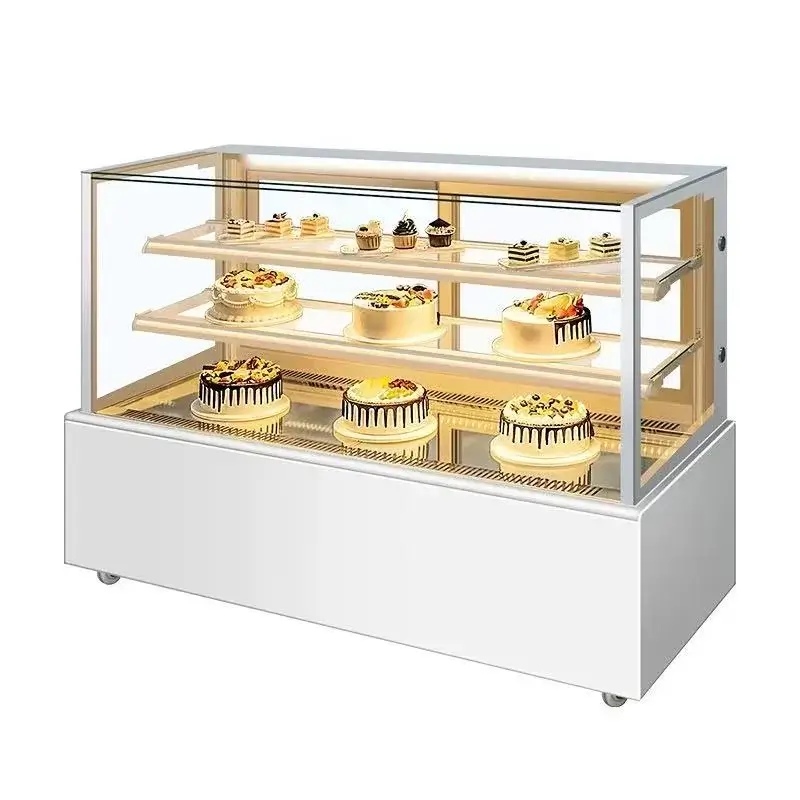
Traditional refrigerated bakery cases put visibility and convenience first. Because they have no front doors, shoppers can see the products clearly at eye level and smell freshly baked goods as they pass. That combination prompts more impulse purchases: compared with closed glass displays, these open cases turn browsers into buyers at rates 30-40% higher.
Open refrigerated displays lose cold air through the opening, so they use air curtains—streams of chilled air flowing across it—to keep the inside at a steady temperature while customers reach in freely. The setup consumes more power, though: these units typically cost 40–60% more to run than comparable models with closed doors.
The added energy expense may be recovered at the display case. Selling single servings, such as cake slices or cupcakes, often brings in more per item than selling a whole cake. Customers can sample a treat without buying an entire cake, which can bring them back for another purchase.
Equipment Design and Construction Differences
Freezer Insulation and Compressor Capacity
A cake freezer needs thick insulation and a powerful compressor. Commercial units generally contain 3–4 inches of high-density polyurethane foam, compared with just 1–2 inches in most refrigerators. The extra insulation helps keep temperatures below zero and blocks heat from entering, particularly in hot weather or rooms without climate control.
Freezer compressors produce substantially more cooling power, measured in BTUs (British Thermal Units). A 20-cubic-foot commercial Cake Freezer generally has a 2,000–2,500 BTU compressor; a similarly sized refrigerator typically runs at 800–1,200 BTUs. That extra capacity is needed because the freezer must maintain a much greater temperature difference from the surrounding air.
The heavy-duty construction covers the gaskets, hinges, and seals. Multiple gasket layers and magnetic strips create a tighter seal than standard refrigerator doors, cutting down on warm-air leaks. Even a cubic foot of warm air entering the freezer forces the compressor to work harder to bring the temperature back down.
Refrigerator Humidity Control Systems
Cake refrigerators hold relative humidity at 80–85%. That keeps frosting soft instead of letting it dry or crack, while the cake layers retain their moisture. Freezers do not require this kind of humidity control. Inside the refrigerator, special evaporators and precisely timed defrost cycles remove excess moisture, limiting condensation without drying the cake.
Some refrigerator display-door frames contain anti-condensation heaters. These slim heating elements use only 50–100 watts, but that is enough to stop moisture clouding the glass, so products remain visible.
Airflow depends on the equipment. Fans spread cold air throughout a display freezer, but refrigerators generally use a softer circulation pattern so exposed cake does not dry out. Excess airflow pulls moisture from the frosting and lowers quality—the very problem refrigeration should prevent.
Defrosting Requirements and Maintenance
Manual Defrost in Freezers
Commercial cake freezers need occasional shutdowns so staff can clear away built-up frost. Moisture from the cakes and damp air entering the cabinet freeze onto the cold evaporator coils. When that ice exceeds 1/4 inch, it insulates the coils, reduces cooling efficiency, and forces the compressor to run longer.
A planned defrost causes less disruption:
● Do it when inventory is at its lowest, usually midweek.
● Transfer the products to a backup freezer and keep them at the required temperatures.
● Unplug the unit and allow the frost to melt completely. This usually takes 4–8 hours, depending on how much has built up.
● Clean the interior with a sanitizer approved for food-contact surfaces, then dry it thoroughly to prevent frost from returning too soon.
●Restart the freezer and confirm that the temperature remains stable before returning the products.
Manual-defrost units require extra upkeep, yet they keep temperatures more stable during regular use than automatic-defrost models. For operators storing premium cakes, that reliability can justify the additional maintenance.
Automatic Defrost in Refrigerators
Most refrigerated display cases handle defrosting automatically. Staff seldom have to scrape away frost themselves: a timer warms the evaporator coils for a short period, typically around 2–4 AM when few customers are present. The resulting water drains into a collection system and then reaches an evaporation pan.
Automation saves time, but it can also create problems. During a defrost cycle, temperatures may climb 5–8°F for 15–30 minutes, potentially damaging delicate products. Better refrigeration units monitor frost buildup itself rather than following a preset schedule, defrosting only when necessary while keeping frost under control.
Auto-defrost refrigerators mostly need routine attention to the drain line. A clog can force water back into the unit, ruining food and creating unhygienic conditions. Check the drain monthly, and arrange professional cleaning every three months to avoid damage and prolong the refrigerator’s service life.
Energy Consumption and Operating Costs
Freezer Energy Requirements
A cake freezer draws a fair amount of power. Keeping its interior far colder than the surrounding room typically takes 3–5 kWh a day for a commercial 20-cubic-foot unit, costing roughly $35–$60 per month at average commercial electricity rates.
A freezer’s location affects its power use more than you might expect. In a climate-controlled room, it consumes much less electricity than it would in an unconditioned space that rises above 85°F during summer. Each 10°F increase in surrounding temperature adds about 15% to compressor runtime, which raises costs in hot months. Placing the freezer somewhere cool, or in a dedicated cold-storage room, helps keep that added demand down.
The way a freezer is packed affects its electricity use. Aim to fill it to about 70–85% capacity: the frozen food helps maintain a stable temperature, but enough space remains for cold air to move around. Leave too much room and cooling gets wasted; cram it full, and the compressor has to run longer.
Refrigerator Operating Economics
A 15-cubic-foot refrigerated display case typically consumes 2–3 kWh of electricity per day, costing roughly $24–$36 a month. Although it uses less power than a freezer, each cubic foot of storage costs more. That expense often pays off: products move faster and look more appealing, which can increase revenue.
Open refrigerated displays consume 40–60% more energy than closed models. Their air curtains place a heavier load on the cooling system, but many operators accept the added expense because sales per square foot are 25–40% higher—more than enough to cover the extra energy cost.
Replacing traditional fluorescent display lighting with LEDs can reduce energy consumption by 50–70%. The lights render colors more accurately and give off less heat in refrigerated spaces. With a typical payback period of 12–18 months, the upgrade ranks among the most affordable efficiency improvements available.
Optimal Application Scenarios
When Cake Freezers Excel
Cake freezers suit businesses that prepare cakes before customers need them. A production bakery can freeze baked inventory between runs and deliver it to retail accounts on schedule. Seasonal shops gain room to prepare during slower periods, then store cakes for the rush around graduations or holidays. Custom cake shops benefit too: with orders placed 2–4 weeks in advance, they can freeze cakes until pickup.
Wholesale suppliers serving multiple locations depend on frozen distribution to make longer delivery schedules workable.
Event caterers often receive the final guest count late. Frozen reserve stock gives them a buffer when attendance exceeds expectations.
Both prioritize flexible storage, long shelf life, and efficient production over appearance alone. With a glass door, the commercial cake freezer and bakery display cabinet keep stored goods in view, linking the kitchen to the sales floor and allowing them to remain part of the customer’s selection.
When Refrigeration Proves Superior
Refrigeration suits products meant to be eaten soon, especially when their appearance helps drive sales. In busy retail bakeries, attractive chilled displays can prompt impulse purchases. Grocery bakery departments that replenish products daily may care more about a fresh-looking display than extended shelf life. Some specialty desserts, particularly those made with fresh fruit or whipped cream, cannot be frozen and must stay refrigerated.
If a restaurant knows roughly how many guests it serves each day, desserts made that morning usually need only a short holding period.
Cafés and coffee shops that sell individual cake slices often do better with an open chilled display beside the counter, where customers can view the choices and order on the spot.
Fresh appearance helps sell these products. Because they are never frozen, they may have a small advantage in taste and texture—enough to make daily production and closer inventory control worthwhile.
Common Mistakes and How to Avoid Them
Temperature Zone Confusion
Refrigeration can keep products fresh beyond 3–5 days without freezing, but that approach often falls short. Cold slows microbes and enzyme activity; it does not stop them. Once the recommended storage period passes, cakes may taste off, stale, or pose safety risks despite staying chilled the entire time.
The simple rule is to stay within the equipment’s limits. If something needs to be kept for more than a week, freeze it; leaving it refrigerated longer will only hurt its quality and could disappoint customers. There is no workaround for that limit.
Inadequate Defrosting Protocols
Cake Freezer units lose efficiency as frost accumulates. Some operators wait until it covers 10–20% of the interior, by which point energy consumption may have doubled. Avoiding a brief shutdown can seem economical, but the added electricity use and compressor wear usually cost far more.
A set defrosting schedule helps stop efficiency from slipping. For most commercial units, once a month is enough to keep performance close to its best. Humid conditions or frequent door openings may call for defrosting every two weeks. If you wait for the unit to struggle, the resulting problems can cost more than routine maintenance.


Mixing Frozen and Refrigerated Products
Some operators store frozen and refrigerated goods together, choosing a temperature midway between the two requirements. Neither group fares well: refrigerated products can suffer from excessive cold, while frozen items may partly thaw and refreeze, causing serious quality loss.
Each temperature zone should have its own equipment. For a small bakery, that means using separate cake-freezer and refrigerator units instead of forcing one appliance to handle both. The extra expense generally pays for itself through more consistent quality and lower waste.
Frequently Asked Questions
Q1: Can turning up the temperature setting allow a cake freezer to operate like a refrigerator?
Most commercial cake freezers cannot refrigerate cakes properly. Their compressors are built for freezing temperatures, and they usually do not control humidity well enough to protect the cake. Purpose-built equipment is more dependable than trying to adapt a freezer.
Q2: After decorating, how quickly should cakes be moved from the fridge to freezing storage for long-term preservation?
Place decorated cakes in the Cake Freezer within 2–4 hours, while they’re still chilled from refrigeration. Waiting at room temperature encourages condensation, which can ruin the frosting’s texture and appearance.
Q3: Do display freezers with glass doors keep temperatures as effectively as solid-door commercial freezers?
With the right specifications and placement, a commercial cake-freezer display cabinet with double-pane glass doors can come close to the efficiency of a solid-door model. It may still consume 10–20% more energy, since glass provides weaker insulation, but customers can see the products without opening the cabinet.