

Choosing a commercial refrigerator with glass doors is a noticeable decision for any food business. It usually sits in a prominent location, runs around the clock, and directly influences what customers buy. If the specifications are wrong, the costs appear every day: wasted floor space, higher energy bills, or stock warming during a hectic shift.
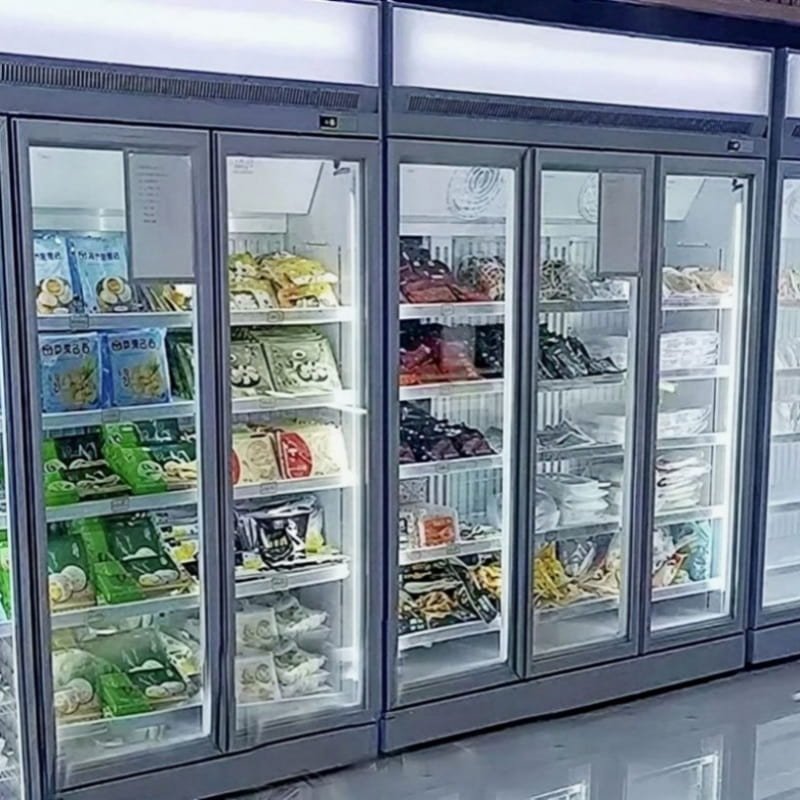
A preference for transparent doors may seem like a simple starting point. Once dozens of nearly identical models are involved, though, the decision becomes less clear. This guide reduces the field through a step-by-step matching process so the final choice reflects the business’s actual requirements rather than guesswork.
A quick note on perspective: this advice is based on watching these machines operate in real settings. A unit can look impressive on paper yet falter during a busy lunch rush when its specifications do not suit the demands of that environment. The points below come from those firsthand observations.
Start With the Use Case—Display or Storage
The Golden Rule: Let the Application Lead the Decision
Begin by deciding what the unit needs to do. That choice determines everything that follows.
For self-service shopping, a commercial glass door refrigerator is useful mainly because it keeps the products visible. Customers tend to purchase what they see, and items placed behind a transparent door outsell identical products stored behind solid steel. The same principle applies to a glass door display freezer stocked with ice cream or frozen meals. It is not merely storage; the unit also functions as a point-of-sale display.
When Glass Doors Still Make Sense in the Back of House
When the unit is used solely as a back-of-house workhorse, glass doors can still be useful. Staff can check the ingredients without opening them, which helps limit cold-air loss during a busy service. For long-term bulk storage in a hot kitchen, however, a solid-door model generally performs better and costs less to operate. Its insulated steel panels retain cold far more effectively than glass.
Three Use Cases, Three Different Priorities
The decision comes down to where the refrigerator will be used:
- Customer-facing retail: Glass doors almost always pay for themselves through impulse purchases.
- Staff-access back of house: They make work faster, but they require careful energy budgeting.
- Long-term frozen storage — solid doors maintain temperature more efficiently over time.
That distinction matters more than many buyers expect. It determines which specifications should receive the most attention. In a display unit, strong lighting and clear glass matter most; a storage unit depends more on insulation and temperature recovery. From the outside, the two may look alike. Inside, though, they are different machines.
Match Capacity to Peak Stock, Not Average Stock
Undersizing is the most common—and costliest—mistake in commercial refrigeration. A unit operating at full capacity day after day puts extra strain on its compressor, slows temperature recovery, and shortens the equipment’s service life. A commercial refrigerator with glass doors sized 15–20% above peak demand, by comparison, operates at a lower temperature, regains temperature faster, and lasts longer.
Capacity planning needs to begin with the busiest delivery day, not an average Tuesday. Stock volume arrives in waves, so equipment sized around quieter periods will be jammed every weekend. A buffer above peak demand is worth building in; replacing machinery that wears out early from constant strain costs much more.
A practical capacity guide:
| Capacity | Recommended Configuration | Best For |
| Up to 300L | Single door | Small cafés, food trucks, staff rooms |
| 300–600L | Single door | Standard restaurant kitchen |
| 600–900L | Single or double door | Busy bars, hotel kitchens |
| 900L and above | Double door display refrigerator | Catering operations, production facilities |
The type of stock matters just as much as the stated capacity. Bottled drinks can be packed tightly, making efficient use of the available space. Pastries, cakes, and prepared meals need more clearance and shallower shelves. A refrigerator built to store a high volume of cans may hold surprisingly few trays. Before buying, check the shelf weight ratings and tray compatibility; otherwise, delivery day may bring an unwelcome surprise.
Glass-door units offer about 10–15% less usable volume than solid-door models of the same size. The lost space comes from the door framing and interior lighting; buyers storing bulky stock may therefore want to choose a somewhat larger unit.
Choose the Right Door Configuration
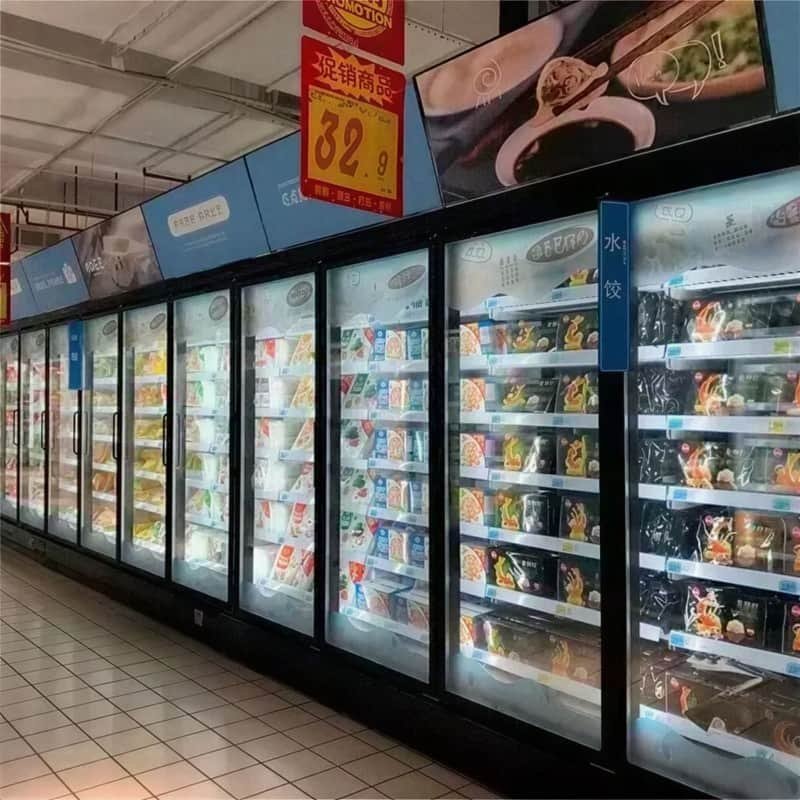
Door count and layout matter much more than a refrigerator’s appearance alone. They also determine how much cold air escapes and how easily stock can be moved in and out. Buyers may focus on the design and overlook these practical issues, which can result in a poor choice.
| Door Configuration | Best For | Trade-Off |
| Single glass door | Small cafés, compact bars | Limited capacity, single display face |
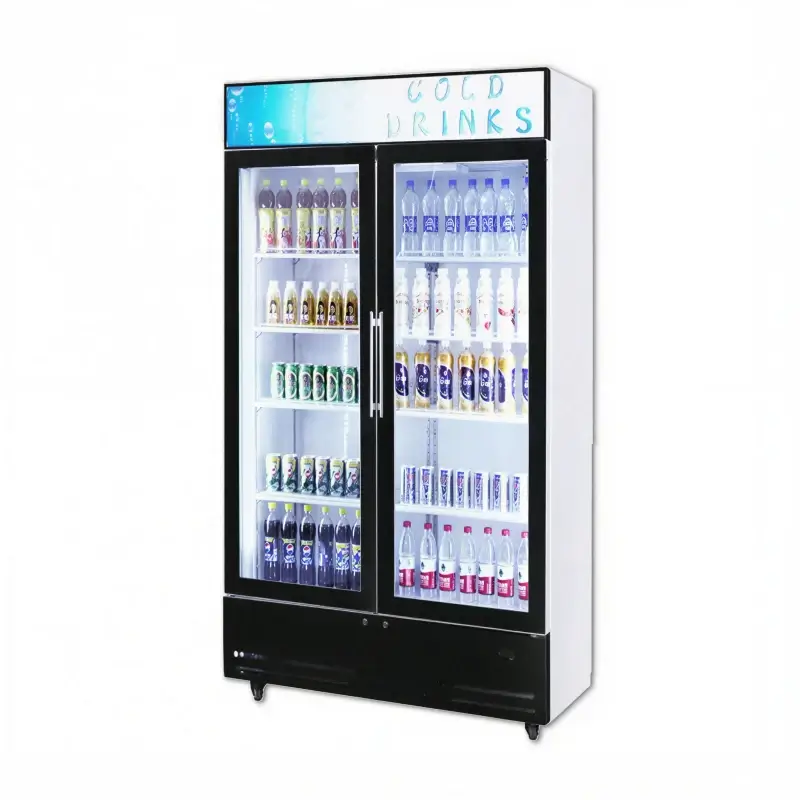
| Double door display refrigerator | Convenience stores, larger bars, cafeterias | Broader display, but needs more floor width |
| Sliding glass doors | Narrow aisles and limited front-of-house space | Do not provide as tight a seal as hinged doors |
| Hinged glass doors | Bars and restaurants with enough floor clearance | Create a tighter seal but need space to swing |
Swinging and sliding doors can both be good choices; neither is automatically superior. Hinged doors typically create a tighter seal, which may reduce energy use over the unit’s lifetime. Sliding doors stay within the cabinet’s footprint instead of extending into the aisle, making them safer in narrow retail spaces where customers pass close by. Buyers should first measure the clearance in front of the unit and think about how often stock will be loaded and rotated.
In a busy setting, the extra width of a double door display refrigerator may justify itself: during peak periods, a single door can hold people up. That added space has a cost, though, particularly in the aisle. Check the floor plan before deciding. A unit might fit the available footprint yet still disrupt traffic through the shop.
Learn About the Cooling System and Glass Specifications
Forced Air vs. Static Cooling: Which Is Right for You
The glass door may catch your eye first. Behind it, though, the cooling system keeps the unit operating properly.
Fan-assisted cooling circulates cold air through the cabinet, lowering the temperature quickly after the door opens. That speed is valuable in retail settings, where doors can be opened again and again, and cold air escapes each time. Static cooling costs less and runs more quietly, but its recovery is far slower. With the cabinet fully stocked, it can also leave warmer pockets. For a busy location, forced air is almost always the better investment.
Why Glass Specs Matter for Performance and Energy Costs
The glass affects performance more than many buyers may expect. Two tempered panes, paired with a low-E coating, reduce heat transfer substantially and help keep operating costs down over the years. Tempered safety glass adds protection if something goes wrong, which matters when stock is loaded quickly and shopper traffic is heavy.
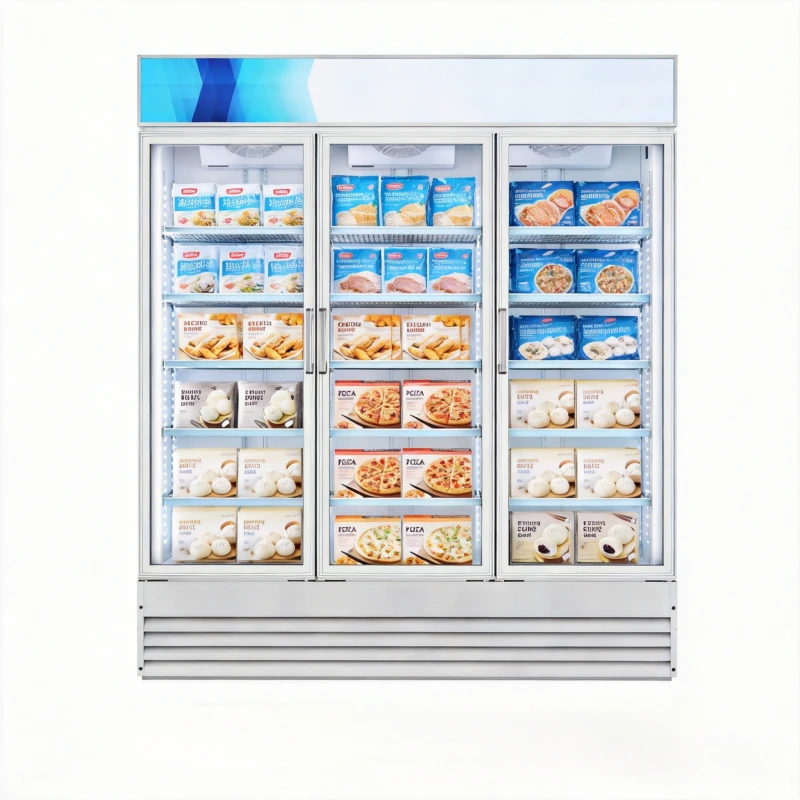
For freezers, the glass specification is even more significant. Heated glass, or heated door frames, prevents condensation and frost from building up. Without that feature, a glass door display freezer can lose its main selling point within a week of installation, as frost spreads across the pane and obscures the products inside.
Don’t Overlook the Refrigerant
Refrigerant choice matters too. Many modern units run on R290 or R600a, which generally operate more efficiently and are less likely than older refrigerants to face regulatory restrictions in the future. Buyers may keep the equipment for a decade, so checking the specification before purchase makes sense. Replacing the unit later can be expensive.
Check the Operating Environment Before Comparing Prices
Why Ambient Temperature Matters More Than You Think
Temperature stability depends on the room around the machine, not just the machine itself. A unit rated for a 25°C ambient temperature may have difficulty in a kitchen that regularly reaches 35°C during the lunch rush. It may recover more slowly and enter defrost cycles more often, increasing food-safety risks.
This specification is easy to overlook because it is not displayed prominently on the machine, even though it may affect real-world performance more than almost any other figure on the data sheet.
What to Verify Before You Buy
Before buying, check the following:
- Confirm that the unit’s rated ambient temperature matches the conditions in which it will operate.
- Fridges should maintain 0–10°C, while freezers should reach −18°C or colder.
- Leave enough clearance around the compressor and condenser for proper airflow.
- In warm rooms, low-E-coated glass paired with a digital thermostat can reduce running costs.
- Check that the unit holds every certification required by local health authorities.
The Long-Term Cost of Overlooking This Specification
Operating a refrigerator in ambient temperatures above its rated limit increases energy use and may shorten the compressor’s lifespan by placing it under additional strain. Over time, this specification has a greater effect on operating costs than any other variable, yet buyers are especially likely to overlook it.
Don’t Ignore the Small Features
Small Details, Big Impact on Usability
A handful of small details can make a unit far more comfortable to use. Installed at the factory, they may add very little to the price; added later, though, they can be much more expensive. Before completing the purchase, buyers should check for a few practical features:
- Self-closing doors — prevent cold air from escaping when doors are left open during busy periods
- LED interior lighting — helps customers see the products more clearly and can greatly improve the display’s appearance
- Adjustable shelving — accommodates products of different heights and containers in various sizes
- Digital temperature display — lets staff confirm that the unit is operating properly without opening the door
- Locks and castors — secure stock after hours and allow cleaning behind the unit
Why Self-Closing Doors Matter
Self-closing doors deserve particular attention. In a busy retail setting, leaving a door open can defeat the purpose of an insulated cabinet. Commercial refrigerators with glass doors that shut automatically help keep the temperature stable and reduce energy costs; no one has to remember to close them. A small feature, but one whose benefits persist over time.
The Selling Power of LED Lighting
LED lighting deserves attention as well. A brightly illuminated cabinet draws the eye, making the products seem fresher. Shoppers often decide within seconds whether to pick something up, so the right lighting may affect that decision immediately. And because LED lighting uses negligible energy, there is no real downside to choosing a well-lit unit.
Compare Total Cost of Ownership, Not Purchase Price
The sticker price is only one part of the calculation. Over five years, a less expensive unit can end up costing more if it consumes energy inefficiently or fails early. For glass-door units, the main expenses include:
| Cost Factor | Notes for Glass Door Units |
| Purchase price | Usually determined by capacity, the number of doors, and the brand |
| Annual energy | Low-E glass reduces the energy gap between glass- and solid-door units |
| Maintenance | Regular upkeep includes cleaning the coils and inspecting the gaskets |
| Replacement parts | Tempered low-E glass panels cost more than standard glass |
| Resale value | Established brands typically hold their value better |
Glass-door units release more cold air than solid-door models, so the type of glass and the quality of its insulation directly affect operating costs. Low-E, double-pane glass has a somewhat higher upfront cost, but the energy savings typically make up the difference within a few years.
Energy costs can build up unnoticed. When a unit runs inefficiently for several hours each day, the extra expense may become significant over its working life. Insulation can widen that difference further; a well-insulated model may cost substantially less to operate than one with poor insulation. Buyers who compare operating costs over five years, rather than focusing solely on the purchase price, consistently select better equipment.
Warranty coverage and service support matter too. In a commercial setting, refrigeration failure is not just a minor inconvenience; spoiled products and lost sales can follow. That risk is much lower when a brand provides a strong warranty, readily available parts, and accessible service.
Conclusion — A Simple Decision Order
The decision is easier when handled in sequence:
- First decide whether the unit will display products or only store them. That determines the door type.
- Size the capacity for peak stock, including a buffer.
- Choose the door configuration based on the available floor space and traffic patterns.
- Confirm that the cooling system, glass, and ambient rating are appropriate for the environment.
- Check the smaller details too, including whether the doors close by themselves and the condition of the lighting, locks, and castors.
- Compare the total cost across five years instead of focusing only on the purchase price.
A commercial refrigerator with glass doors needs to do three things well: hold products at the right temperature, let customers see what is inside, and operate dependably for years. When it can, the equipment fades into the background; when it cannot, the purchase becomes a recurring problem.
FAQ
Q1: What size commercial glass door refrigerator does a convenience store need?
For a busy convenience store, a double-door display refrigerator with a capacity of about 600–900L is usually a sensible choice. It offers room to present a wide range of products without occupying too much floor space, and the additional 20% capacity provides a useful buffer for stock.
Q2: Are glass door display freezers more expensive to run than refrigerators?
Yes. Because a glass door display freezer operates across a wider temperature difference, its glass must be heated to prevent condensation, which increases energy use. Low-E glass and adequate insulation narrow that difference.
Q3: How often should a commercial upright freezer be maintained?
Clean the condenser coils at least once a quarter and inspect the door gaskets monthly. In a greasy kitchen, clean the coils every month so the commercial upright freezer runs efficiently, and the risk of early failure is reduced.