
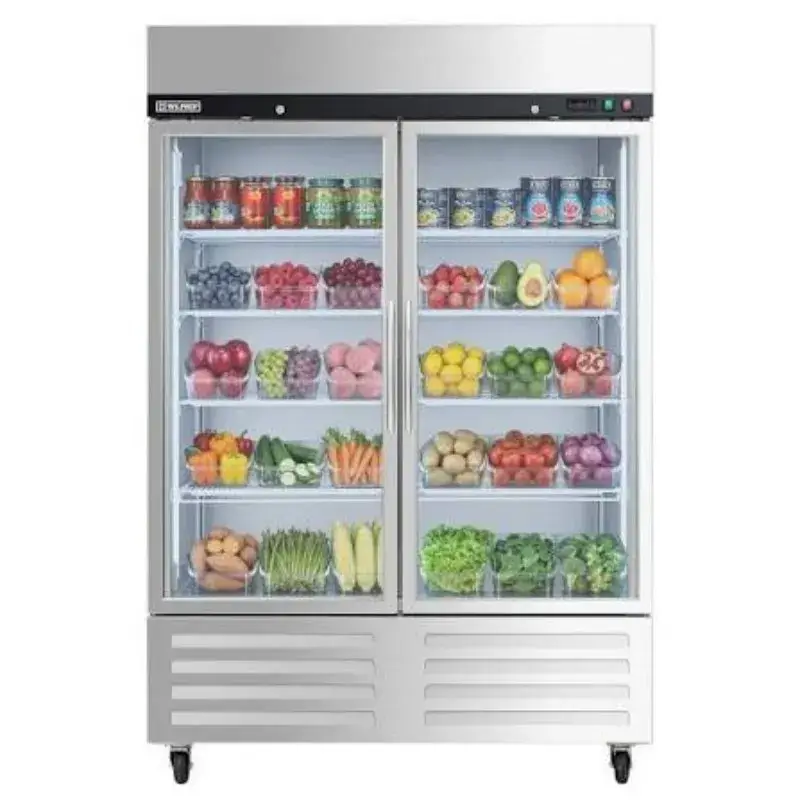
We usually decide whether produce looks fresh before anything else. Even a perfectly good vegetable may seem old when its leaves droop or its texture softens, whether it’s displayed in a store or held for service in a restaurant. The right vegetable refrigerator helps preserve that crispness, giving you longer to sell it.
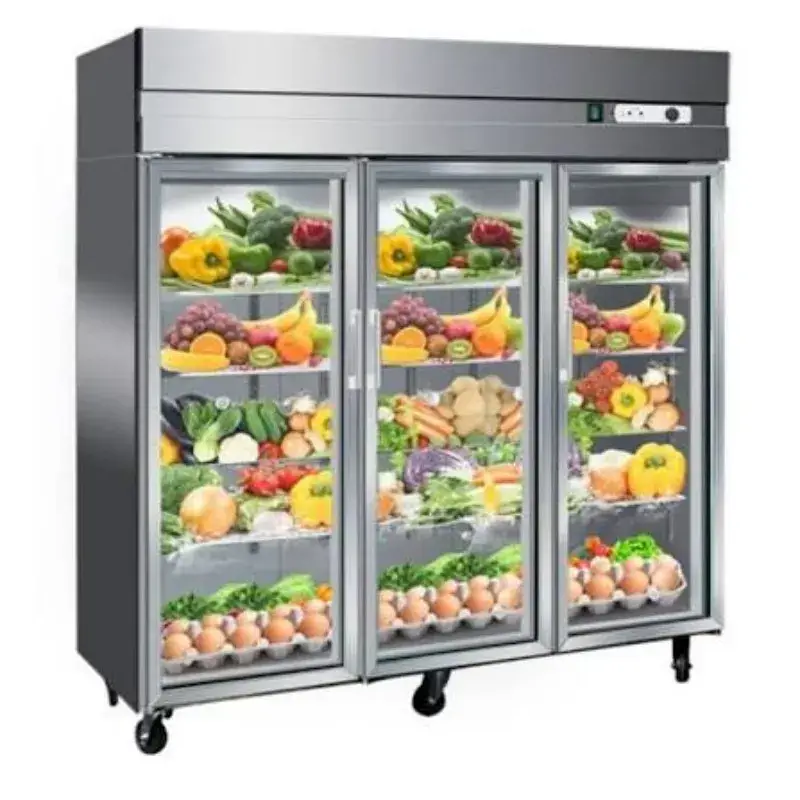
Understanding Produce Physiology
Vegetables keep changing even after they leave the field. Respiration continues, gradually affecting their texture and quality. Heat accelerates the process, pulling out moisture and breaking down tissue faster.
That fresh, crisp bite comes from water pressure within the cells. As the vegetable loses water through respiration and transpiration, the pressure falls and the tissue wilts. Proper storage limits moisture loss while keeping the produce above freezing, because ice crystals can damage its cells.
Vegetables do not all keep well under the same conditions. Leafy greens need a precise balance of temperature and humidity, but those settings may damage root crops. Tropical produce presents another problem: temperatures safe for temperate varieties can cause chill injury. In a shared inventory, every crop must be stored according to its own needs.
Optimal Temperature Settings
Critical Temperature Ranges
Keep the refrigerator between 32°F and 40°F. That range helps vegetables stay crisp by slowing respiration, while temperatures below 32°F can freeze the water inside their tissues. The cabinet should remain within ±2°F of its set temperature, even after the door opens or fresh food goes in.
Leafy greens keep their quality best at 32°F to 34°F. At that range, respiration drops sharply without much risk of freezing. Root vegetables can handle temperatures as high as 38°F with little decline, but facilities holding different types of produce generally settle on 34°F as the practical middle ground.
Vegetables may spoil sooner under repeated temperature changes than in a refrigerator that remains slightly too warm. For every degree above the ideal setting, shelf life can drop by roughly 10–20%. Fluctuations also create condensation, giving bacteria the moisture they need and speeding decay. Improved compressors help higher-quality refrigerators maintain steadier temperatures during normal use.
Zone Temperature Management
Commercial refrigerators generally have several temperature zones for different kinds of produce. Cold air moves naturally through the unit, leaving the top shelves roughly 2–3°F warmer than the lower sections. Placing food in the right area makes use of that temperature difference.
Keep leafy greens on the lowest refrigerator shelf, where temperatures are usually coldest. Store sturdier vegetables, such as root crops, on the middle shelf. Herbs and other delicate produce should go in a separate spot with more consistent temperatures.
Sensors placed throughout the cabinet track the temperature and humidity in each storage zone. If either reading leaves its approved range, managers get an alert and can correct the conditions before the produce spoils. The system keeps these readings on file for inspectors to examine during health inspections.
| Vegetable Type | Ideal Temperature | Ideal Humidity | Storage Duration |
| Leafy Greens | 32-34°F | 95-100% | 7-14 days |
| Root Vegetables | 32-38°F | 90-95% | 14-60 days |
| Cruciferous | 32-36°F | 90-95% | 10-21 days |
| Tomatoes | 50-55°F | 85-90% | 7-14 days |
| Peppers | 45-50°F | 90-95% | 14-21 days |
Humidity Control Systems
The Moisture Balance
Cold air alone will not keep vegetables crisp. Most need relative humidity between 90% and 95%; when the air is drier, moisture escapes through their surfaces and wilting can begin within hours. Too much humidity creates a different problem: the vegetables stay wet, which encourages bacteria and fungi to grow.
Most standard refrigerators hold humidity around 60%–70%, so fresh produce loses moisture and dries out quickly. Vegetable refrigerators control humidity more precisely, helping food stay fresh without allowing condensation to collect on the produce or inside the cabinet.
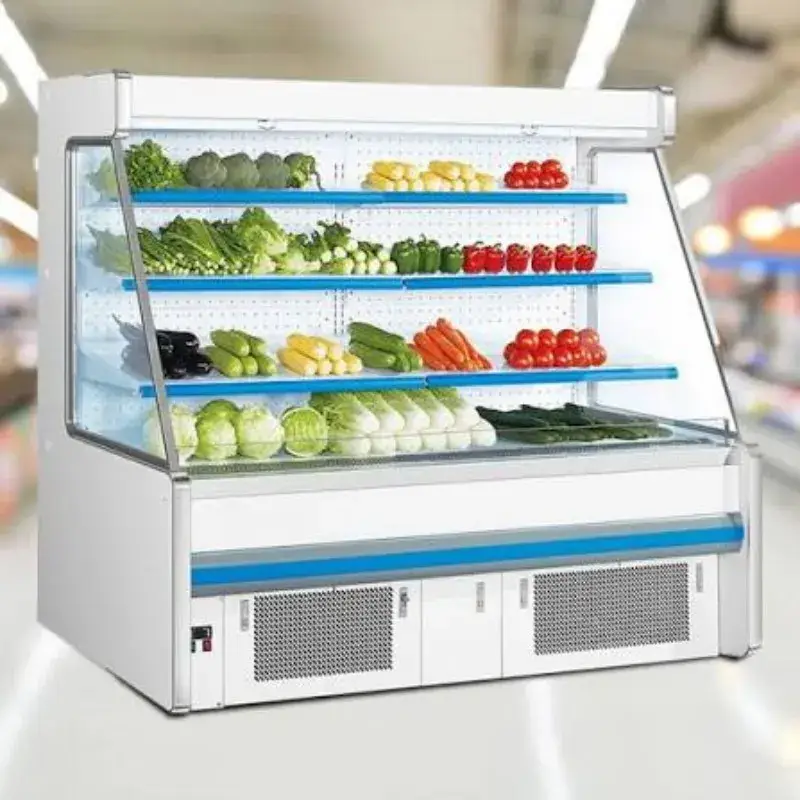
Perforated shelves leave space for air to move beneath the products, reducing moisture buildup. Some advanced units use humidity sensors to release a fine mist when the stored goods start drying out.
Preventing Excessive Moisture
Fresh produce needs moisture, but water sitting on its surface can encourage pathogens. The cabinet must move air well enough to remove that excess without drying the produce, and a properly designed air curtain can help maintain that balance.
Low humidity helps vegetables keep longer in the refrigerator. Each time the door opens, warm, damp air enters and leaves condensation on the chilled interior. Once the door shuts, steady airflow brings the temperature back down and dries those surfaces before bacteria have time to grow.
Moisture control matters more than the refrigerator’s temperature setting. For produce, perforated plastic bags work well because they hold humidity without blocking airflow. Airtight containers can backfire: they trap excess moisture and ethylene released during respiration, allowing food to spoil faster despite a correct temperature.
Strategic Organization Practices
Air Circulation Requirements
Good airflow keeps temperature and humidity more stable and removes ethylene, the gas that speeds ripening. Cram the cabinet, though, and warm pockets may develop, causing vegetables to spoil despite a normal temperature reading.
Keep about 2–3 inches of space between stacked containers and between the load, the walls, and the vents. This gives cold air room to move around the products instead of sitting in stagnant pockets. Fans beneath the load push air upward in well-designed units, though too much direct airflow can dry the products.
Keep produce off solid shelves. Trapped water can make it rot. Wire racks allow air to move underneath and liquid to drain, while a solid pan beneath catches juice from damaged items without blocking drainage.
Product Compatibility Planning
Some vegetables give off enough ethylene gas to speed up ripening nearby. Tomatoes, peppers, and avocados release relatively high amounts, and that exposure can cause leafy greens, carrots, and broccoli to spoil sooner. Keep them separated so the rest stays fresh longer.
Root vegetables handle ethylene better than leafy greens, so they can sit between produce that needs more distance. Store tomatoes, peppers, and avocados in a separate section, away from vegetables that spoil quickly.
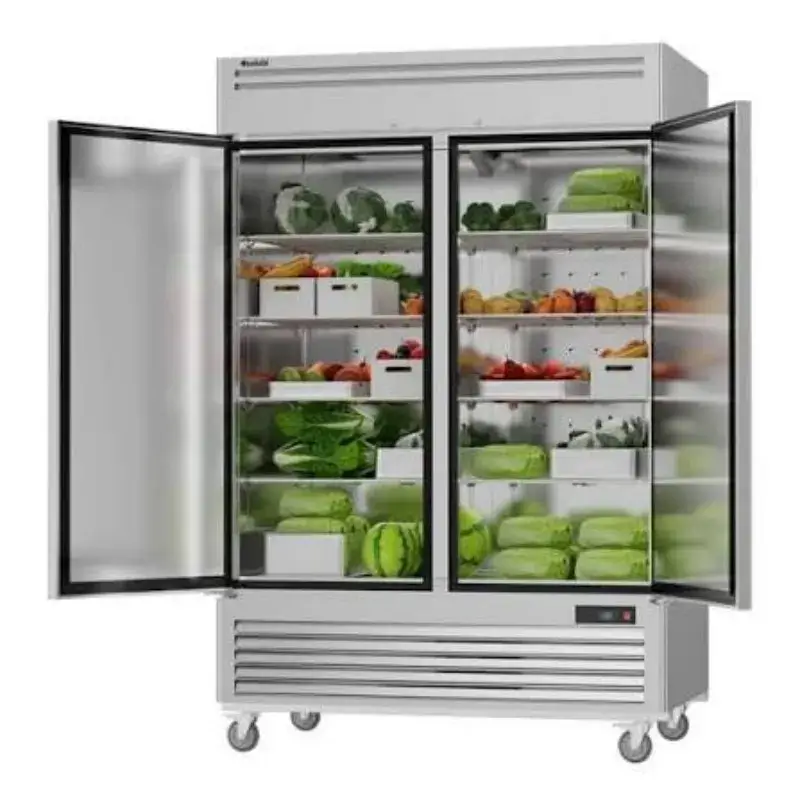
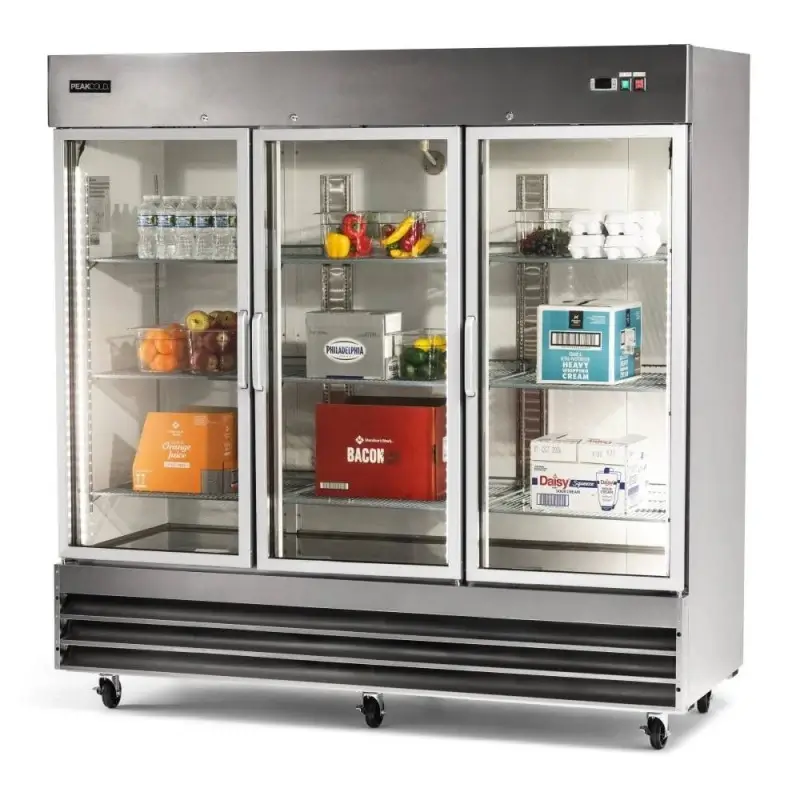
Glass-door commercial refrigerators let staff check the produce without opening the door. Older stock is easier to spot, so items can be rotated and anything unfit for sale removed promptly.
Pre-Storage Preparation Techniques
Temperature Pre-Conditioning
Let freshly picked produce cool somewhat before refrigerating it. A sharp temperature change can harm plant tissue and force the cooling system to work harder. Once the vegetables are closer to storage temperature, they will last longer, and the equipment will use less energy.
Sturdy vegetables such as carrots and celery cool quickly in chilled water, while delicate greens need forced air because water may damage them. Small operations can use room cooling when the harvest does not require rapid processing.
A sudden drop in temperature can damage the cells, brown the surface, and hasten decay. Cooling the produce gradually over 2–4 hours works better than putting it straight into 32°F storage. Some operations first hold it in a moderately cool area before transferring it to the final cold room.
Cleaning and Inspection
Before putting produce into storage, remove loose stems, torn leaves, and anything starting to rot. Discard damaged items immediately and inspect each delivery as it arrives, since decaying material can spread bacteria or mold to healthy produce.
Humidity control alone will not stop surface moisture from encouraging bacterial growth. Dry delicate produce gently with an absorbent cloth, or let moving air dry it. Leafy greens are better suited to a salad spinner, which removes water without bruising them. Set fully ripe items aside for immediate use; this makes stock rotation easier and reduces waste when produce ripens before customers buy it.
Maintenance and Monitoring Protocols
Daily Inspection Routines
Close the door on a dollar bill, then pull it. There should be some resistance. If it slides out easily, the gasket is not sealing tightly enough. Check for tiny gaps as well; warm, humid air entering through them can cause condensation and force the cooling system to work harder.
Put calibrated thermometers among the stored items, not just near the monitor. A monitor can read the surrounding air rather than the produce itself, so the two measurements may differ by several degrees. Check the thermometers periodically to confirm they remain accurate.
Use older stock before newer deliveries. Proper storage slows spoilage but cannot prevent it, so check behind recently stocked produce and bring older items forward before they spoil.
Equipment Cleaning Requirements
Each week, take out the food and shelves, then wipe the interior with a food-safe sanitizer. Pay close attention to the drain pan, door tracks, and gaskets; dirt tends to collect there, encouraging bacteria, unpleasant smells, and quicker spoilage.
Once a month, remove the dust from the condenser coils. Buildup makes the compressor work harder and draw more power; during heavy use, the refrigerator may also struggle to hold the right temperature. Most units provide easy access to the coils.
Change the misting-system filters on the schedule set by the manufacturer. Mineral buildup cuts mist output, while clogged filters can harbor bacteria that contaminate stored produce. Regular replacement keeps the system working properly and supports food safety.
Technology Integration Benefits
Modern vegetable refrigerators use digital controls to hold steady temperatures while consuming less power. A microprocessor tracks the workload and varies compressor and fan speeds as needed instead of switching both systems fully on and off over and over.
Managers do not have to be on-site to check storage conditions. A phone or computer can track temperatures, and if they move outside the approved range, staff receive an immediate alert and can act before products spoil. Companies with several locations can view every site on one screen.
Health inspectors and auditors can review the logs as proof that storage requirements were followed. The ongoing temperature and humidity records also show whether conditions stayed within range, identify equipment problems early, and help reduce losses and liability.
Frequently Asked Questions
Q1: After loading the vegetables, how long should it take for them to reach storage temperature?
A: About 4–6 hours in a properly designed system. Quicker cooling generally protects quality, though delicate produce may be damaged if cooled too fast.
Q2: Can different vegetables share a refrigerator?
A: Yes. Keep ethylene-producing vegetables away from those that spoil in its presence, and place each one where the temperature suits it best.
Q3: Why do vegetables freeze when the refrigerator is set above 32°F?
A: The air around the vents or evaporator coils can fall below freezing, even if the refrigerator as a whole remains at its selected temperature. Store vegetables and other food away from those especially cold spots.