
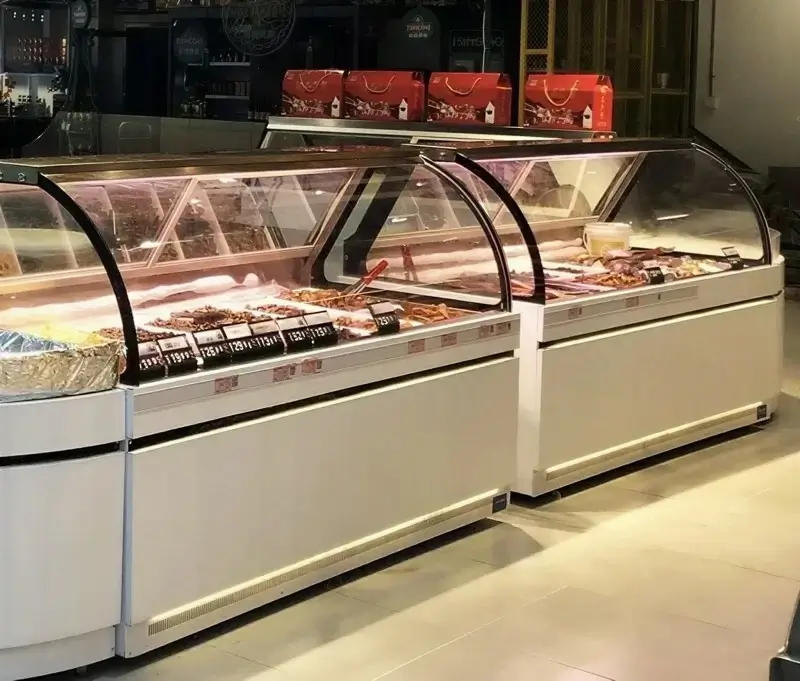
Meat display refrigerators need steady, accurate cooling. Set the refrigerator properly to protect your inventory and reduce risks to customers. Even a slight temperature increase can spoil meat quickly and lead to food-safety violations.
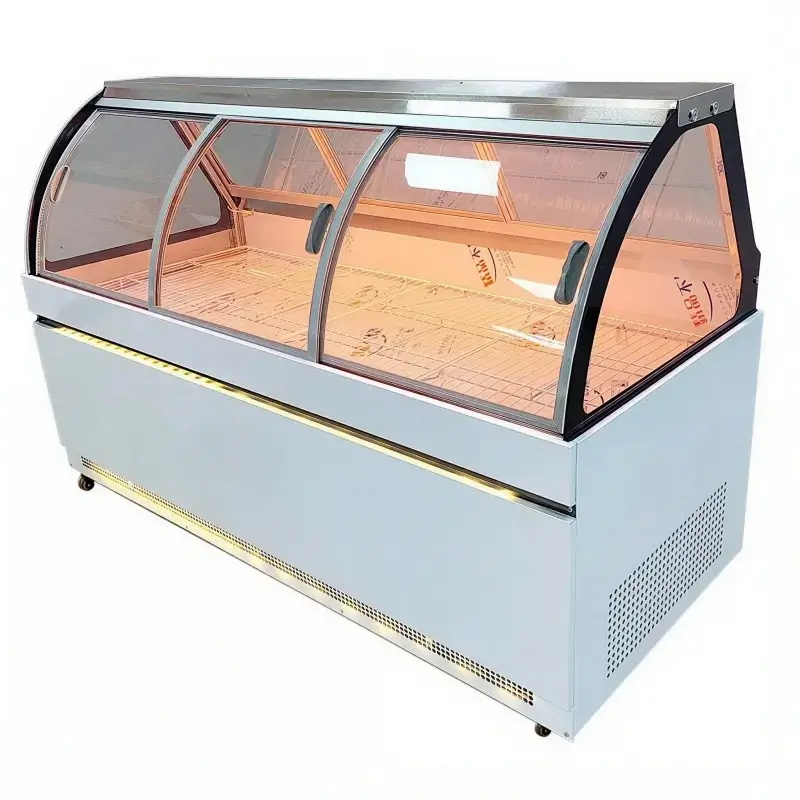
Critical Temperature Ranges for Fresh Meat
Keep fresh meat at 28°F–32°F. It stays in good condition without the tissue freezing. Once the temperature rises above 32°F, bacteria grow faster, and each extra degree may reduce shelf life by at least 24 hours.
The right storage temperature varies by meat. Keep poultry at 28°F to 30°F, while beef and pork can remain safe at up to 32°F. Ground meat needs colder conditions because its larger exposed surface gives bacteria more chances to spread. If one case holds several kinds of meat, set it at 30°F.
Getting the temperature right is only half the job. It must stay steady, too; fluctuations pull moisture to the meat’s surface and create conditions where bacteria can multiply. Even during restocking, quality meat display refrigerators keep the set temperature within ±1°F.
How Temperature Affects Meat Quality
Color Preservation
A shopper’s choice can hinge on meat’s color. Beef may remain bright red—and appear fresh—despite its age. Once myoglobin oxidizes, the surface turns brown, making the cut less attractive and hurting sales. Browning speeds up above 32°F but slows sharply between 28°F and 30°F.
Maintaining the right temperature can keep the product bright red for an additional three to five days. Retailers that carefully control display conditions report 15–20% fewer losses from discoloration, with fewer markdowns and less waste as a result.
Bacterial Growth Control
At 40°F, illness-causing bacteria can double every 20 minutes. Drop the temperature to 30°F, and that growth may take several hours instead. Even a five-degree difference matters: meat stored at 35°F in a meat display refrigerator may have a safe display period at least 50% shorter than meat held at 30°F.
Pseudomonas bacteria cause much of the smell that develops as meat spoils. Once the temperature rises above 32°F, they become active; below that point, their growth almost stops. Storing meat at temperatures under 32°F can therefore slow the sour odor that may lead people to throw it away prematurely.
| Temperature | Shelf Life (Days) | Bacterial Doubling Time | Color Retention |
| 28°F | 7-10 | 8-12 hours | Excellent |
| 30°F | 5-7 | 4-6 hours | Good |
| 32°F | 3-5 | 2-3 hours | Moderate |
| 35°F | 2-3 | 45-90 minutes | Poor |
| 40°F | 1-2 | 20-30 minutes | Very Poor |
Equipment Features That Maintain Temperature
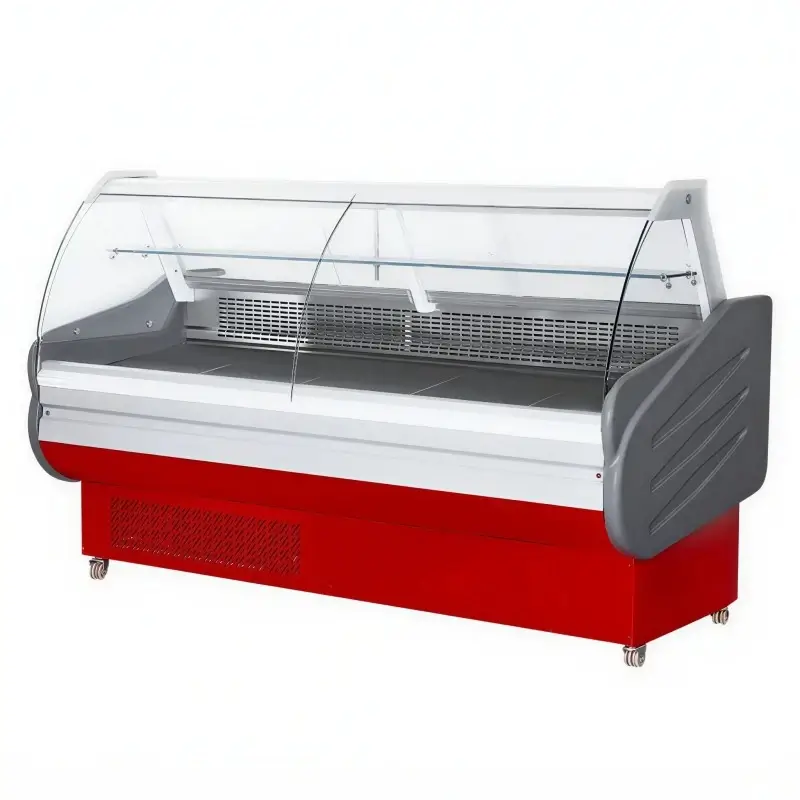
Commercial Glass Door Refrigerator Design
Commercial glass door refrigerators require specialized construction. Their insulated, multiple-pane doors keep condensation under control without blocking the view of the meat inside. Low-emissivity glass also reflects infrared radiation, reducing heat transfer by 30–40% compared with standard glass.
Fans keep the cabinet temperature steady. Opening a door lets in a rush of warm air, but the air curtains block much of it while customers look inside. After the door shuts, the cabinet reaches its set temperature again within two minutes, limiting temperature spikes that might harm product quality.
After the store closes, refrigerated cases hold onto the cold air, which means their compressors run less often and energy use can fall by as much as 25%. Some newer models automatically lower their covers according to the store’s hours.
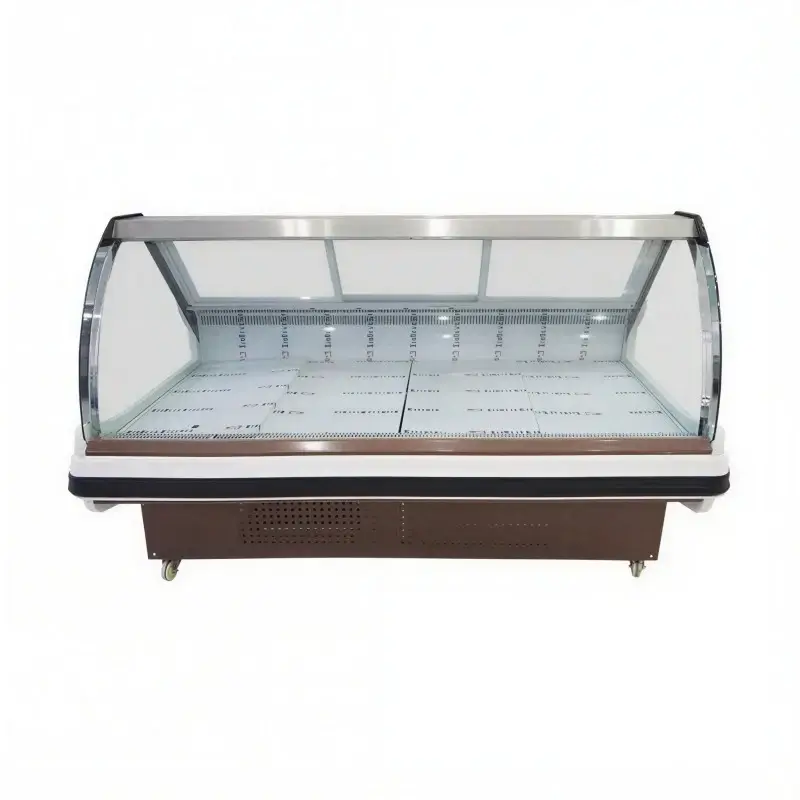
Meat Freezer vs. Refrigerator Considerations
Choose a display refrigerator based on the butcher’s usual cuts and how quickly they sell. For meat that will be stored longer, use a meat freezer set to 0°F or below. That setup can complicate daily sales because frozen cuts may take 24–48 hours to thaw before customers can buy them.
Frozen meat can become tougher once it thaws. As ice crystals form and enlarge within the muscle, they break cell walls and let moisture drain away during defrosting. Meat held at the proper refrigerated-display temperature loses less moisture and generally stays more tender.
Busy butcher shops need ample refrigerated display space; fresh stock sells quickly. A smaller store might manage with a compact case and extra frozen inventory. Choose the refrigerator’s capacity according to average daily sales and how much meat you want visible at once.
Monitoring and Verification Systems
Digital Temperature Controls
Microprocessor-controlled thermostats keep modern display cases within ±0.5°F. Rather than switching the compressor fully on or off, the system changes its output as conditions shift, which limits temperature fluctuations.
Readings are logged every 15–30 minutes, creating an inspection record for managers. When the temperature leaves the approved range, an automatic alert gives them time to act before products spoil.
Operators can check display temperatures from a computer or smartphone without being on-site. If a business has several locations, one central team can monitor them all and apply the same procedures everywhere.
Placement and Loading Practices
Temperature control also depends on where the display is placed. Keep it out of direct sunlight and away from heating vents or kitchen equipment. Leave open space around the condenser coils so heat can dissipate.
Where food sits in the cabinet affects both its temperature and safety. Meat packed too tightly can block circulation, creating warmer spots where spoilage starts sooner. Keep packages away from vents and below the marked load lines, with enough room around them for cold air to move.
Chill the meat fully before putting it away. Adding a large quantity while it’s still warm can raise the cabinet temperature by 5–10°F, and the refrigeration system may need 30–60 minutes to bring it back down.
Regulatory Compliance Requirements
Businesses must monitor temperatures continuously and keep a record of every reading. In most jurisdictions, meat has to stay below 41°F; many operators keep it at 32°F or colder. Going above the limit can lead to violations, seizure of the product, or closure.
Before you buy a commercial meat display refrigerator, ask for documented proof that its readings are accurate. The independent calibration certificate should confirm that the displayed temperature remains within the permitted tolerance of the meat’s actual temperature.
Post daily temperature logs where staff can easily see them. Take one reading when the refrigerator opens and another at closing; comparing the two can reveal whether the unit stayed at a safe, steady temperature throughout the shift.
Energy Efficiency and Temperature Management
Colder settings require more electricity. An efficient refrigerator can cut operating costs, and ENERGY STAR certified displays use 20-30% less power than standard models while maintaining temperature control.
LED bulbs produce much less heat than fluorescent or incandescent bulbs, so the cooling system has less work to do. Anti-sweat heaters need to match local humidity levels; oversized units waste power preventing condensation that would not otherwise occur.
Regular maintenance helps a refrigerator cool consistently while using less electricity. When dust covers the condenser coils, the compressor runs longer, especially during heavy use, and cooling may become uneven. Clean the coils every three months.
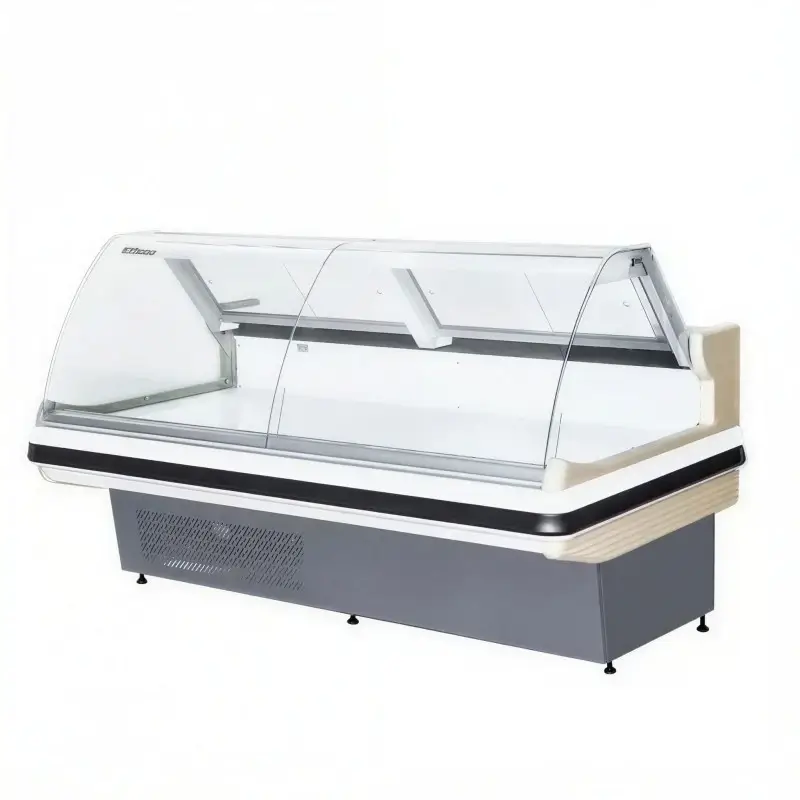
Frequently Asked Questions
Q1: What happens when a meat display refrigerator freezes the meat?
A: Freezing creates ice crystals that rupture the meat’s cells. Once the meat thaws, it releases excess moisture, leaving the texture poorer and reducing its overall quality.
Q2: How quickly should a meat display refrigerator cool after it has been restocked?
A: The unit should return to its set temperature within three minutes. If it takes over five minutes, the cooling system may be too small, or the refrigerator may need servicing.
Q3: Can beef, pork, and poultry be kept at the same display temperature?
A: Yes. Keep all three at 30°F. If possible, store ground meat separately at 28°F for added protection.