

Who Needs a Single Door Display Refrigerator
For many businesses, a huge walk-in cooler or multi-door display cabinet would be more than they need. A Single Door Display Refrigerator fits better in small shops with limited stock, especially where quick impulse purchases drive sales. Its compact footprint saves floor space, while the full glass door keeps chilled products in plain view and makes the refrigerator part of the sales display.
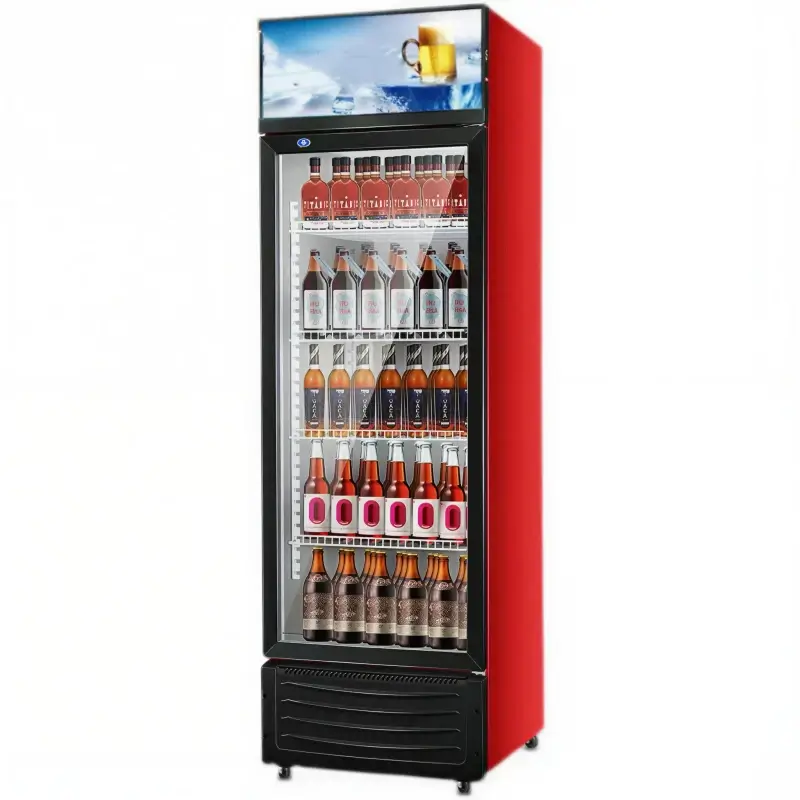
This article looks at which businesses gain the most, both in day-to-day use and financially, from choosing a single-door refrigerator. It also compares that format with other commercial refrigeration options.
The Core Value Proposition
Visibility Sells Products
Customers can see the contents of a glass-door display unit at a glance, rather than opening a solid-door refrigerator to find out what is inside. Clear panels, often paired with LED lighting, make it easy to scan chilled products quickly. That visibility can encourage impulse purchases, particularly for drinks, snacks, dairy products, and ready-to-eat meals.
Solid-door commercial reach-in refrigerators keep ingredients cold and organized out of sight, making them a practical choice for back-of-house kitchen storage. They are not meant for customer access. Up front, display refrigerators usually earn more revenue from the same amount of floor space.
Compact Footprint, Real Capacity
Single-door units typically measure 23–27 inches wide and 54–78 inches high, with a footprint of roughly 4–5 square feet. Despite their slim profile, well-made models can hold 250–450 liters of usable product—enough for most small retail shops and food-service operations. They work especially well where space is tight, but merchandise still needs to remain visible.
Who Benefits Most
Convenience Stores and Gas Stations
Convenience stores rely on impulse purchases. Since chilled drinks and snacks account for a large share of sales, putting a Single Door Display Refrigerator near the checkout or along a busy aisle keeps those products in plain sight and can prompt customers to add one at the last minute.
Most convenience stores use several single-door coolers rather than one large, multi-door cabinet. Staff can put each unit where shoppers are most likely to notice it and set its temperature for the drinks inside. A breakdown affects only part of the store’s chilled-drink capacity. The layout can also change more easily, since employees can move one cooler without rearranging oversized equipment.
Cafes and Bakeries
A small display beside the counter can hold bottled drinks, fresh juice, yogurt parfaits, and pre-packaged salads. Customers waiting for coffee may spot something to take along, increasing the average ticket without giving staff extra work.
A one-door display case lets bakeries put chilled treats—from cheesecakes to cream-filled pastries—plainly in view, and that quick visual appeal can turn into a sale.

Hotels and Hospitality Venues
Guests should be able to grab a cold drink in a hotel lobby, beside a resort pool, or at a conference center—even where space is tight. The single-door display cooler has a small footprint, and its glass front makes the available drinks easy to see without overwhelming the room.
Small Restaurants and Takeaway Shops
A single-door unit fits well beside a restaurant’s pickup counter when the menu includes bottled drinks, desserts, or prepared meals. Customers can browse while waiting and add a cold drink or dessert without needing staff help.
Single Door Display Refrigerator vs. Other Commercial Refrigerator Types
| Feature | Single Door Display Refrigerator | Multi-Door Commercial Glass Door Refrigerator | Commercial Reach In Refrigerator |
| Door Configuration | One glass door | Two or three glass doors | One or two solid doors |
| Product Visibility | Customers can see the products clearly | Customers can see the products clearly | No visibility through the solid doors |
| Floor Space Required | 4-5 sq ft | 10-18 sq ft | 5-8 sq ft |
| Typical Capacity | 250-450 liters | 600-1,500 liters | 400-700 liters |
| Primary Location | Front-of-house, customer-facing areas | Retail aisles and large display areas | Back-of-house kitchen storage |
Choosing a Larger Glass Door Model
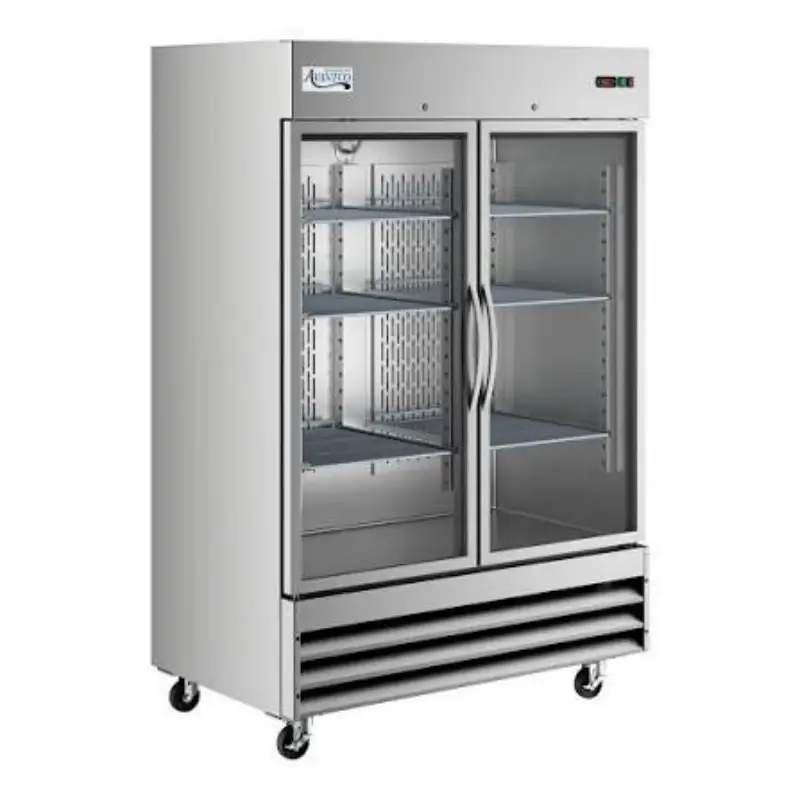
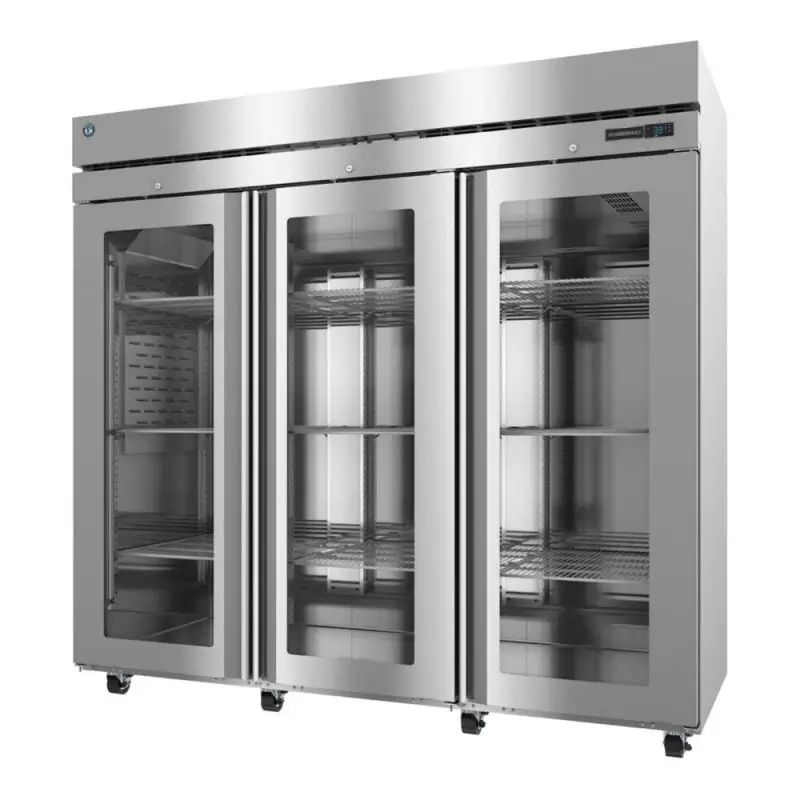
Once the chilled selection grows, supermarkets, large liquor stores, and busy beverage retailers usually need more than a single-door refrigerator. Commercial Glass Door Refrigerator units with two or three doors offer extra shelving for a wider range of products and reduce the pressure of frequent restocking. For a smaller selection, a single-door model remains the practical choice.
When Solid-Door Storage Works Better
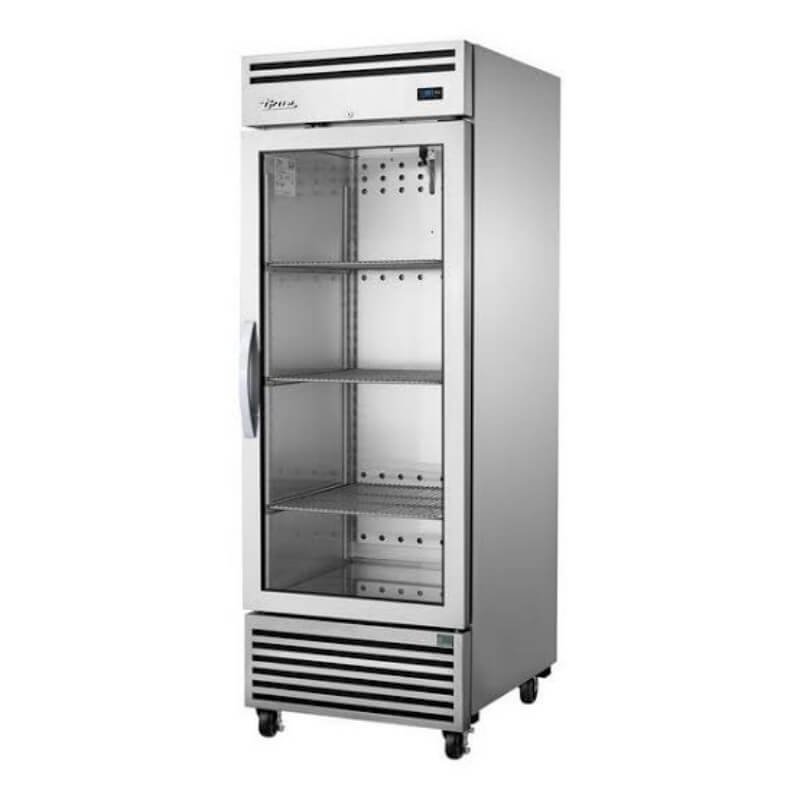
Glass doors aren’t necessary for kitchen storage. A solid-door reach-in keeps raw ingredients, prepared food, and back-of-house supplies better insulated, consumes slightly less energy, and maintains a steadier temperature by avoiding heat transfer through the glass. Restaurants purchasing refrigeration strictly for storage should choose solid-door Commercial Reach In Refrigerator units, reserving display models for customer-facing areas.
Features Worth Evaluating
Key Specifications That Shape Everyday Performance
Before you buy, look closely at the specifications that shape everyday performance. Start with the glass: double- or triple-pane Low-E windows reduce condensation and use energy more efficiently than single-pane glass.
Lighting — LED strips placed along door frames or shelf edges cast even light over the products while producing little heat inside the cabinet.
Adjustable shelves — Repositionable shelving accommodates various product sizes, from tall bottles to small snack packages.
Self-closing doors use springs or magnets to shut once someone lets go, limiting energy waste from doors left open.
Temperature range: Most display units run at 33°F to 45°F (1°C to 7°C), a suitable range for drinks and packaged food.
Noise and Placement Considerations
Because display refrigerators sit where customers gather, their compressor noise matters. A good unit runs at roughly 45–50 dB—about the volume of a quiet conversation. Check the rating before putting one in a small café or hotel lobby, where a louder machine may bother guests.
Fan-cooled models maintain more consistent temperatures throughout the cabinet, although the fans produce some extra noise. Static-cooled units run more quietly, but their internal temperatures can differ from one shelf to another.
Making the Decision
A Single Door Display Refrigerator keeps chilled goods in clear view while using very little floor space. That makes it a practical choice for customer-facing businesses that depend on quick purchases, including convenience stores, cafés, bakeries, hotel shops, and takeaway restaurants.
For back-of-house storage, where customers never see what’s inside, a solid-door Commercial Reach In Refrigerator makes more sense. If product visibility matters, choose a multi-door Commercial Glass Door Refrigerator; it offers more display space and holds a larger inventory.
Start with two simple questions: Do customers need to see the products clearly, and is the available space limited to slim equipment? If so, choose a single-door display model.
Frequently Asked Questions
Q1: How much electricity does a Single Door Display Refrigerator use?
Most commercial models consume about 3–6 kWh per day. Those with Low-E glass and LED lighting typically use closer to 3 kWh.
Q2: Can a single-door display unit keep food at safe temperatures in a warm store?
Yes. Quality units work reliably in ambient temperatures up to 90°F (32°C). For hotter stores, choose a model rated for tropical conditions (Climate Class 4).
Q3: How often should a business replace the door gasket on a display refrigerator?
Inspect the gasket every three months. Replace it sooner if it cracks, tears, or loses magnetic strength. Under normal commercial use, businesses typically replace it every 18–24 months.