
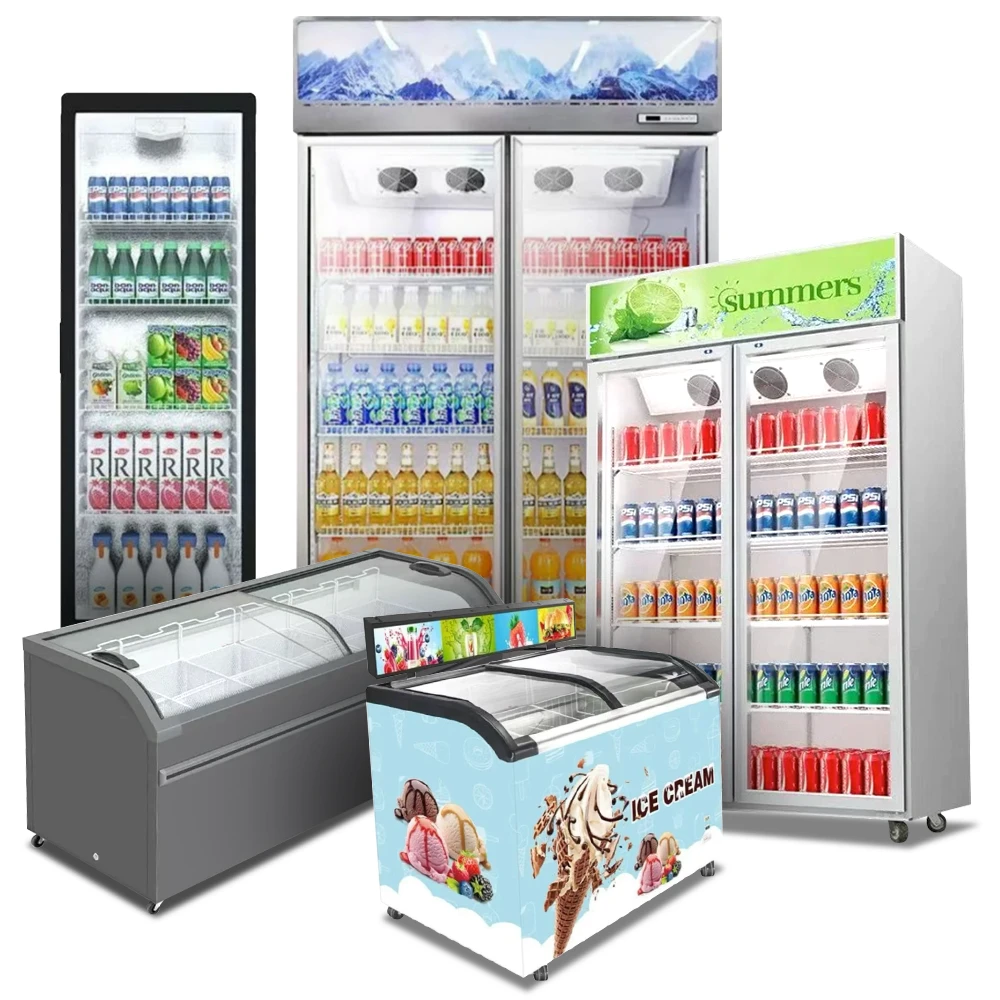
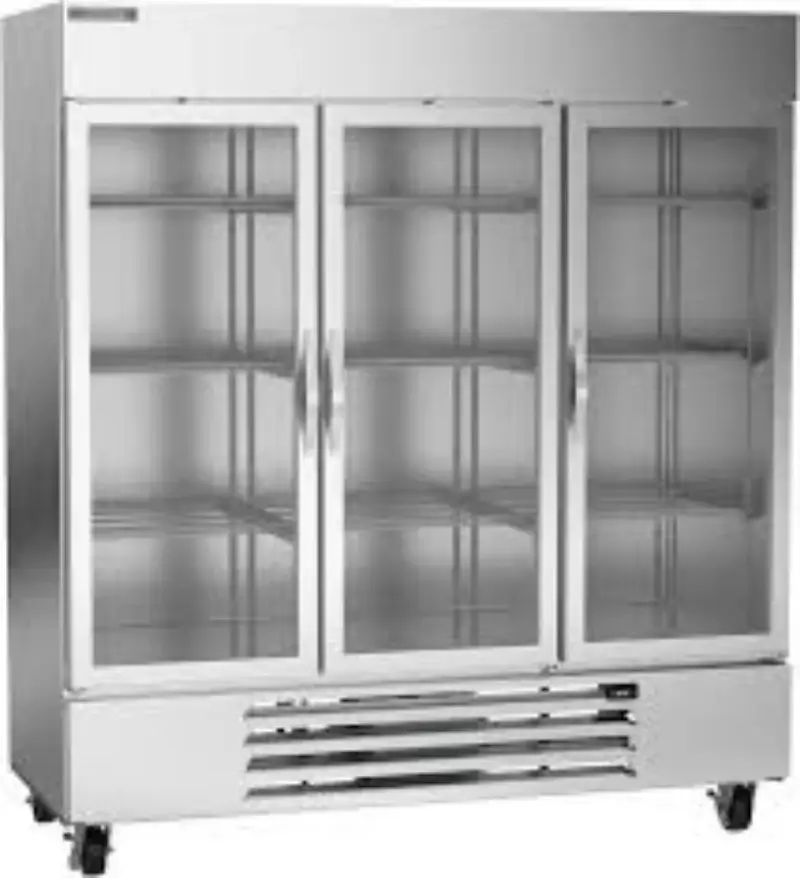
A commercial refrigerator with glass doors costs more to buy and run than an insulated solid-door cabinet, so it is never the default. The glass front is a merchandising choice: it lets customers see contents without opening the door.
The businesses that benefit most are those where people must see contents before choosing and where the door opens often: convenience stores and supermarkets, cafes, bakeries and bars, grab-and-go counters, hotels, and self-service settings from offices to clinics. Those that benefit least are hot back-of-house lines and long-term frozen storage, where a solid door holds temperature with less effort.
This guide sets the two conditions that make glass doors pay off, then applies them to each type of business.

The Two Conditions That Make Glass Doors Pay Off
Glass doors create value only when contents need to be seen, and the door opens frequently. If either condition is missing, an insulated solid door cabinet does the same job at lower cost.
A glass front changes two things: how easily people see inside and how much heat the cabinet gains.
Visibility That Drives Revenue
Transparency removes guesswork. Customers compare brands and sizes at a glance, and staff spots an empty facing without opening the door. Impulse purchasing analysis estimates the uplift from visible display at roughly 20 to 40 percent.
The Energy and Recovery Penalty
Glass conducts heat more readily than an insulated panel, so a glass door cabinet typically uses 15 to 30 percent more energy than an equivalent solid door model and recovers two to five minutes slower after each opening. The gap narrows with:
- Double-pane low-emissivity glass
- Heated frames or anti-fog glass in humid rooms
None remove the penalty; they reduce it, so the case rests on visibility.
Where Glass Doors Are the Wrong Choice
| Setting | Why glass works against you | Better choice |
| Hot line beside ovens or fryers | High ambient load plus heat gain | Solid door reach-in |
| Long-term frozen storage | Defrost cycling and energy loss | Solid door freezer |
| Storage opened under 20 times a day | Visibility is rarely used | Solid door cabinet |
Retail and Convenience: Where Glass Doors Earn the Most
Retail formats with high turnover, self-service, and brand comparison get the largest return, because the glass front is part of the point of sale rather than a storage door.
Here the cabinet sits on the sales floor and is shopped directly, so visibility and straightforward restocking justify the energy premium many times over.
Convenience Stores, Bottle Shops, and Supermarkets
Shoppers buy bottled water, soft drinks, juices, milk, and ready-to-eat items on impulse and compare them by label. An upright merchandiser arranges them at eye level, saves floor space, and shows staff where gaps appear.
Specialty Retail and Non-Food Counters
Florists, pharmacies, cosmetic counters, and pet retailers use glass display refrigeration for goods that need to be seen. If a customer must judge a product before buying, the glass front pays. Where goods are never shown, a solid door unit is cheaper.

Food Service: Cafes, Bakeries, Bars, and Restaurants
Food service benefits when the cabinet faces customers and when speed of access matters, but the benefit splits sharply between front of house and back of house.
The same kitchen can justify both door types; the deciding factor is whether the cabinet is a display or a store.
Front-of-House Display Versus Back-of-House Storage
Front-of-house units show pastries, desserts, bottled drinks, and grab-and-go meals, so glass supports the sale and self-service. Back-of-house units hold ingredients and prep, where stability matters more than visibility. The test measures door openings per hour and whether customers ever look inside.
Bars, Coffee Shops, and Grab-and-Go Formats
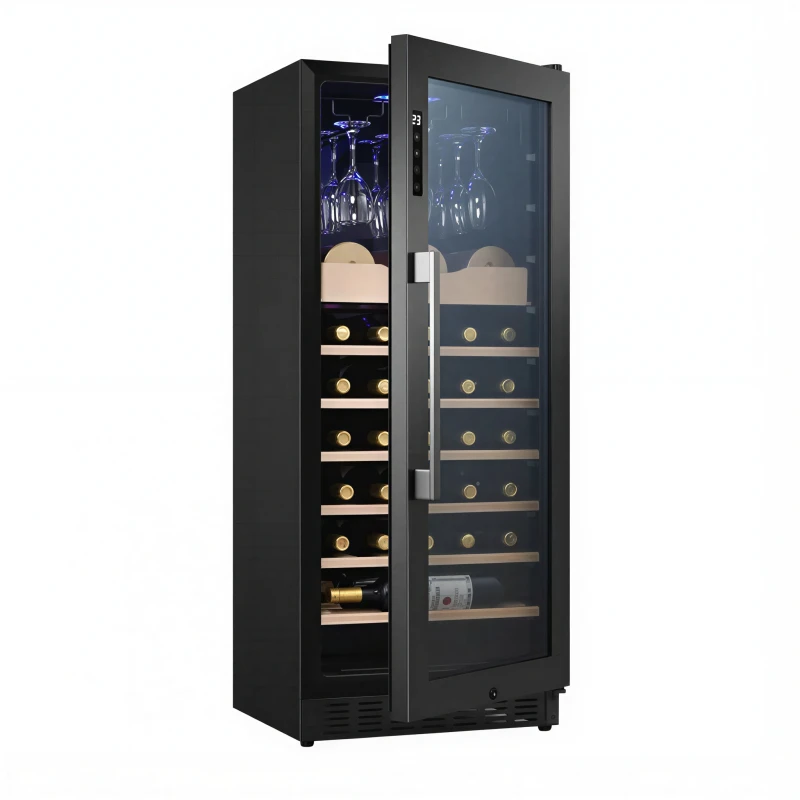
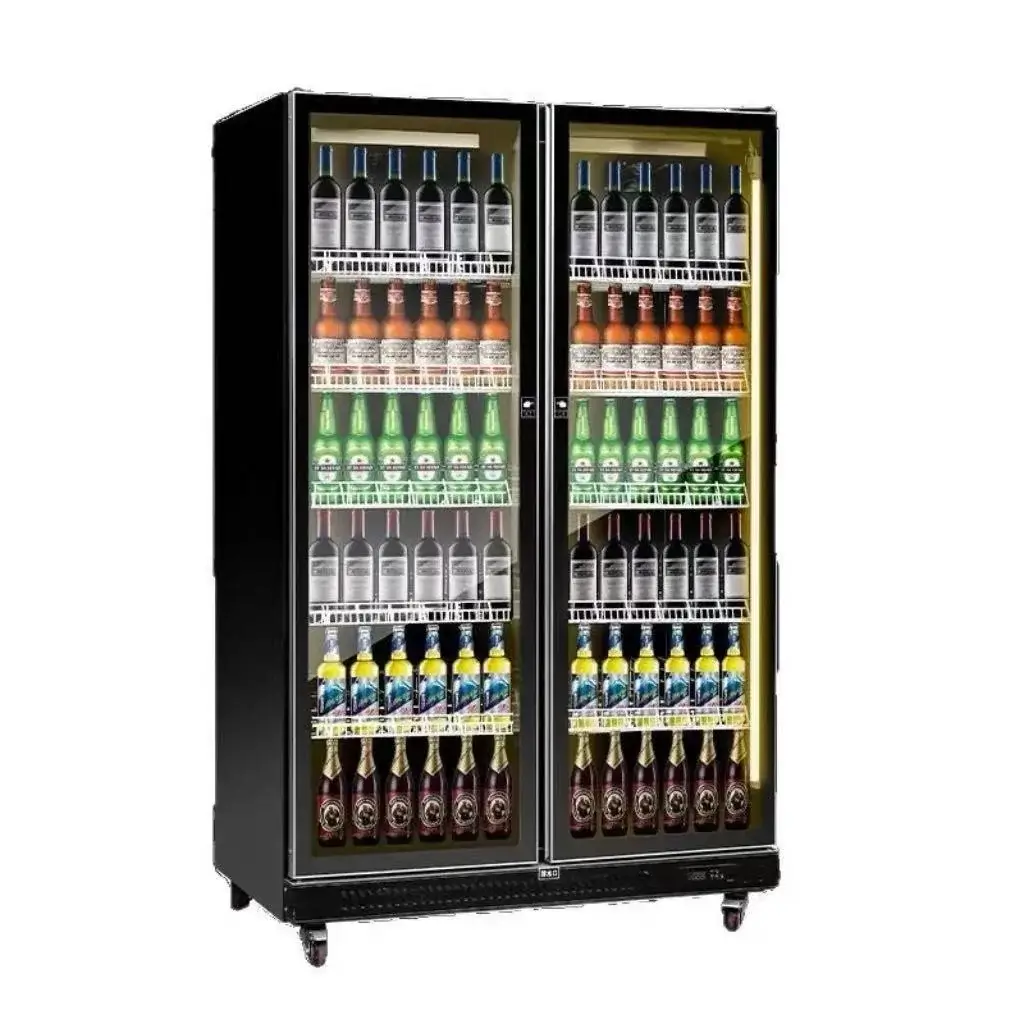
Back-bar coolers and countertop displays keep beer, wine, mixers, and cold brew within reach during a rush. Speed of service is the return: a bartender finds an item without searching. Lockable doors control alcohol inventory, and self-closing hinges reduce cold air loss.
Hospitality, Wellness, and Institutional Users
Hotels, venues, offices, gyms, and clinics benefit through self-service and presentation, and here the glass door replaces staff time as much as it drives sales.
Where nobody stands behind a counter, a visible cabinet lets guests and members serve themselves.
Hotels, Lounges, and Event Venues
Lobby and lounge units, banquet refrigeration, and in-room minibars rely on presentation as much as cooling. Quiet operation matters where guests sit nearby, and steady temperature protects wine and specialty beverages that are served rather than stored.
Offices, Gyms, Schools, and Healthcare Waiting Areas
Break rooms, gym drink coolers, cafeteria lines, and clinic waiting areas use glass front cabinets so people help themselves without asking staff. The priority shifts to durability, lock options, and a restocking rhythm that keeps the display full.
Specifications That Decide Whether It Pays Off
Capacity, door count, glass construction, and installation conditions decide whether a glass door unit delivers the benefit or becomes an energy drain.
Two cabinets with the same footprint behave differently when you compare their doors, glass build, and airflow.
Capacity, Doors, and Shelving
| Format | Shelves | Business fit |
| Countertop display | 2 to 3 | Cafes, bars, delis |
| Single door upright | 4 to 6 | Small shops and cafes |
| Two-door upright | 6 to 8 | Convenience, restaurants |
| Multi-door merchandiser | 8 or more | Supermarkets, bottle shops |
Confirm usable volume rather than the nominal figure, the shelf load rating, and whether standard cartons or food pans fit.
Glass, Defrost, and Airflow
Ask whether the glass is double-pane, low-emissivity coated, and heated. Confirm whether the evaporator fan stops when a door opens, because a fan that keeps blowing spills cold air.
Refrigerant, Electrical, and Installation
Ask which refrigerant is used and at what charge size, and confirm the voltage and circuit your site can supply. Plan the clearances the manual requires for condenser airflow before the unit arrives.

Certifications and Compliance by Business Type
Certification follows the use: food businesses need food safety and electrical listings, while clinical or pharmacy settings need a unit rated for biologics.
A certificate held by a trading office rather than the factory proves little, so match each document to the model on your order.
Food Service and Retail
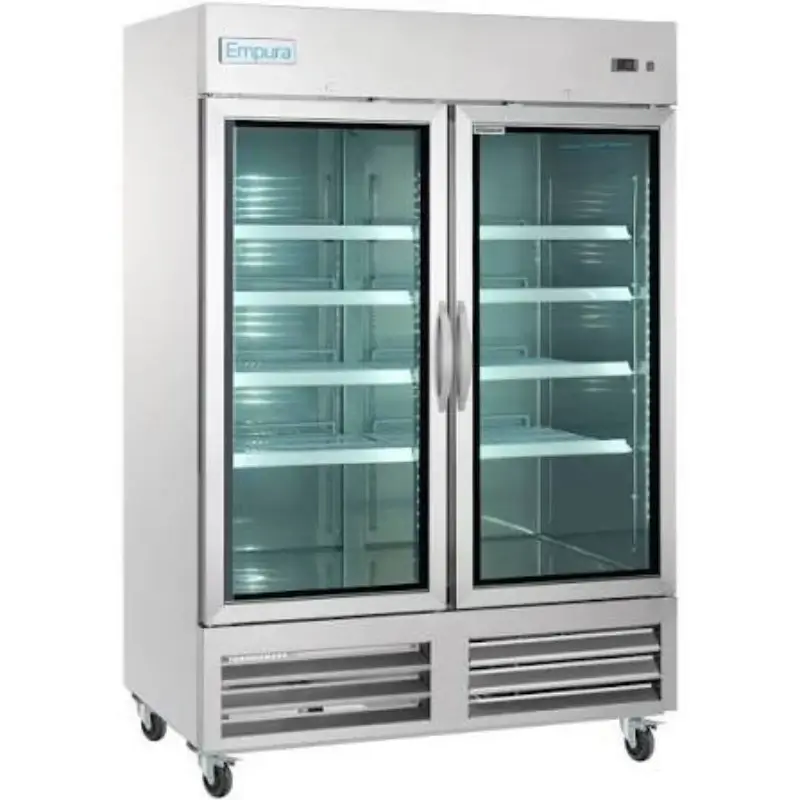
Food businesses should confirm the cabinet carries NSF/ANSI Standard 7 plus an electrical listing such as UL 471. Cold holding must keep time and temperature control for safe foods at or below 41 degrees Fahrenheit, a core requirement of the FDA Food Code. Inspectors probe product temperature and expect records, so a display with alarms and logged readings supports a HACCP plan. ENERGY STAR certified commercial refrigerators and freezers are tested against efficiency criteria.
Clinical, Pharmaceutical, and Other Regulated Users
Clinics, pharmacies, and laboratories need more than a cold cabinet. CDC vaccine storage and handling guidance specifies a 2 to 8 degree Celsius range for refrigerated vaccines and recommends purpose-built units with microprocessor control and forced air circulation. Please confirm that the model meets that guidance and that the certification covers the unit shipped to you.
Running Cost, Maintenance, and Sourcing at Volume
Running cost depends on how hot the room is, how often the door opens, and how well the glass manages heat gain, and simple checks protect the return.
That cost compounds over a decade of service, so glass build and maintenance discipline matter as much as the price.
What Drives Energy and Lifetime Cost
| Factor | Effect | How to manage it |
| Ambient temperature | Hotter rooms raise compressor load | Site away from ovens and sun |
| Door openings per hour | More recovery cycles | Buy the right number of doors |
| Glass heating | Continuous draw in humid rooms | Use only where fogging is real |
The Maintenance Routine That Protects the ROI
Clean the condenser coils monthly in dusty or greasy environments, because a dust layer forces longer compressor runs. Check gaskets quarterly, calibrate the thermostat annually, and register the warranty, since registration often extends compressor coverage.
Buying One or Many
A single site can buy based on price and fit. A multi-site operator buys consistency, so the same models keep gaskets, shelves, and spares interchangeable. Ask whether setup fees apply to custom branding.
FAQ
Q1: Do glass door refrigerators really cost more to run than solid door ones?
Yes, typically 15 to 30 percent more for the same volume, because glass transfers heat faster and the cabinet works harder to recover after each opening. The gap narrows with double-pane glass and efficient compressors, but it rarely closes.
Q2: Can a business use a glass door refrigerator purely for storage?
It can, and some kitchens do, but the visibility benefit is wasted while the energy penalty remains. If a cabinet is never shopped and opens only a few times a day, a solid door unit stores the same goods at a lower cost.
Q3: What certifications should a glass door commercial refrigerator carry?
Food and beverage businesses should look for NSF/ANSI Standard 7 plus an electrical listing such as UL 471. Settings handling vaccines or samples need equipment matched to their storage guidance. Please confirm that the certificate specifies the exact model and manufacturer.