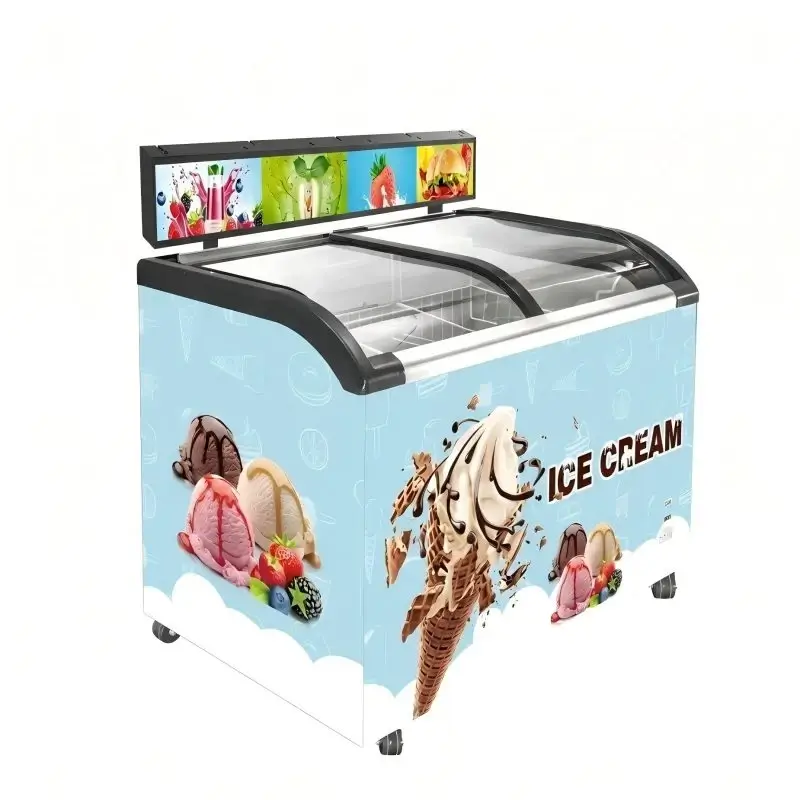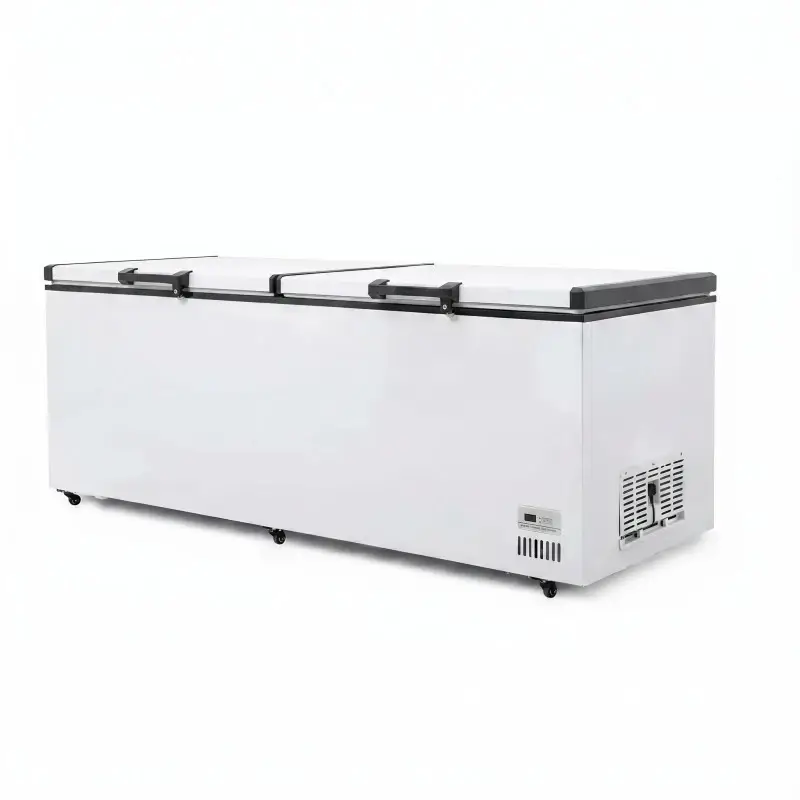
Understanding Large Chest Freezers in Business Operations
Cold storage affects expenses and workflow. A Large Chest Freezer can keep substantial quantities of inventory frozen without taking up as much space or consuming as much energy as many larger commercial refrigeration systems.


Restaurants, food-service companies, and medical facilities all need room for temperature-sensitive supplies. Since a large chest freezer usually holds cold more effectively than an upright model, it works well for storing bulk quantities at a steady temperature.
Industries That Rely on Large Chest Freezers
Food Service and Restaurant Operations
Commercial freezers give restaurants, caterers, and institutional kitchens room to buy in bulk, manage food costs, and maintain steady supplies. Staff can store proteins, frozen vegetables, and prepared meals until they are needed without sacrificing quality.
A busy restaurant can go through 200–500 pounds of frozen food each week. One upright freezer usually cannot hold that much, so owners may need multiple units, along with the extra equipment and electricity expenses. Chest freezers offer more storage in the same area and keep cold air circulating the food, reducing freezer burn and helping maintain its quality.
Retail and Grocery Operations
Food retailers depend on steady cold storage to keep frozen products available all day. During rush periods, the doors may open repeatedly, yet the thick insulation in commercial chest freezers helps hold a consistent temperature.
For stores with a broad frozen selection, a well-insulated double chest freezer can make daily operations easier. Its separate compartments divide product types, improve stock control, and reduce the chance of cross-contamination.
Healthcare and Laboratory Settings
Hospitals, laboratories, and pharmaceutical sites must store vaccines, biological samples, and medicines within tight temperature limits. A brief power failure or loss of temperature control can ruin valuable materials, so dependable systems and backup electricity are essential.
Digital displays, alarms, and data logging are standard features in medical chest freezers and help facilities meet regulatory requirements. Storing large quantities in one freezer also makes inventory easier to manage while limiting the handling that can cause damage.
Hospitality and Event Management
Hotels, resorts, and event venues all face quiet periods. During those lulls, a Large Chest Freezer lets them buy supplies at bulk rates and hold them until bookings pick up. Caterers can also prepare for large events without using up the stock reserved for everyday service.
In a restaurant or hotel, a freezer failure can disrupt service within minutes and quickly frustrate guests. Commercial chest freezers are built for this kind of workload, with stronger compressors and hard-wearing parts designed to handle constant, heavy use.
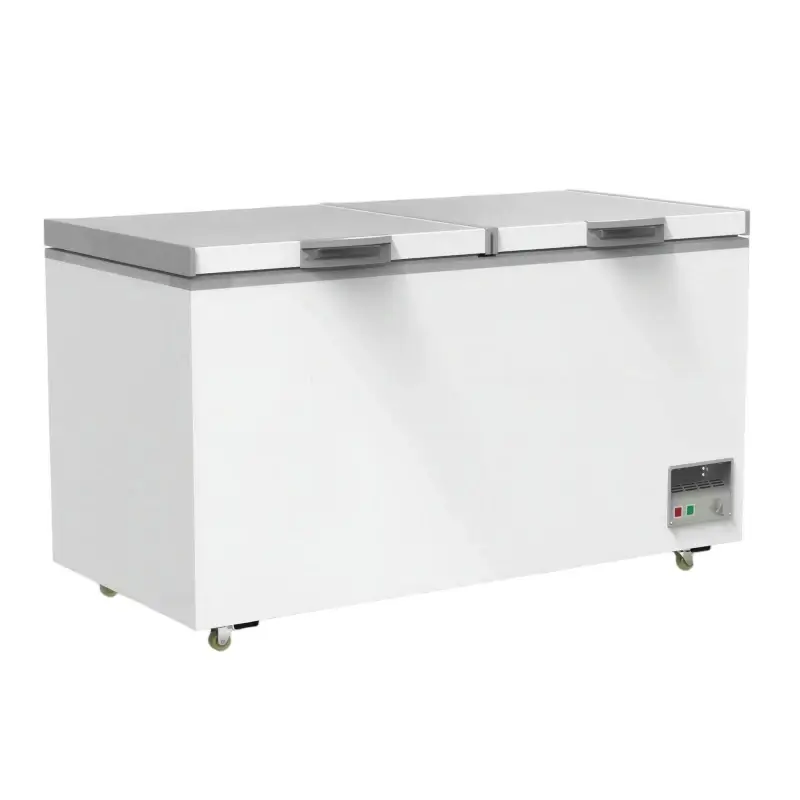
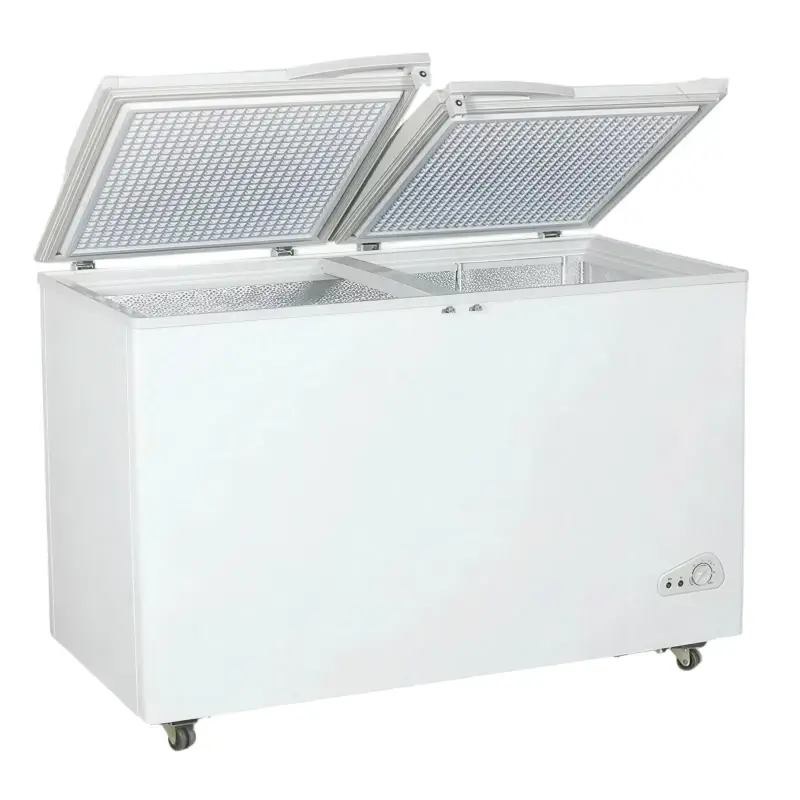
Why Large Chest Freezers Suit High-Volume Operations
More Usable Storage
Chest freezers open from the top and have no fixed shelves taking up room. Staff can fit bulky packages and oddly shaped items inside, then stack them to use the available space more efficiently.
The design can change storage capacity considerably. A standard upright freezer usually provides 15–20 cubic feet of usable space. A commercial chest freezer occupying about the same floor area may hold 20–30 cubic feet or more, giving a kitchen or warehouse roughly 30–50% more storage per square foot.
Energy Efficiency and Operating Costs
Chest freezers generally use 10–25% less electricity than upright models of a similar size. Since cold air sinks, less escapes when you lift the lid than when you open a front door. That difference cuts power consumption and lowers the electric bill.
Typical consumption looks like this:
| Freezer Type | Daily Energy Use (kWh) | Monthly Cost ($0.12/kWh) | Annual Savings vs. Upright |
| Large Chest Freezer (25 cu ft) | 1.2-1.5 | $4.32-$5.40 | $180-$240 |
| Upright Commercial Freezer (25 cu ft) | 1.8-2.3 | $6.48-$8.28 | Baseline |
| Multiple Small Chest Units | 2.0-2.5 | $7.20-$9.00 | – |
Temperature Stability and Food Safety
Commercial freezers are built for demanding use and usually hold temperatures from -10°F to -20°F. Thick insulation limits heat transfer, while the small amount of air exchange during door openings helps prevent sudden temperature spikes. Food stays in better condition, and required safety standards are easier to meet.
During health department inspections, dependable temperature logs can make a real difference. Many newer chest freezers save readings automatically, cutting down on paperwork and alerting staff to mechanical trouble before the unit fails.
Durability and Maintenance Requirements
Commercial freezers are made to handle heavy daily use. Large chest units typically have reinforced hinges, commercial-grade compressors, and corrosion-resistant interiors, which often gives them a longer service life than household models.
Maintenance is generally straightforward when care is consistent. At an annual service visit, a technician will typically check the compressor, door gaskets, defrost system, temperature settings, and electrical connections, replacing or adjusting parts as needed.
Choosing the Right Large Chest Freezer Configuration
Assessing Volume Requirements
Begin with the inventory. Work out the average volume stored each week, then allow for seasonal spikes, routine bulk orders, the time each product remains frozen, and projected growth over the next 3–5 years.
A freezer should generally run at 70–85% capacity, leaving room for major deliveries and seasonal demand. Packing it too tightly restricts cold-air circulation and increases energy consumption.
Insulation Quality Considerations
Thick insulation reduces energy consumption and helps maintain a more stable temperature. Premium Commercial Freezer models have 2–4 inches of high-density foam in their walls, allowing the interior to remain cold longer during extended power outages—an important benefit for businesses with unreliable electrical infrastructure.
Double chest freezers stay cold longer, thanks to their high-density foam insulation. With the lid kept shut during a power outage, they can hold food at a safe temperature for 24–48 hours. Standard upright freezers usually manage only 4–12 hours.
Divider and Basket Systems
A well-planned interior makes unused storage space much more useful. Removable baskets keep frequently handled items within reach while bulk stock stays below, and dividers separate product types to reduce cross-contamination and make stock rotation easier.
Businesses with several product lines can rearrange the interior as their inventory changes. Movable dividers create space for new storage needs, so the entire unit does not have to be replaced.
Location and Installation Requirements
A large chest freezer needs breathing room. Leave 6–12 inches on every side so air can circulate, and place it on a floor strong enough to support 500–800 pounds once the freezer is full.
Give the freezer a dedicated circuit so the compressor can start without creating voltage drops. Leave sufficient space for the lid to open all the way and for easy access to the food. Keep the appliance away from heat and direct sunlight.
Operational Best Practices for High-Volume Frozen Storage
Inventory Management Strategies
Good management makes a large chest freezer far more useful. Mark every item with its purchase and expiration dates, then use FIFO—first in, first out—to reach older stock before opening newer supplies. Inventory checks become faster, waste drops, and product quality holds up.
Digital tracking can connect to newer freezers, show their contents, and alert staff when supplies run low. That means fewer manual inventory checks and fewer ordering mistakes.
Temperature Monitoring Protocols
Staff should take a visual temperature reading when the facility opens and again when it closes, recording both results. Each week, review the full log; once a month, verify that the equipment remains calibrated. Any reading more than ±2°F outside the acceptable range requires immediate investigation.
Remote alerts from automated monitors give managers time to act before inventory is damaged. If the equipment fails, cloud-stored records retain the details needed for audits or insurance claims.
Defrosting and Cleaning Schedules
Defrost a manual-freeze chest freezer when the frost grows beyond 1/4 inch; for many units, doing this every three months—preferably when supplies are running low—works well. Move the food to backup storage, unplug the freezer, and let the ice melt completely. Once empty, wash the interior with a food-safe sanitizer and dry it fully. Plug the unit in again, then put the food back only after its temperature has stabilized.
Auto-defrost models save staff from having to remove ice by hand, though they generally use a little more electricity. The better choice depends on the freezer’s workload and the labor available.
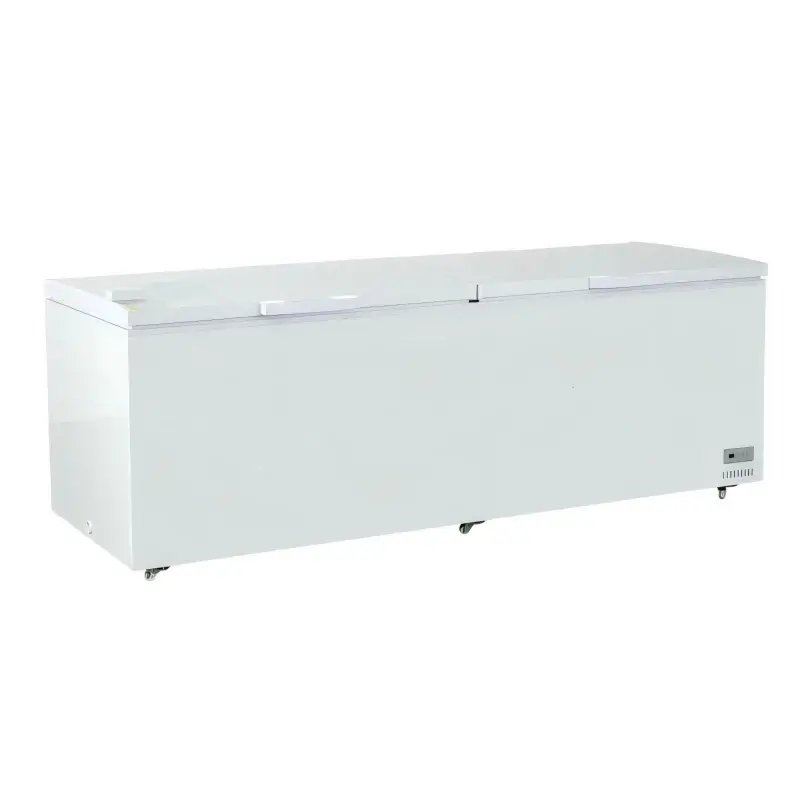
Cost-Benefit Analysis for a Large Chest Freezer Investment
Initial Investment Considerations
Size and included features have the biggest effect on a commercial freezer’s price:
●Entry-level commercial units (15-20 cu ft): $800-$1,500
●Mid-range commercial models (20-25 cu ft): $1,500-$2,800
●Premium large chest freezers (25–30+ cu. ft.): $2,800–$5,000
●Specialized medical or laboratory units: $4,000–$8,000+
The sticker price is only the starting point. Add delivery and installation, any electrical work, optional extended coverage, five years of estimated energy costs, and anticipated maintenance to find the true cost of owning it.
Return on Investment Metrics
Bulk purchasing often lowers the unit price by 15–25%, helping businesses recoup the cost of a large chest freezer. With more durable storage, spoilage drops and shelf life may increase by 20–30%. One large freezer can also cut annual energy costs by $150–$300 compared with several smaller units.
Labor efficiency: With everything stored together, staff waste less time finding and collecting items.
Restaurant purchasing
A freezer that holds 3,000 units can cut monthly expenses by $450–$750 when buying in bulk becomes feasible. For most commercial operations, that reduction covers the purchase within 6–12 months.
Financing and Depreciation Benefits
Businesses can finance commercial freezer systems instead of paying the full cost upfront. Suppliers often provide 24–48-month payment plans with competitive interest rates.
●Lease-to-own programs can suit seasonal businesses.
●Trade-in allowances for equipment upgrades
Commercial freezers may qualify for accelerated depreciation under Section 179. That can let a business deduct the equipment’s entire purchase price during the year of purchase instead of spreading the deduction across several years.
Common Challenges and Solutions
Power Outage Preparedness
Even a dependable Large Chest Freezer can stop working during an extended power outage. A backup generator paired with an automatic transfer switch can reduce that risk.
●Keep dry ice available for emergency temperature control.
●Take photos of the freezer’s contents to document any insurance claim.
●Identify nearby cold-storage facilities in advance in case the load must be moved.
If the lid remains closed, a well-insulated chest freezer can hold a safe temperature for 24–48 hours without power.


Space Optimization Challenges
Even a full chest freezer must stay easy to access. Labeled baskets, transparent containers, and an inventory map make items quicker to find, while rigid dividers allow vertical stacking without crushing fragile contents.
Regular inventory checks reveal which products are going unused and taking up freezer space. Order according to actual demand, so the restaurant has what it needs without filling the freezer with surplus food.
Frequently Asked Questions
Q1: What size chest freezer does a mid-sized restaurant usually need?
A restaurant serving 100–150 covers each day will generally need a 20–25 cubic-foot freezer. That capacity handles weekly bulk purchases while leaving 20–30% of the space available for seasonal needs and special events.
Q2: How does a double chest freezer with high insulation lower operating costs compared to standard models?
Improved insulation can cut compressor run time by 15–25%, reducing electricity use right away. It holds heat in more effectively, which eases mechanical strain and helps the equipment last longer. Energy savings usually make up the added initial expense within 18–24 months.
Q3: Can Large Chest Freezers maintain temperature stability in warm commercial kitchen environments?
Yes, provided the unit is properly sized, has enough space for airflow, and can operate in ambient heat reaching 100°F. Keep it away from ovens and dishwashers; a cooler location helps it hold its internal temperature without using as much energy.